Under and along the surface of the Atlantic Ocean on South Africa’s West Coast lies a marine ecosystem that is crucial to the survival of the world, the Benguela Current Large Marine Ecosystem (BCLME). This is one of four key, wind-driven upwelling systems bristling with mission-critical marine biodiversity.
The intense upwelling of cold, nutrient-rich waters from the deep Atlantic Ocean drives high levels of phytoplankton growth off the West Coast. This forms the foundation of the Benguela food web, which supports a massively rich biodiversity of marine life, from plankton to seaweeds, fish, seabirds, and marine mammals – as well as rich benthic and intertidal communities.
Humans can also be included in this interconnected web. Fishing contributes between 5% and 34% of total animal protein consumption across South Africa, Namibia, and Angola, while the number of fishers ranges from approximately 17,000 to more than 100,000 in each country.
The Benguela Current is responsible for many livelihoods. It means food security and underpins the economic survival of thousands of people along the southwest African coast. The influence of this ecosystem extends beyond this region, because almost 10 million people depend on it, according to the World Bank.
To many, the ocean might appear vast and empty. However, beneath its surface lies an ecosystem that extends far beyond the sandy beaches, rocky shores and shallow reefs most people experience. This is a highly sensitive ecosystem that is increasingly under threat from extractive industries such mining – and oil and gas.
Biodiversity in the Benguela
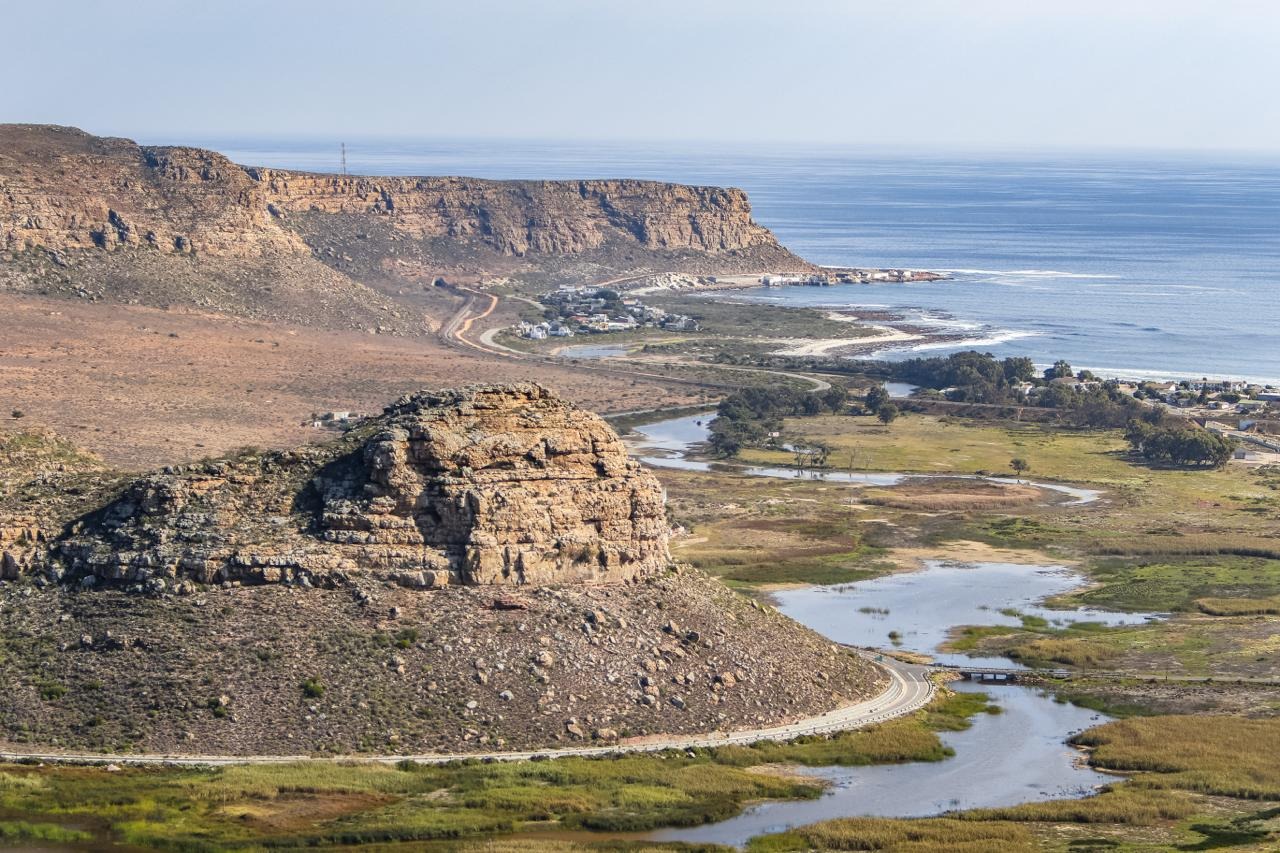
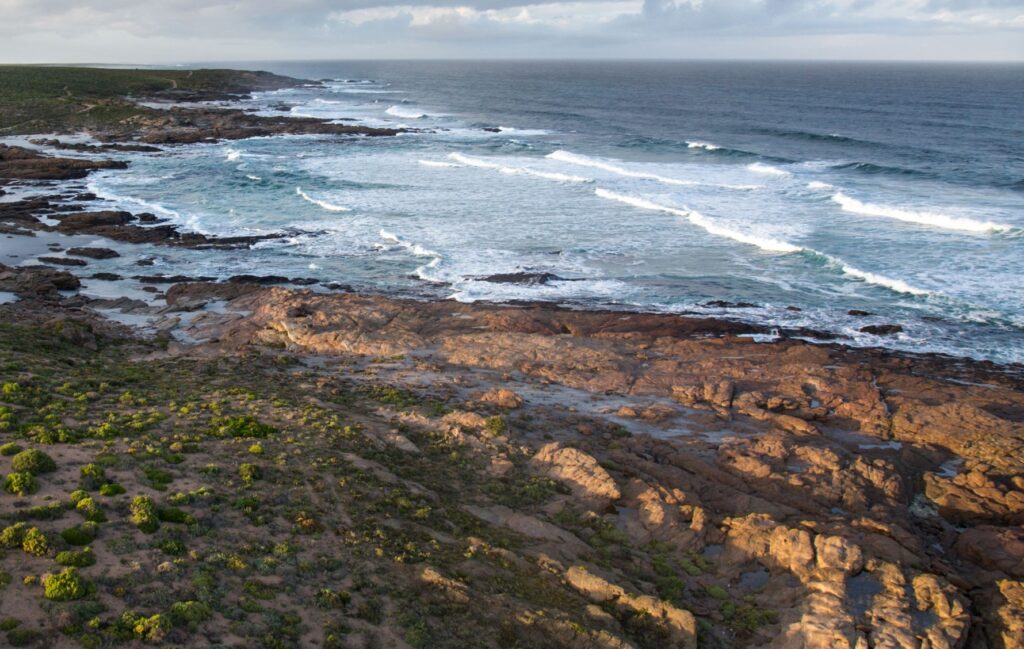
Flying over the West Coast, the shoreline unfolds in an alternating pattern of sandy beaches, rocky intertidal shores, and shallow submerged reefs. The sandy and rocky shores disappear into the open waters offshore – the pelagic zone – and benthic (seafloor) habitats below. Each zone supports a distinct community of marine life.
Nestled within the sandy beaches and shallow intertidal zones lives a world of infaunal communities, the foundation of many coastal food webs. These communities include marine worms, shellfish such as clams and mussels, small crustaceans, amphipods and other microscopic and small-bodied organisms, that recycle nutrients, provide food for fish, shorebirds and larger predators higher up the chain.
Along the rocky intertidal between the high and low tide marks, life is arranged in distinct bands or zones, shaped largely by tidal height and wave exposure. Higher up, hardy barnacles and small periwinkles cling tightly to the rocks. Dense mussel beds dominate sections of the midshore, alongside grazing limpets that slowly scrape algae from the rock surfaces. Closer to the low tide mark, the shoreline becomes increasingly diverse and colourful, with seaweeds, sea anemones and a wider variety of invertebrate life carpeting pools, crevices and reef surfaces.
Below the low tide mark, the Great African Seaforest formed by the giant kelp, Ecklonia maxima, creates shelter, nursery, and feeding grounds for a diversity of marine life on subtidal reefs. Classified as epifauna (animals that live on the seabed surface) – such as mussels, limpets, barnacles, sea anemones, whelks, and sponges – cling to rocks and reef surfaces.
Free-roaming West Coast rock lobster, sea urchins, brittle stars, starfish, octopus, crabs and other crustaceans play their evolutionary part, alongside reef fish such as galjoen, red roman and catsharks. Further offshore, the Benguela’s reef systems give way to colder, darker shelf-edge and canyon habitats, where seabed communities become increasingly specialised.
Sponges, jellyfish, soft corals, and sea fans occupy the seafloor, while brittle stars can form dense beds across sandy and mixed-bottom habitats. Crustaceans and demersal fish occupy these deeper systems, where depth, oxygen availability, temperature, and seabed structure shape offshore communities beneath hundreds of metres of water.
Above these seabed systems, the Benguela’s nutrient-rich upwelling waters support microscopic phytoplankton and zooplankton communities. These fuel the entire marine food web, supporting shoals of sardine, anchovy, round herring and horse mackerel, which in turn sustain larger predators such as snoek, hake, sharks, seabirds, dolphins, seals and whales.
The shift from land to sea mining
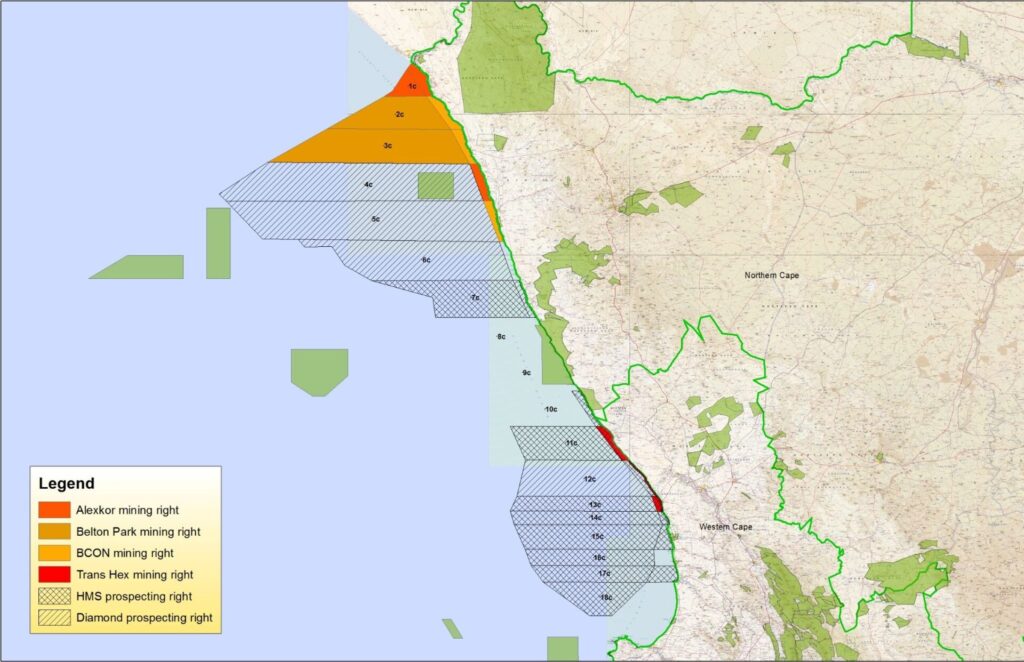
The West Coast mining industry has progressively shifted offshore as terrestrial and beach diamond deposits have matured, and dwindled. Advances in offshore mining technology during the 1980s and 1990s have helped to establish marine diamond mining as a commercially viable industry, which extends extraction into surf zones and offshore concession areas.
Today, much of the West Coast’s offshore concession area is tied up in mining and prospecting rights. While the operational status of many concessions is unclear, offshore mining continues to form a major part of the region’s extractive landscape.
Research on marine mining impacts in South Africa (Biccard et al. 2018) suggests that while some sandy beach ecosystems may begin to recover within a few years of rehabilitation, full recovery can take decades. In deeper offshore habitats, active rehabilitation is largely impossible, and recovery depends on natural processes that may take five to 15 years if left undisturbed.
The Benguela Current system is far from an empty ocean. It is a layered, living ecosystem. It is the lung of the West Coast, and indeed the world, supporting a highly connected marine ecosystem from the smallest microscopic plankton to the largest marine mammals in the world. And there is more to discover.
Recent research continues to uncover benthic species never recorded in the region. Given the limited understanding of benthic communities and their ecological importance, a strong precautionary approach to any intrusion into this environment is warranted.
Given the sharp rise of focus on offshore mining in the region recently, Protect the West Coast’s scientific and legal teams have increased their vigilance of all mining operations and applications in the Atlantic minimise their impact, which when combined with the further threat of unrelenting oil gas exploration, could be significant unless held to account by environmental NGOs and the South African public.
Species we risk losing
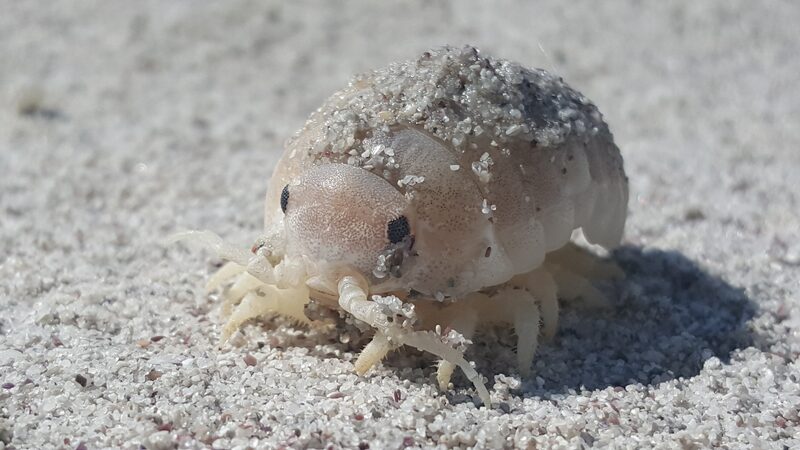
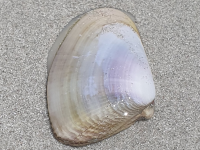
The Endangered giant pillbug (Tylos granulatus) and white mussel (Donax serra). Photos by Linda-Harris.
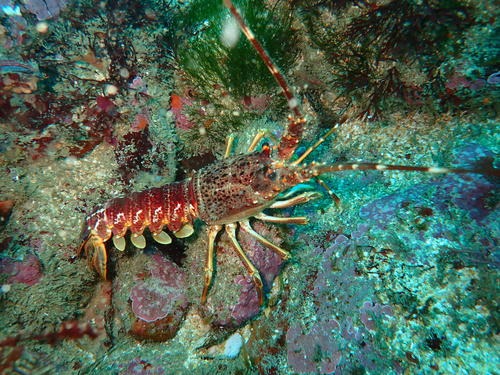

West Coast rock lobster (Jasus lalandii), and West Coast steenbras (Lithognathus aureti) are classified as Endangered. Photos by Peter Southwood (left) and Felix Riegel (Right)
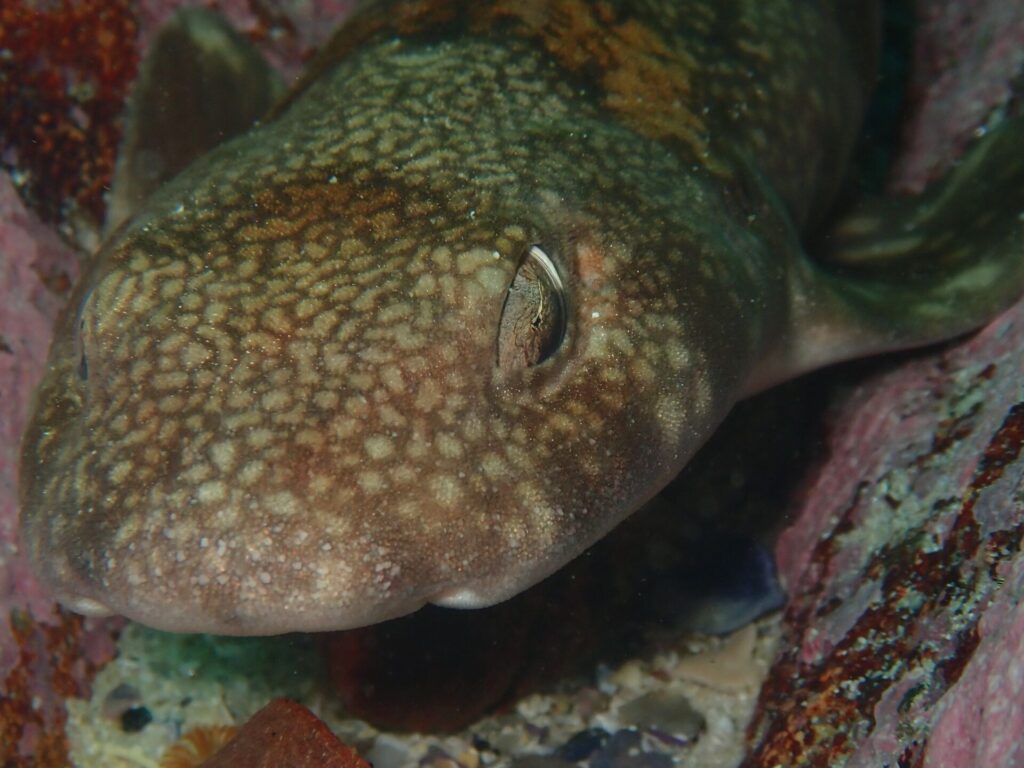
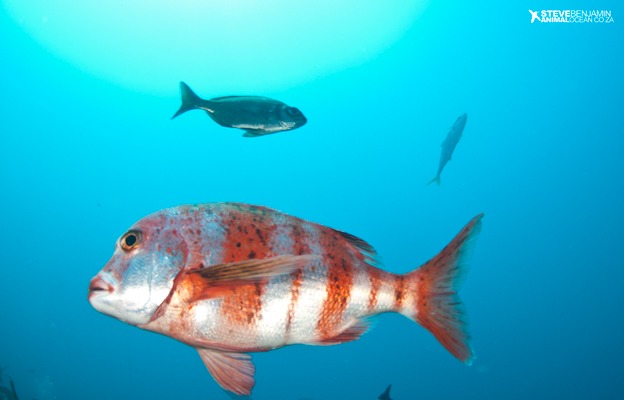
The puffadder shyshark (Haploblepharus edwardsii), red stumpnose (Chrysoblephus gibbiceps) are classified as Endangered. Photos by Rebekah Haschick (left) and Steve Benjamin (right).
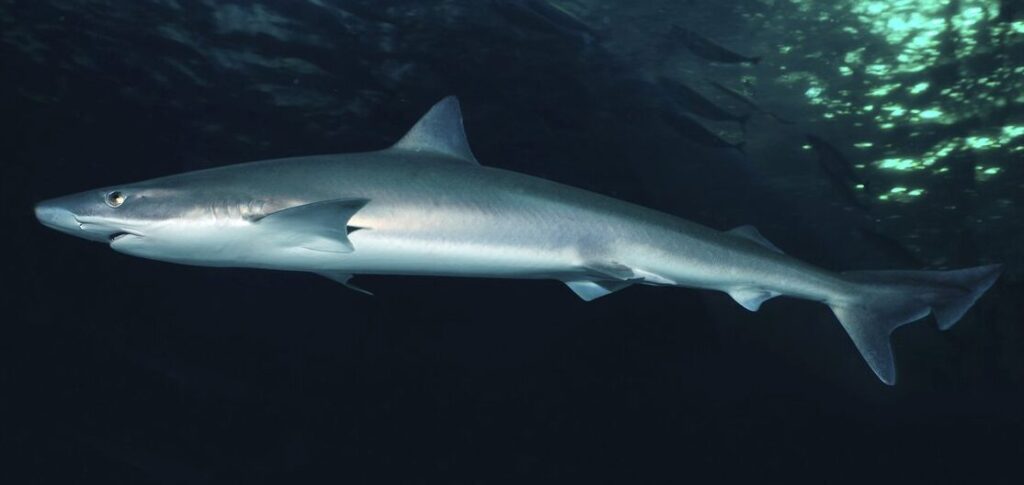
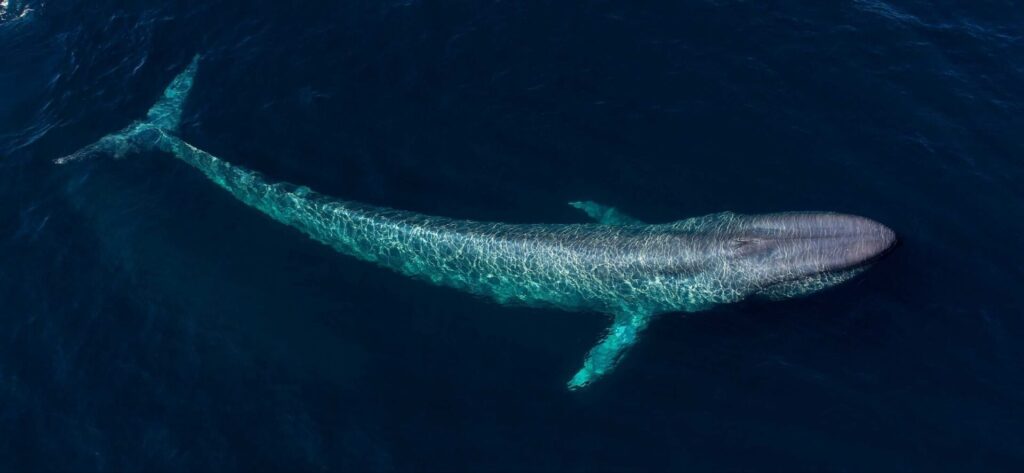
The soupfin shark and blue whale, both Critically Endangered. Photos by Erling Svensen (left) and The Marine Mammal Center (right).
Seabirds are the most threatened group of birds globally and in South Africa. All seven seabird species endemic to the southern Benguela are threatened:
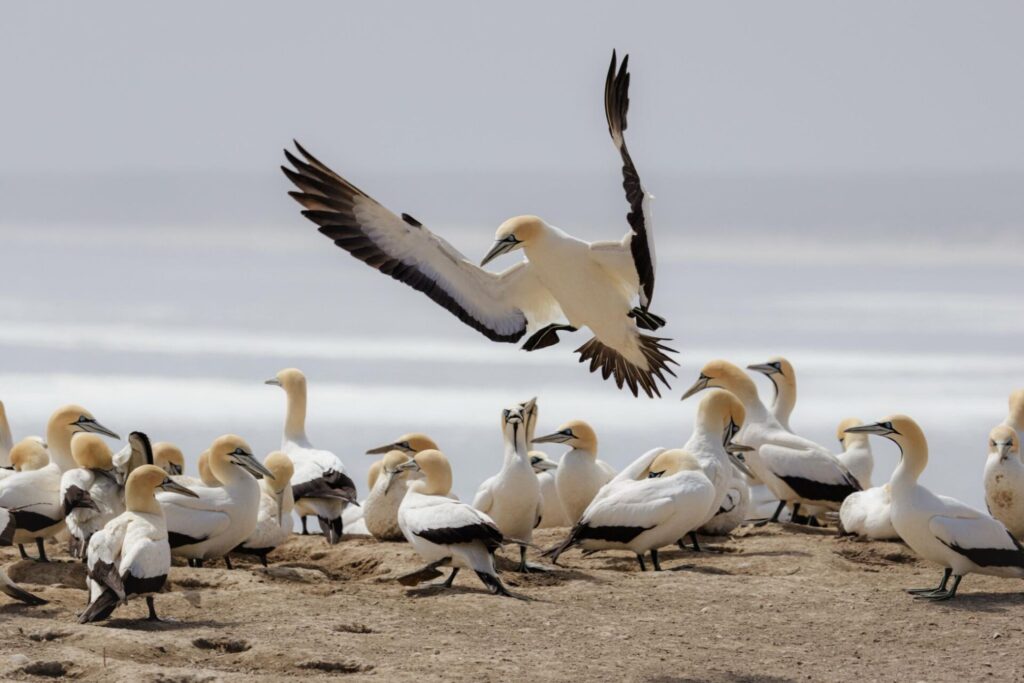
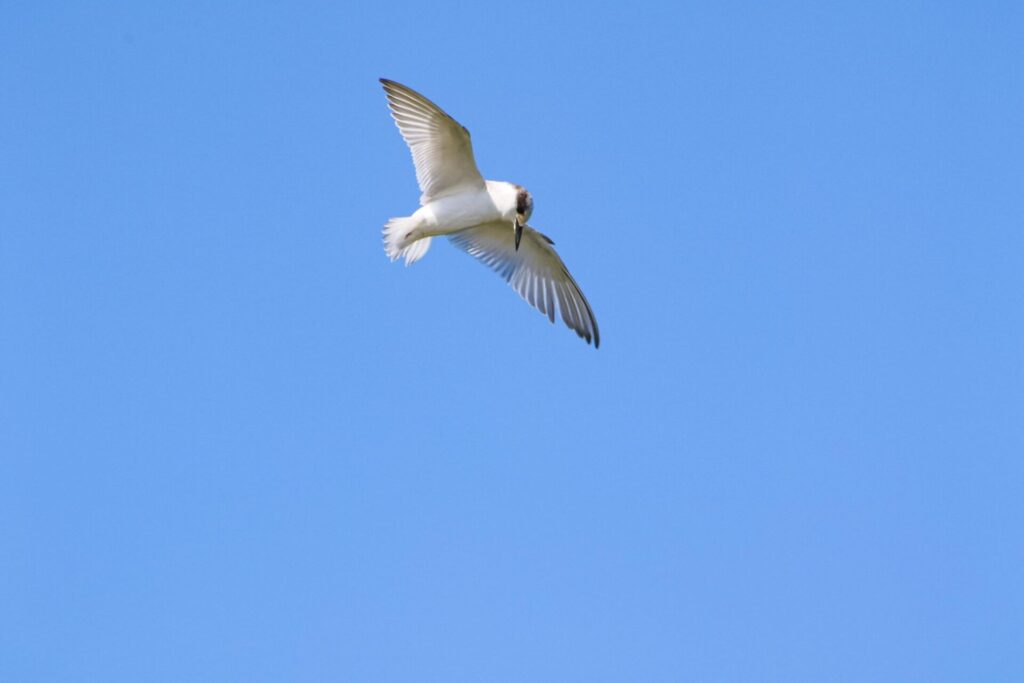
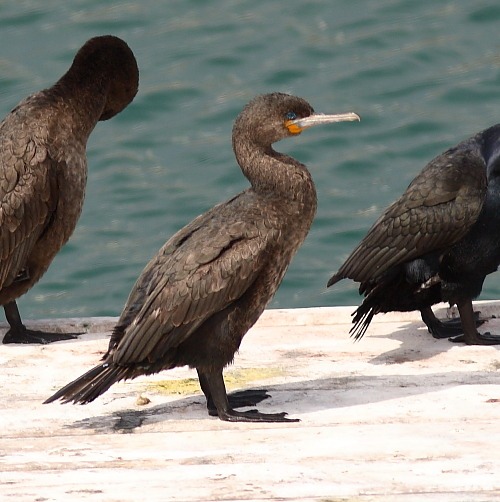
The Cape gannet, Damara tern, and Cape cormorant listed as Endangered. Photos by Jacque Smit (top left), Michael Buckham (top right).
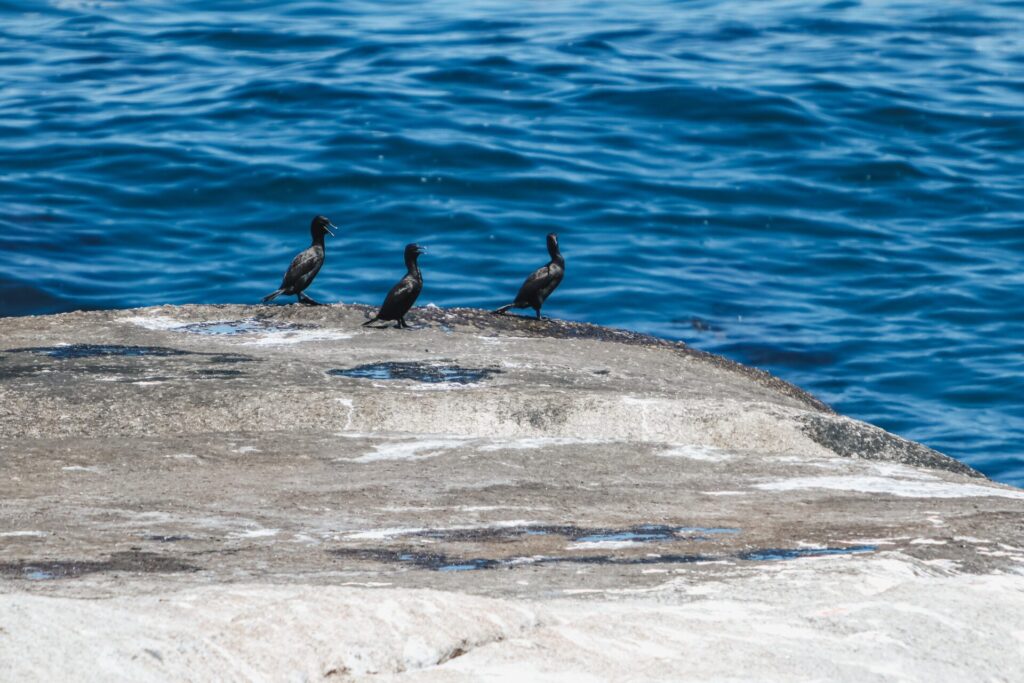
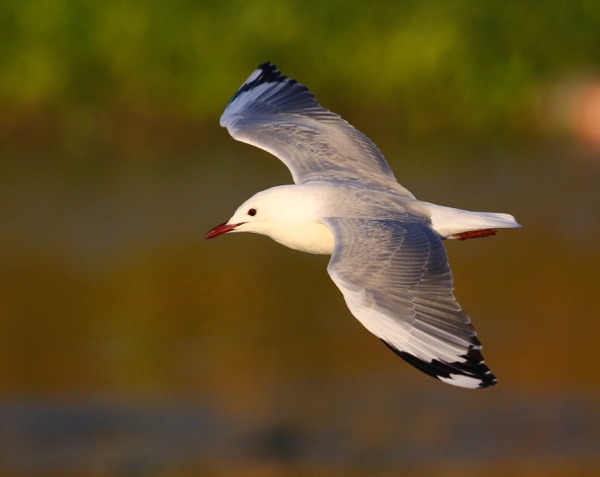
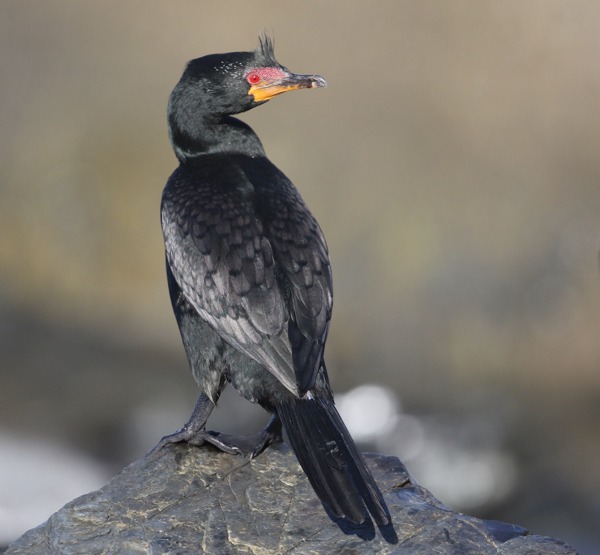
The Hartlaub’s gull and crowned cormorant are listed as Vulnerable species. Photos by Michael Buckham.

Sign up to Ripl: www.ripl.co.za