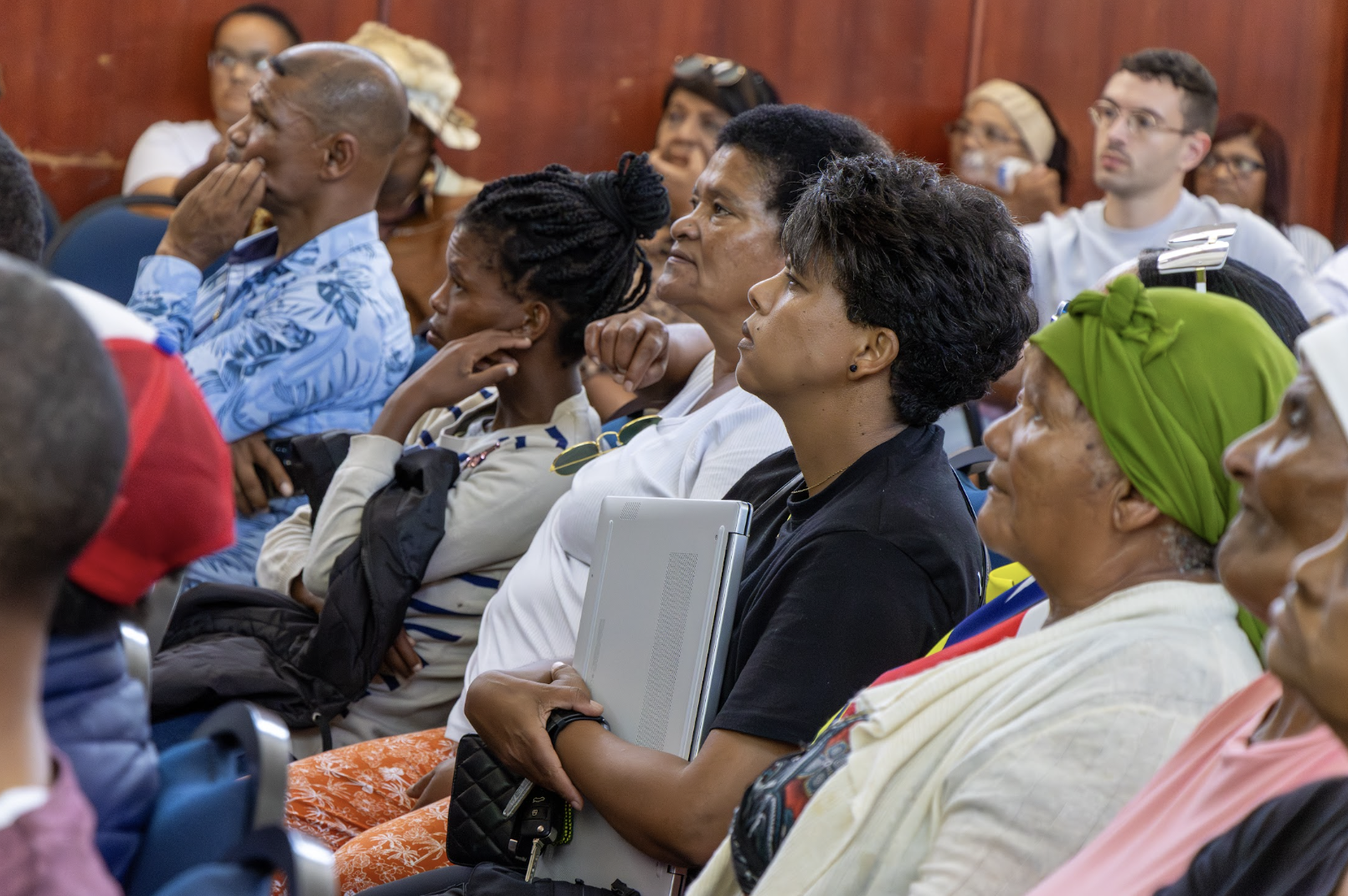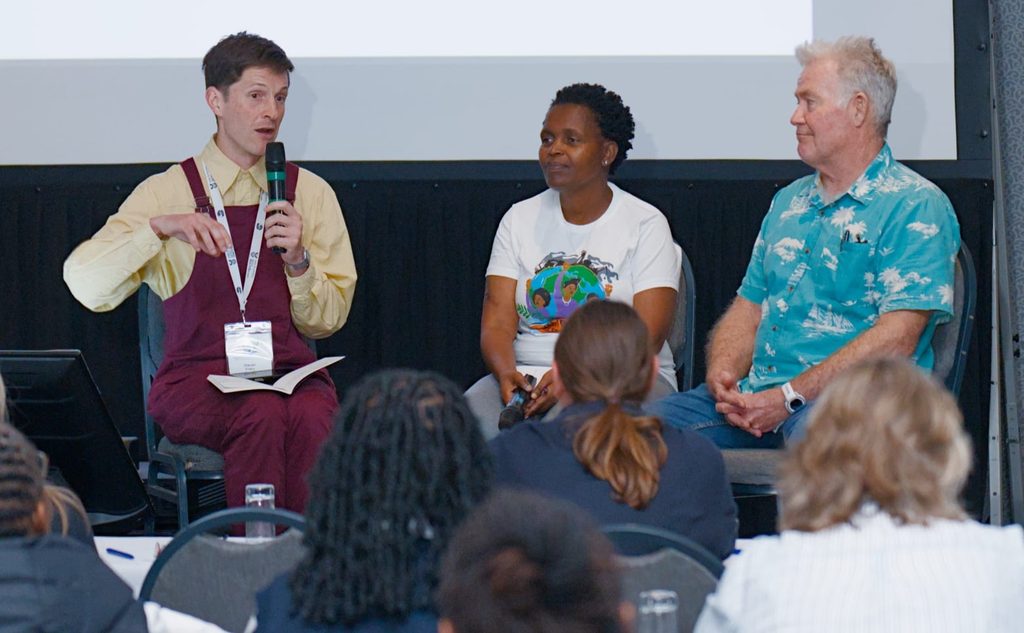
The opening session of the National Wetlands Indaba, hosted by the Western Cape Wetland Forum with support from the South African Wetland Society (SAWS), set a thematic tone for the conference around grassroots environmental justice and community stewardship. Organisers of the conference invited senior journalist Steve Pike from PTWC and Nonhle Mbuthuma, founder of the ACC, to speak about the underlying motivation behind their work beyond scientific data and governmental policy.
The National Wetlands Indaba is an annual cross-disciplinary platform that brings together scientists, researchers, and government representatives to strengthen the management, protection and sustainable use of South Africa’s wetlands. Convener of the panel was Steven Ellery, a scientist with SAWS, who wanted to explore how a spiritual connection with nature, and the sense of place it evoked, shaped the will to defend wetlands and other valuable ecosystems against ill-considered development.
Ellery opened the discussion by asking Mbuthuma about the connection the Pondo people had to their ancestral land at Xolobeni on the Wild Coast, and how this drove their resistance to Shell’s offshore seismic survey for oil and gas, and multi-decade fight against attempts by Transworld Energy and Minerals, a subsidiary of Australia’s Mineral Commodities Ltd (MRC) to mine for titanium.
Mbuthuma spoke of the spiritual significance that the area of Amadiba held for her people, recalling how her father taught her about edible herbs and plants, and those with vital medicinal properties. This ancestral repository of knowledge had been disregarded by formal development frameworks, which highlighted a severe disconnect in environmental governance. She pointed out that bureaucrats in inland cities made sweeping decisions with no understanding of how indigenous people relied on these ecosystems.
Ellery asked Pike how the immersive experience of surfing in the marine ecosystem was a catalyst for the desire to safeguard it. Pike answered that a deeper relationship with nature was shaped by many types of interaction, but surfing was a powerful example of the philosophy espoused by oceanographer Jacques Cousteau who spoke of how people protect what they love.
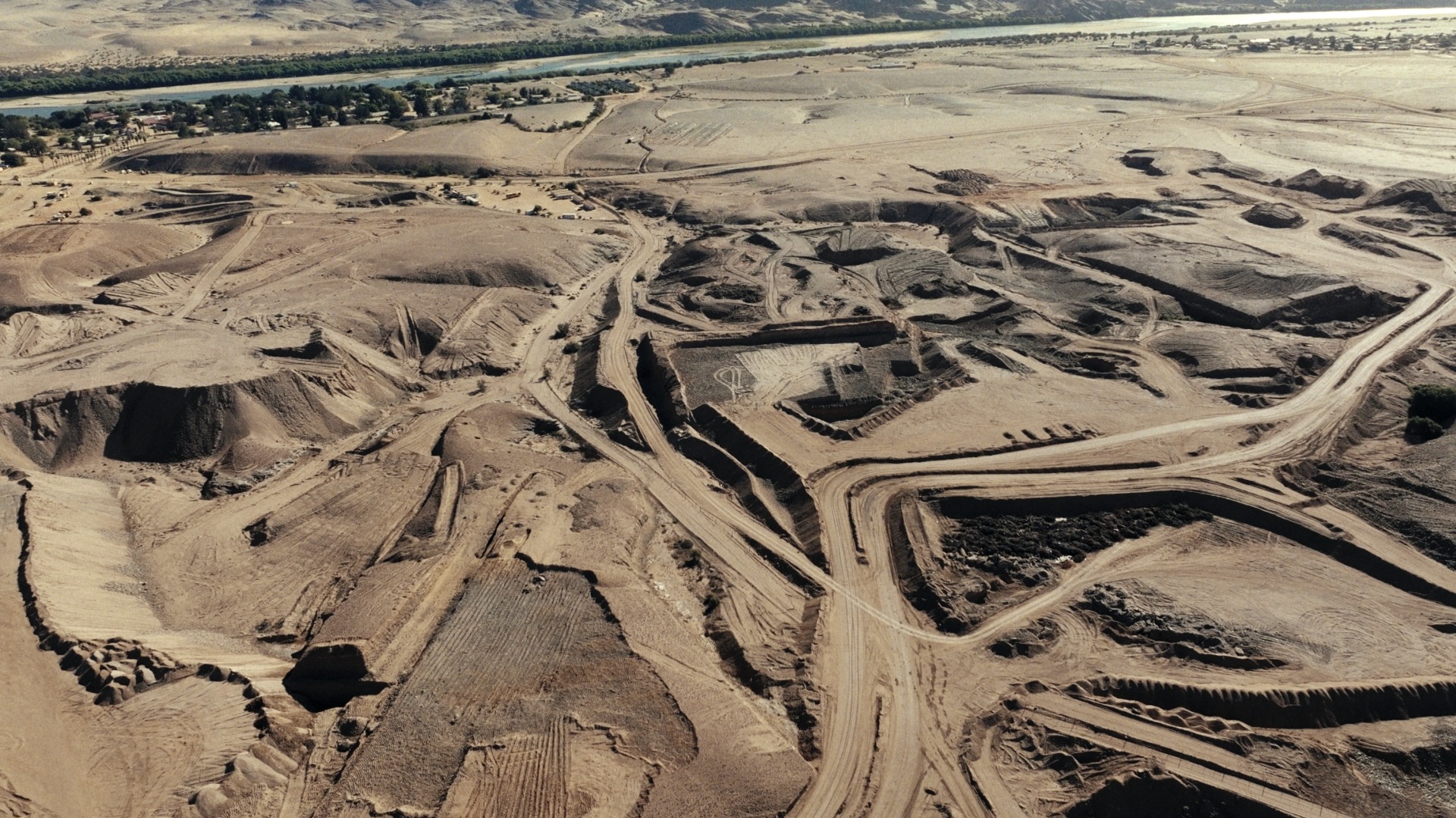
Pike mentioned that PTWC comprised a team of lawyers, media specialists and scientists fighting against the escalating threats of heavy mineral sand mining and offshore prospecting on the West Coast. He emphasized the critical need to shield the Olifants River Estuary and nearby systems like the Verlorenvlei Estuary, which act as invaluable biodiversity nodes that face fragmentation by the cumulative impact of mining and other development.
Discussion also centred on parallels between the work of PTWC and ACC, particularly around public participation. Pike mentioned the importance to PTWC of the Constitutional Court ruling in favour of the Xolobeni community in August 2026, which upheld an appeal by local communities and environmental groups to set aside the offshore oil and gas exploration right held by Shell and Impact Africa.
The Court found that the right granted in 2014 by the then Department of Mineral Resources (DMR), now the Department of Mineral and Petroleum Resources (DMPR) was unlawful due to a lack of meaningful engagement with the affected coastal communities – something that PTWC lawyers now use as part of their pushback against poorly conceived mining applications on the West Coast.
Another important link was Australian-owned Mineral Commodities Ltd, and its South African subsidiary, Transworld Energy and Minerals, who spent years trying to mine the titanium-rich coast at Xolobeni, which the community fought until a landmark ruling in 2018 by the Pretoria High Court that established the state could not grant mining rights without the prior consent of the affected community.
After the Wild Coast, Mineral Commodities Ltd moved to the West Coast through its shareholding in Mineral Sands Resources (MSR), which owns the Tormin mine. MSR entered business rescue in 2024 and was placed in provisional liquidation in February 2025, as PTWC exposed various issues that led to the operational collapse of the mine.
“The parallel between PTWC and ACC shows how ecologically sensitive ecosystems in both regions face increasing pressure from extractive projects and industrial development, while local communities in both regions are being systematically excluded from decision-making because of flawed public participation oversight,” Pike said.
Make your voice heard
Sign up to the Ripl public participation platform here: www.ripl.co.za