In 2014, Parliament introduced the OES to align mining authorisations and activities ancillary to mining under the MPRDA with environmental authorisation processes under NEMA to streamline what was a fragmented and onerous process of environmental and mining authorisation into a single, fast-track decision-making process.
However, the reform did more than streamline paperwork. It shifted responsibility for environmental approvals in the mining sector to the same department tasked with promoting mining, the Department of Mineral and Petroleum Resources (DMPR), a change that has drawn sustained criticism from scholars and civil society.
Before the OES, an applicant had to make an application to the DMPR for authorisation to mine and a separate application to environmental authorities, at either a national or provincial level for certain environmental authorisations. However, under the OES, this was consolidated and responsibility was given to the DMPR to grant authorisations for mining
Environmental Authorisations (EAs) issued by the DMPR must conform to the environmental framework of NEMA, as well as its Environmental Impact Assessment (EIA) Regulations, and include a Public Participation Process (PPP). Depending on the triggered listed activities, applicants must conduct either a Basic Assessment Report (BAR) or a Scoping Report (SR) and Environmental Impact Assessment Report (EIAR).
These processes are supposed to evaluate environmental, social and economic impacts, consider alternatives, and identify mitigation measures. An Environmental Management Programme (EMPr) must also be approved by the DMPR. The EMPr functions as the legally binding blueprint for environmental management during the life of the project, including obligations to rehabilitate and monitor.
Financial provisioning for rehabilitation is regulated under the Financial Provisioning Regulations, GNR 1147 of 20 November 2015 under NEMA, which requires applicants to determine, secure and maintain adequate financial provision for rehabilitation, closure and post-closure management. Where water resources are affected, a Water Use Licence (WUL) is required under the National Water Act 36 of 1998.
Mining in coastal areas must also comply with the Integrated Coastal Management Act 24 of 2008 (ICMA), which recognises coastal public property as held in trust by the State and requires its protection and enshrines equitable access. In principle, this integrated framework is designed to ensure that mining proceeds in a constitutionally compliant, environmentally responsible and socially equitable manner.
Shortcomings of the OES
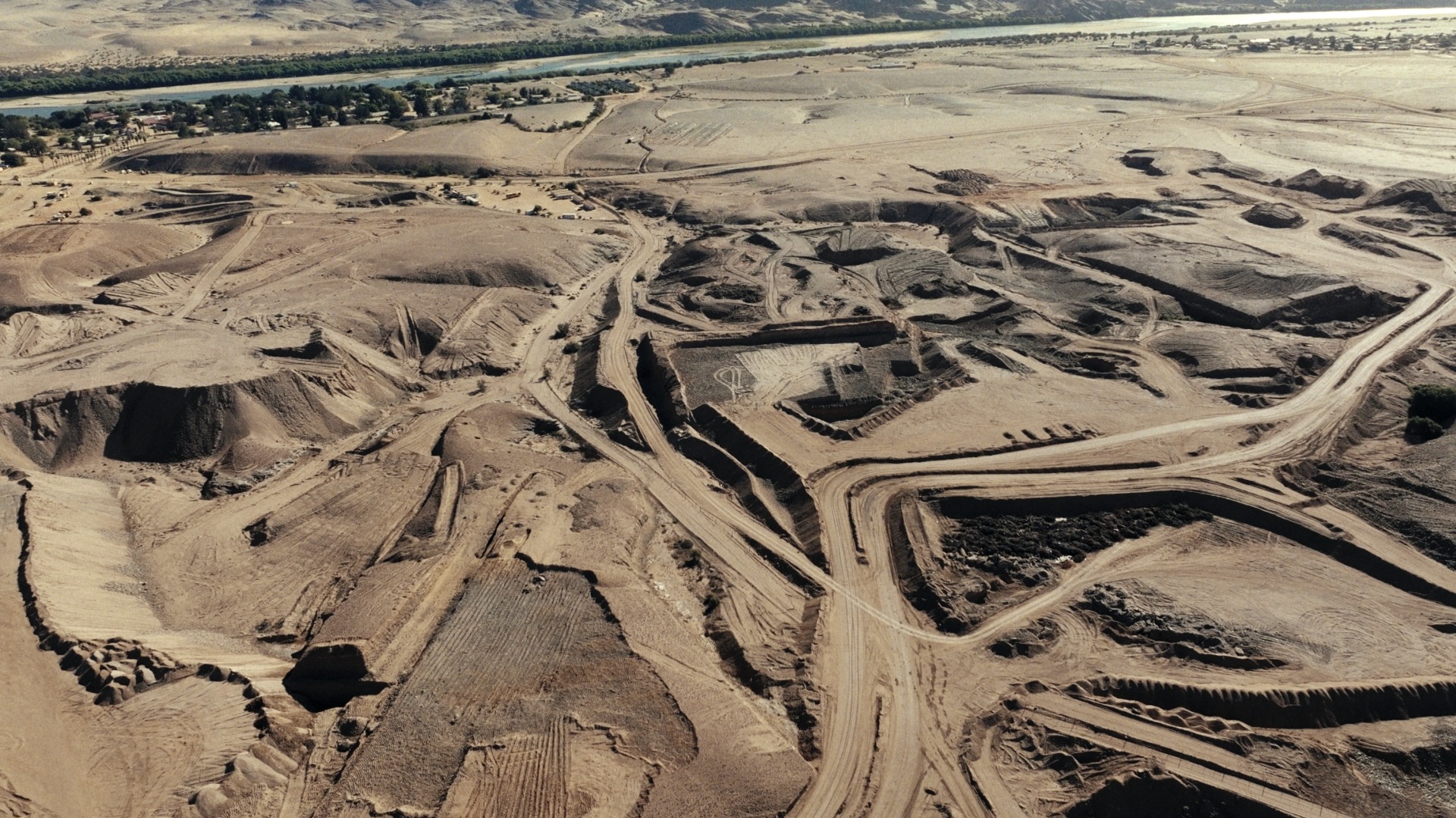
The OES was introduced more than a decade ago in a bid to harmonise environmental management and strengthen enforcement, but there is no evidence to suggest that it has. Environmental degradation and destruction on the West Coast and elsewhere in South Africa continues. If anything, it has become worse. This includes increasing loss of critical biodiversity, declining access to coastal resources and areas, mounting pressure on already scarce water systems, and growing social disintegration.
Opposition from civil society groups, including indigenous and local communities, and an increasing number of appeals and legal challenges against EAs indicate that the system is not fulfilling its objectives to ensure sustainable use and management of the West Coast environment. Weakness in the current system is structural as well as operational and is being exploited to the detriment of socioeconomic conditions and the environment.
A central concern is the role of the DMPR to promote mineral resource development while at the same time regulate its environmental impact. The same authority that grants prospecting and mining rights also issues environmental authorisations, approves EMPrs, and is supposed to oversee rehabilitation and enforce compliance. This dual role creates an inherent tension between the ostensible economic driver of promoting mining, against that of social and environmental protection. This increases the risk that short-term development imperatives can and do override long-term socioeconomic and ecological safeguards.
Although NEMA requires comprehensive impact assessment, decision-making frequently remains reactive and site-specific. Applications are assessed on a project-by-project basis without sufficient consideration of regional context or cumulative impacts, which accumulate over time without a more holistic approach through a Strategic Environmental Assessment (SEA).
A current example is the dual offshore mining application by Trans Hex Operations (Pty) Ltd and prospecting right application by Trans Hex Heavy Minerals Mining (Pty) Ltd. The cumulative impact discussions in their EIAs remain largely generic and they conclude “low significance” based partly on assumptions such as relatively low incidence/frequency and simultaneous mining/exploration activity being “unlikely”.
A proper cumulative impact assessment requires moving beyond the direct effects of an individual application toward a broader evaluation of the combined long-term environmental, social and economic effects in the region as a whole.
The DMPR: Administrative and Procedural Failures
The administrative functioning of the mining application system is frequently deficient. Historical documentation is hard to obtain, and is often incomplete and lacks proper dates, signatures or author credentials. Environmental applications, reports and rehabilitation plans are for the most part prepared by qualified consultants. However, in some cases, their expertise and qualifications are unclear or insufficient.
Even the most qualified have been known to downplay data that indicates significant environmental impact. Required audits of EMPrs and Social and Labour Plans are not always submitted, or rigorously reviewed. There are persistent failures in oversight and enforcement that perpetuates an atmosphere of impunity.
Rehabilitation budgets are in some cases based on underestimated disturbance footprints and not properly budgeted for. Actual closure certificates are almost never issued. Mining rights are transferred, or renewed, without adequate verification of compliance with the obligations actually imposed on the prior holder of those rights.
In many cases, these deficiencies lead to appeals against EAs granted by the DMPR, which are submitted to the Department of Forestry, Fisheries and the Environment (DFFE). The DFFE’s Minister may confirm, vary or set aside the DMPR’s decision.
These procedural weaknesses undermine decisions, accountability and compromise the integrity of the entire authorisation process. Moreover, although financial provision for rehabilitation is legally required, oversight is often inadequate. Closure liabilities may be underestimated, and financial guarantees may prove insufficient when companies enter business rescue or liquidation, as several have.
Where enforcement is weak, environmental liabilities accumulate over time, leaving degraded landscapes and insufficiently funded rehabilitation burdens. Monitoring capacity within the DMPR is limited, and enforcement inconsistent or absent entirely. Where non-compliance occurs, corrective action may be delayed or absent, which allows environmental harm to persist.
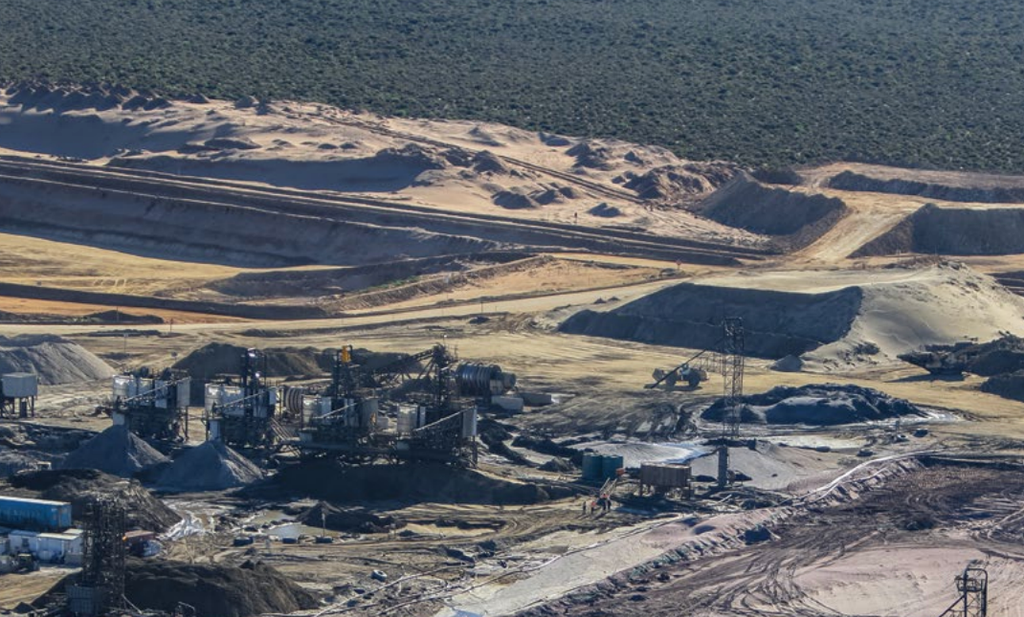
Rehabilitation is often grossly inadequate, as evidenced by numerous abandoned mines and unrestored areas, some decades old. Transparency is also constrained. Communities and civil society organisations frequently encounter obstacles in accessing documentation and decisions, even where such information should be publicly available, forcing them to invoke the Promotion of Access to Information Act (PAIA), which is often drawn out and sometimes unsuccessful.
Although public participation is required under NEMA and the EIA Regulations, meaningful engagement through the PPP is often compromised by limited notice, inaccessible documentation, limited public meetings, and poorly facilitated processes, casting doubt on decisions and eroding public trust.
The OES was introduced to streamline decision-making and align mining and environmental governance but fails in practice to uphold the principles of ecological integrity, social equity, and sustainable coastal development, which undermines the intent of the legislation, weakens the effectiveness of environmental governance and ultimately leaves the West Coast poorer for it.
The result is not a lack of law, but a failure of design, implementation and oversight. A framework that could be constitutionally robust on paper has proven incapable of preventing environmental degradation and social harm in practice and must be improved or replaced.
The Tipping Point
The above is an adapted excerpt from the 2026 PTWC Special Report: ‘The Tipping Point’. Filled with history, stats and other information, the report unpacks the damage from decades of heavy mineral and diamond mining, partly as a result of weak regulatory oversight. But all is not lost. We make the case for better enforcement of legislation, a moratorium on new mining applications while an assessment of cumulative impacts is conducted, with more investment in alternative economic solutions, such as nature-based industries, including ecotourism.
Read the full Special Report here:
Make your voice heard
Sign up to the Ripl public participation platform here: www.ripl.co.za