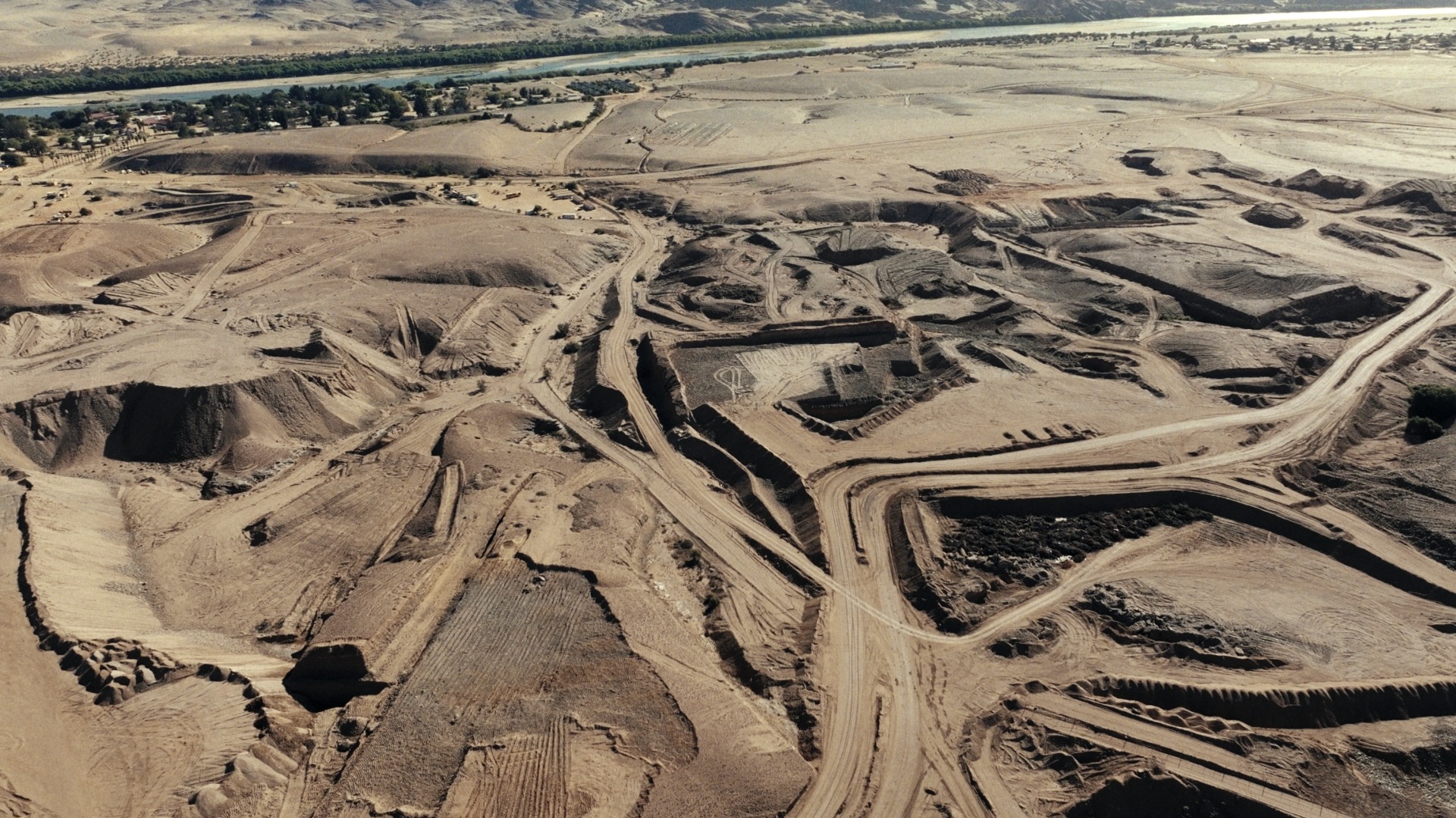
PTWC recently teamed up with traditional !Ama leaders, a film crew, activists and academics, who embarked on a trip to the Northern Cape, where we witnessed rampant mining destroying a vast area of coast, as well as community-owned farms on the Orange River, and even parts of the Richtersveld National Park.
We were joined by the national leader of !Ama people, Martinus Hendricks, and his colleague, !Ama elder and veteran mining activist Andries Joseph. The expedition also included a crew from Eyeforce Films, activist Bongani Jonas from Macua (Mining Affected Communities United by Mining), consultant Arthur Cook (sent by the former Director General of Department of Public Enterprises Kgathatso Tlhakudi), and Dr Siphiwe Tsawu, a legal researcher sent by the University of Johannesburg.
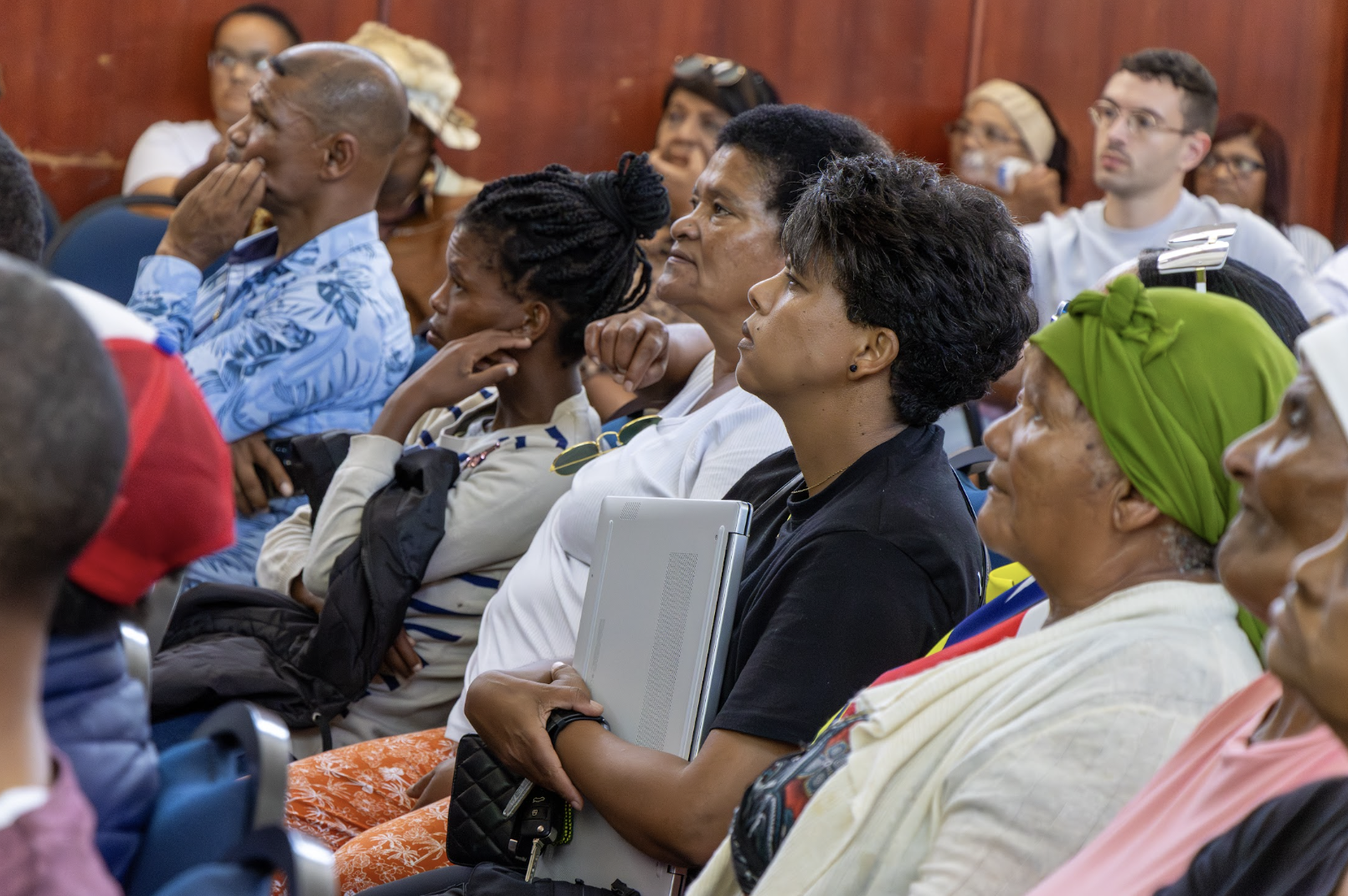
In the icy winter evenings, we attended community meetings at mostly empty halls in disrepair in Sandrift and Alexander Bay where the !Ama leaders reported back to the community, and introduced the PTWC team to the audience. They reported back on efforts to find restitution after alleged state capture of their CPA (Community Property Association) that has allegedly robbed them of a share in diamond mining on their own land, without permission.
In the day, we rattled over dusty corrugated roads through a moonscape of utter desolation. We could not believe the devastation we found, from environmental degradation to social collapse. Unscrupulous miners have stifled alternative economic activity that holds hope for sustainability and long-term growth, such as seaweed farming, various types of tourism, farming, and marine industries identified in the Municipal Integrated Development Plans for the area.
We were so horrified to see the extent of the industrial scale damage and lack of rehabilitation, that we sent an urgent letter to the new Minister of Forestry, Fisheries and the Environment, Dion George, to raise the alarm, with emphasis on the catastrophe developing in the Northern Cape, but also for the entire coast from Cape Columbine to the Orange River.
“We urge you, as DFFE Minister, to ensure your department enforces its mandate to ensure the sustainable use and management of this sensitive region and its resources. We call your urgent attention to the plethora of prospecting and mining applications approved in these sensitive areas on an ad-hoc basis without adequate public participation, consideration of cumulative impacts, and legal oversight of transgressions and rehabilitation, once operational,” we wrote.
PTWC noted how the COVID Pandemic lockdown in 2020 and the remoteness of the area had opened the floodgates to a mining deluge that pushed aside other land uses and economic drivers, and that we had seen first-hand how companies had not adhered to Environmental Management Plans and rehabilitation requirements.
We informed the minister that in just the last two years, vast areas of farmland owned by the community along the Orange River “are being mined with no oversight, and we suspect with no permission. Nama leaders were horrified to report large-scale mining even taking place in the Richtersveld National Park itself! This cannot stand.”
“We urge you – as the entity that authorises prospecting and mining applications – to halt applications that are not based on accurate scientific evidence and extensive public participation.
“The full and informed consent of indigenous peoples and the involvement of local communities is not only required by law, but is critically important given their cultural and spiritual connection to this environment, and their reliance on it for a living.”
“If you visit this area you will see first-hand the socio-economic and environmental destruction that is taking place,” we added.
PTWC is happy to report that we received an almost immediate response from DFFE, who have promised to respond. We will soon publish a more detailed feature on the trip to relate our profound experiences amongst gentle people forsaken by their government, but are now hopeful after a bold plan of action that has begun to crystallise between stakeholders and the community.
We urge you to consider a donation to PTWC to help us hold mining companies accountable and cover the cost of our work to protect West Coast communities and their natural heritage.
Donate to PTWC
Please support the vital work of Protect the West Coast. You can buy us a coffee (or round of coffees) every month, make a one-off or recurring donation or purchase some of our unique, limited edition merchandise.
Your contribution will go a long way in funding vital projects like our aerial photographic survey and help our efforts to preserve the natural beauty and ecological balance of this cherished region.