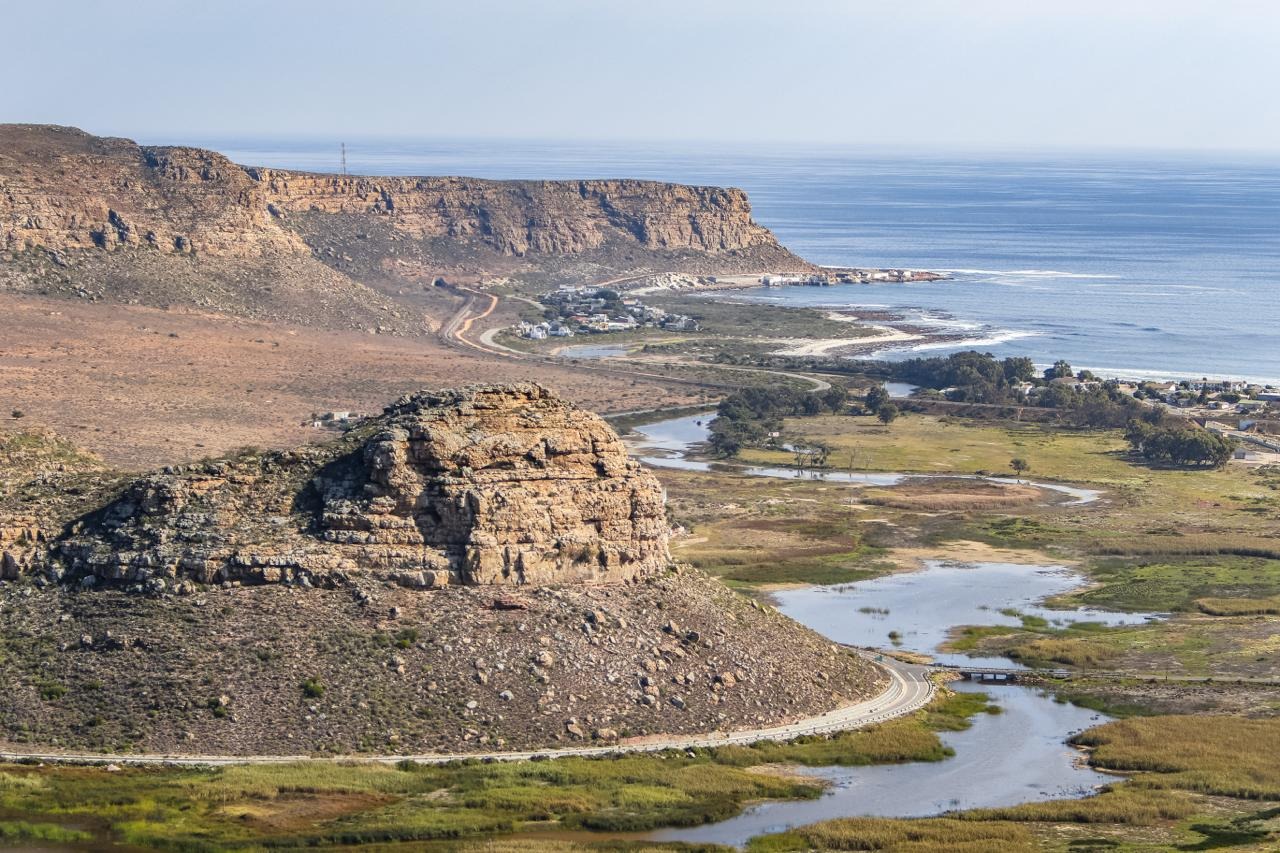
Yesterday, a group of activists from the environmental group Protect The West Coast (PTWC) conducted a peaceful protest to challenge the mining of beaches at the Tormin mine near Brand se Baai on the Cape West Coast. They also handed over a ‘Memorandum of Grievances’ to a representative of the mining company operating the Tormin mine, Australian-owned Mineral Sands Resources (MSR).
About a dozen members of the Cape Town-based not-for-profit company (NPC) took part, while others participated in a 102-kilometer trail run through the affected coastal area. The aim of these events was to draw attention to both the environmental and public access concerns relating to these mineral mines, in particular the Tormin mine.

Apart from the Tormin mine and its controversial ‘10 Beach Extension’ – which was the focus of PTWC’s protest – there have been several further prospecting applications, both onshore and offshore, across this highly biodiverse and otherwise untouched area recently, most of them without adequate public participation or knowledge. There are several negative impacts that mining in this environmentally fragile region can have on coastal ecosystems. These mining activities also generate air pollution from the large numbers of trucks on gravel roads often without protective covering. Other concerns include the impact on groundwater resources, which affects local farmers, as well as issues around public access to the affected coastal areas, many of which are now inaccessible due to restrictions imposed by the miners.

All images – James Louw PTWC’s Memorandum, which the organisation also intends to deliver to MSR’s office in Cape Town, as well as government representatives, including Minister of Environmental Affairs, Barbara Creecy, covered several topics. These included a pending judicial review application before the Western Cape High Court, which seeks to set aside Minister Creecy’s refusal to uphold appeals lodged against the Integrated Environmental Authorisation granted by the Department of Mineral Resources (DMR) to MSR to conduct mining activities in respect of the expanded mining area.
“Given the legal challenges raised to the authorisation granted, which may result in the authorisation being set aside, to have commenced mining activities is premature and potentially places the environment and the surrounding communities at risk,” states the Memorandum.
The PTWC Memorandum also lists several activities they allege are taking place at the site without authorisation and includes a list of demands aimed at MSR, requesting that, among other requirements, all mining activities in the extended mining area are immediately halted until the legal challenges are finalised; and that Section 24G applications are immediately submitted for any and all activities that have commenced without authorisation. PTWC also requested the immediate removal of the signs restricting access for all areas where there can be no reasonable justification for any purported restricted access being imposed.
PTWC managing director and protest leader Mike Schlebach said, “Our first protest went well and we got our point across. PTWC is committed to ensuring that the West Coast is protected and that any mining activities taking place are done in a manner that accords with the environmental right enshrined in our Constitution, the applicable environmental statutes, and the relevant authorisations granted.”
View the Memorandum HERE
END.