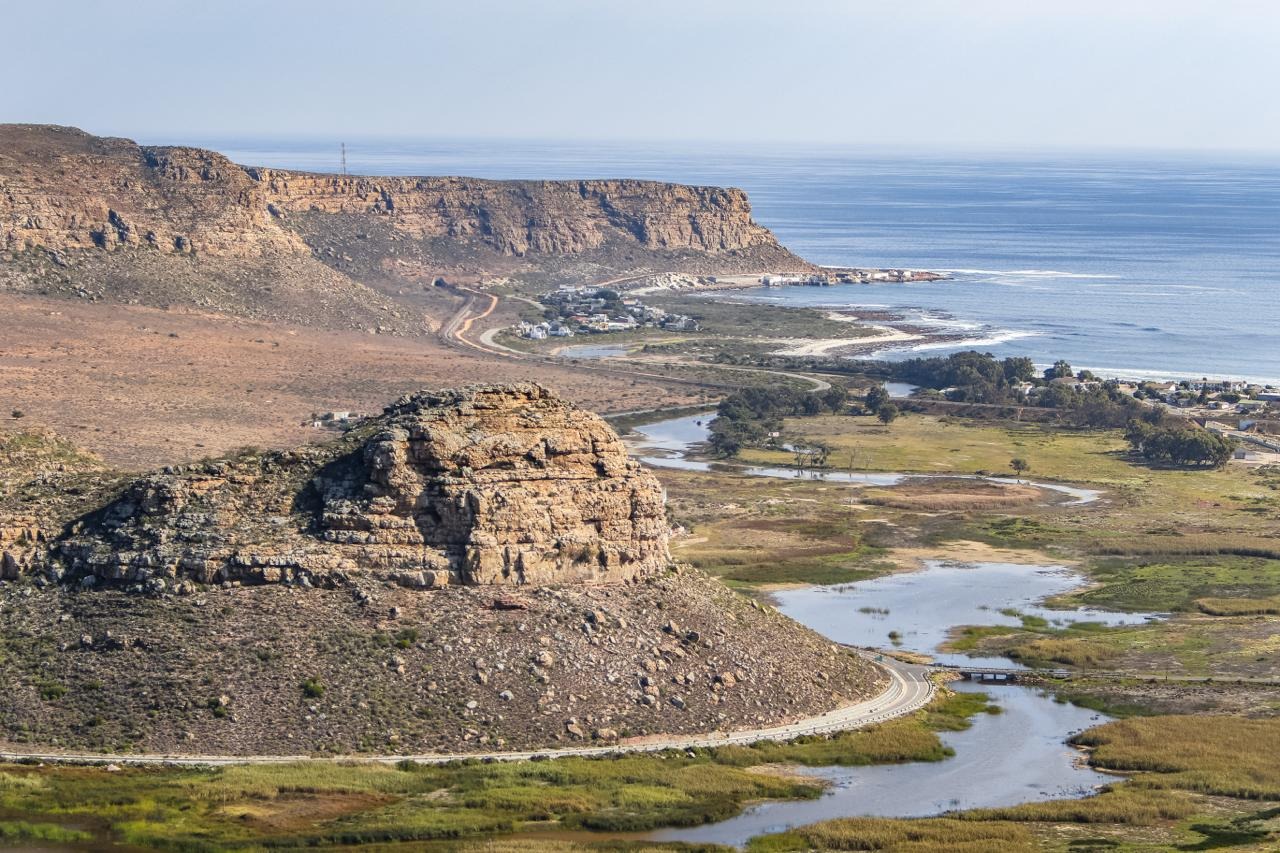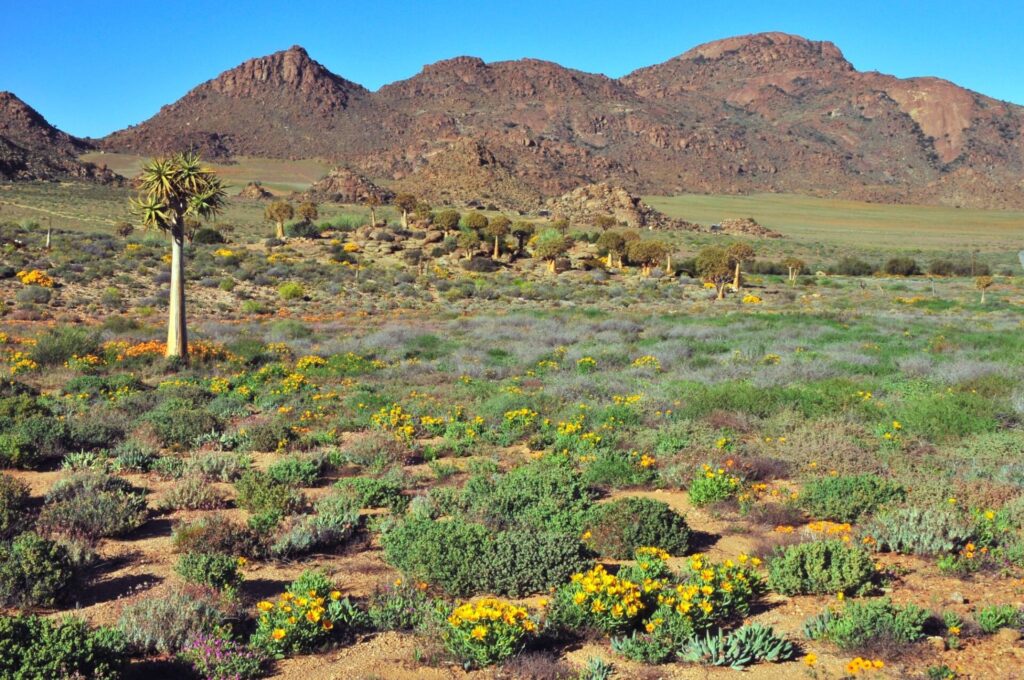
Twiga Global Ore’s application, which was lodged in August 2024, falls within the internationally recognised and highly sensitive Succulent Karoo Biome, the only arid-zone biodiversity hotspot in the world, which is filled with sensitive endemic fauna and flora*.
The Environmental Authorisation (EA) was granted by the Department of Mineral and Petroleum Resources (DMPR) in May 2025, essentially a green light that the company could proceed with wide-ranging prospecting over five years, including drilling holes up to 110 metres deep.
PTWC and six other appellants, including PTWC geological expert Allen Lyons, as well as individuals and community groups representing farmers and residents – such as the Kliprand Agricultural Association and the Knersvlakte Conservancy – appealed the authorisation. The appeals cited weak points that were, in PTWC’s view, grounds for upholding the appeals.
These points included:
- Poor compliance with mining regulations on rehabilitation;
- Weak geological justification for the drilling programme;
- Inadequate information on proposed electromagnetic drone surveys;
- Missing details of mitigation measures for gas and dust emissions, and soil erosion monitoring;
- No proper mitigation measures for the cumulative and general impacts of prospecting;
- No Radioactivity Impact Assessment;
- A weak assessment of the impacts on terrestrial biodiversity, critical biodiversity, ecological support, and National Freshwater Ecosystem Priority Areas.
In the PTWC appeal submission, PTWC MD Mike Schlebach said that the EA was not compliant with requirements set out in Government Notice Regulation 1147 of 2015 (GNR 1147), a key piece of environmental legislation that demands an annual rehabilitation plan, a final rehabilitation plan, decommissioning and mine closure plan as well as sufficient financial provisioning for this planning.
“These failures both collectively, and individually, are fatal to this entire application,” he said.
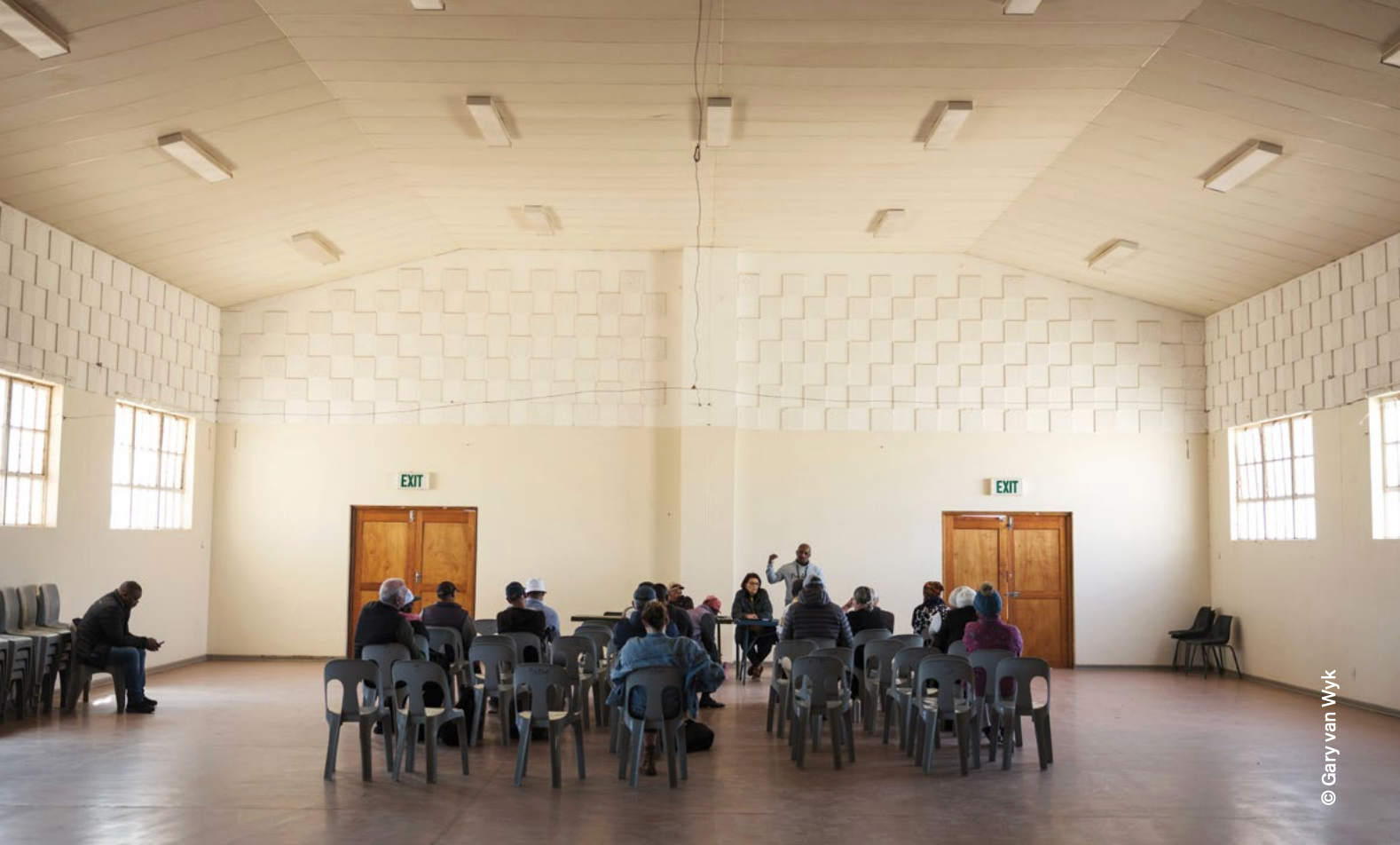
Patrick Forbes, head of Legal at PTWC, added that it was “particularly troublesome that the Department of Mineral and Petroleum Resources (DMPR) would have been well aware of the strong opposition from the local community to this application”.
“They would have been made aware of the glaring flaws with the application during the Public Participation Process (PPP), to which PTWC, the above appellants and others had registered as Interested and Affected Parties (I&APs) and voiced their concerns,” he said.
However, the DMPR went ahead and issued the EA regardless. This seriously calls into question the ability and/or motivation of the DMPR – South African mining’s ‘competent authority’, which has a clear conflict of interest in its mandate to promote mining when it simultaneously holds the responsibility of protecting the environment.
These weak applications are often appealed once an EA is granted, and that creates a ripple effect through the whole system. The DFFE is tasked with making final decisions on hundreds of appeals, cases that should have been properly assessed and decided at the first instance by the DMPR. This causes delays and places a burden on everyone involved, the mining companies waiting on certainty, the activist organisations fighting the appeals, and the government departments left to pick up the slack.
Fortunately, in this case, the applicant, Twiga Global Ore (a company registered in Emalahleni/Witbank, Gauteng, with no website or track record in mining that PTWC could identify), seems to have realised that the appeals were too strong and withdrew their application. As far as we know, this type of withdrawal is extremely rare.
It must be noted that Twiga Global Ore has not directly confirmed** that the appeals influenced their decision to withdraw. It is, however, the logical conclusion that the strong grounds for appeal in the submissions were the main reason.
This is a noteworthy victory for PTWC, the other appellants and any organisation or individual with a vested interest in protecting the environment and communities of the West Coast from poorly regulated mining operations.
This is all proof that our vigilance in scrutinising every application we receive and upload to Ripl – and our collective activism efforts – are having a meaningful impact.
Sign up to Ripl to add your voice.

About the Karoo Biome
The 116 000 km2 [Karoo] biome is home to 6 356 plant species, 40% of which are endemic and 936 (17%) of which are listed in the Red Data Book. In addition to its floral diversity, there are 27 amphibian species, 29% of which are endemic; 121 reptile species, 20% of which are endemic; 68 mammal species, 9% of which are endemic; and 431 bird species.” – Source: Unesco.
** At the time of writing PTWC has reached out to Twiga Global Ore for comment but they have not yet responded to our questions.