While much of the content generated by Protect the West Coast (PTWC) brings to bear the devastating effects of beach mining on the West Coast, the feel-good story about the appearance of humpback whale superpods shows that damaged ecosystems can restore themselves – sometimes in spectacular ways.
Cape Town wildlife photographer Chris Fallows was the first person to record breaching white sharks in False Bay. His photo in 1996 exploded across world media. Since then, he has amassed the largest database of white shark predations in False Bay.
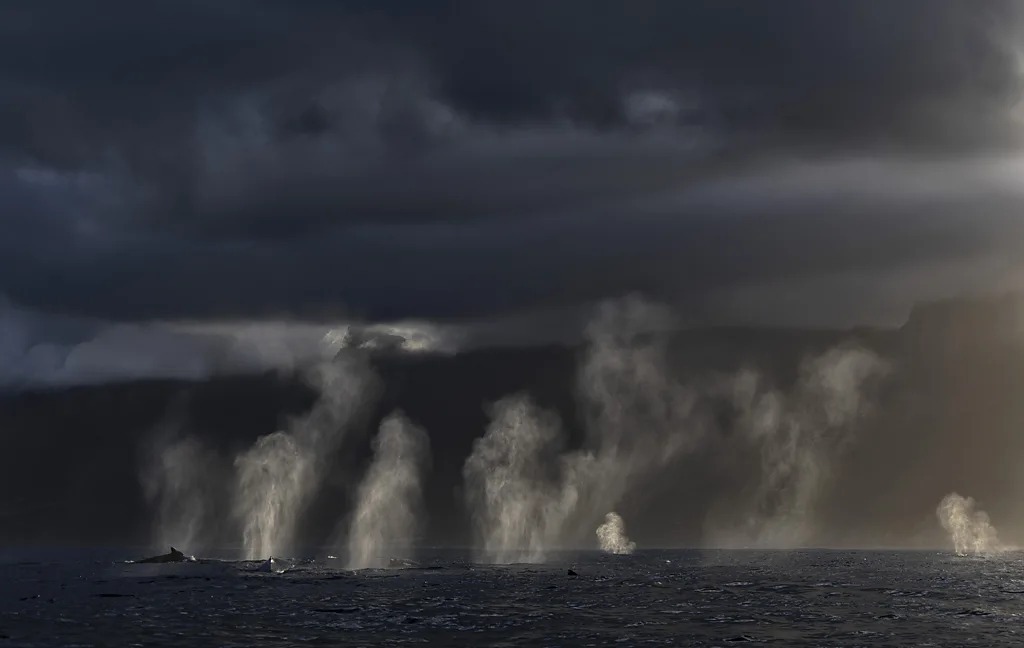
But over the ensuing years, a much bigger creature was quietly making a comeback. On the day before New Year’s Eve last year, he witnessed a world record superpod of humpbacks off Dassen Island on the West Coast, which he regards as one of the most memorable and special moments of his life.
“We encountered 304 whales that we could count,” said Fallows. “But there must have been at least 450 individuals. To see 50 whales in one go is mindblowing enough – one of the most extraordinary sensoratorial experiences you can have. But to see that many is just overwhelming: a sensory overload of epic proportions.”
In a lifetime of ocean work, he has seen tragedy, such as the decline of the great white sharks, but this was “an out of this world, inspirational feeling. It makes you feel wonderful inside”.
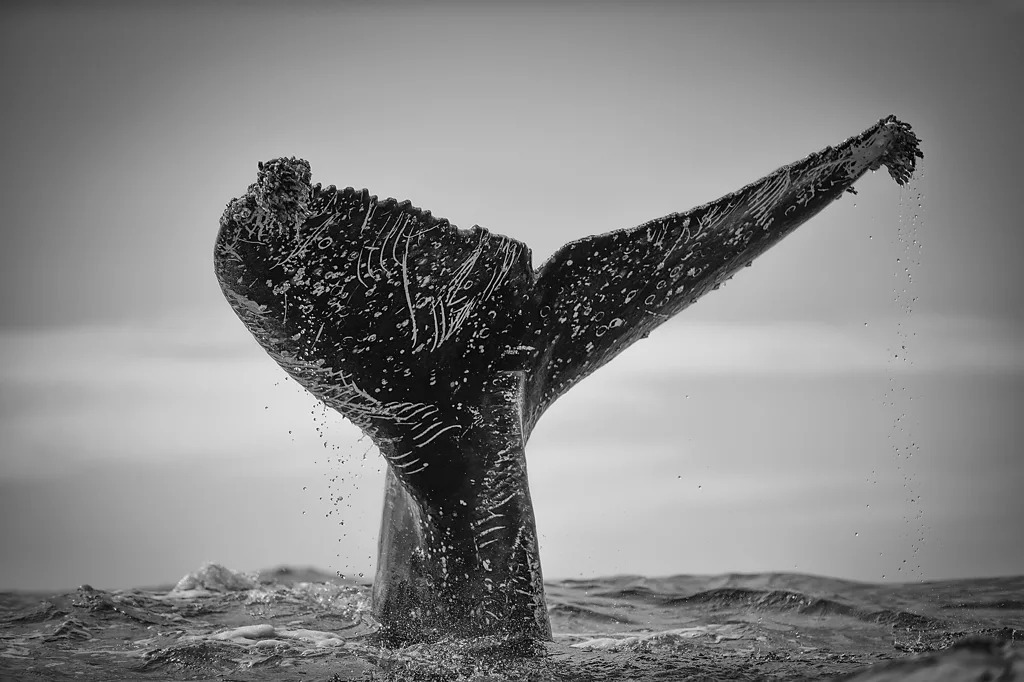
Fallows added that this huge manifestation of ocean leviathans did not happen overnight. While it was a huge victory for conservation – a genuine feel-good story – it was testament to outspoken, brave individuals decades ago who stood firm on the need to stop commercial whaling.
“Credit must also go to governments who saw the virtue of protecting whales that are not commodities, but something far greater,” he said, praising the collaborative atmosphere around whale conservation as a key reason for this success.
“With whales, citizen scientists like myself and (his wife) Monique have found a shared desire to do right by these animals, and a recognition that far more can be achieved by working together,” he said, one of the aims of Protect the West Coast (PTWC) to facilitate a network of stakeholders who build a sustainable future for the West Coast.
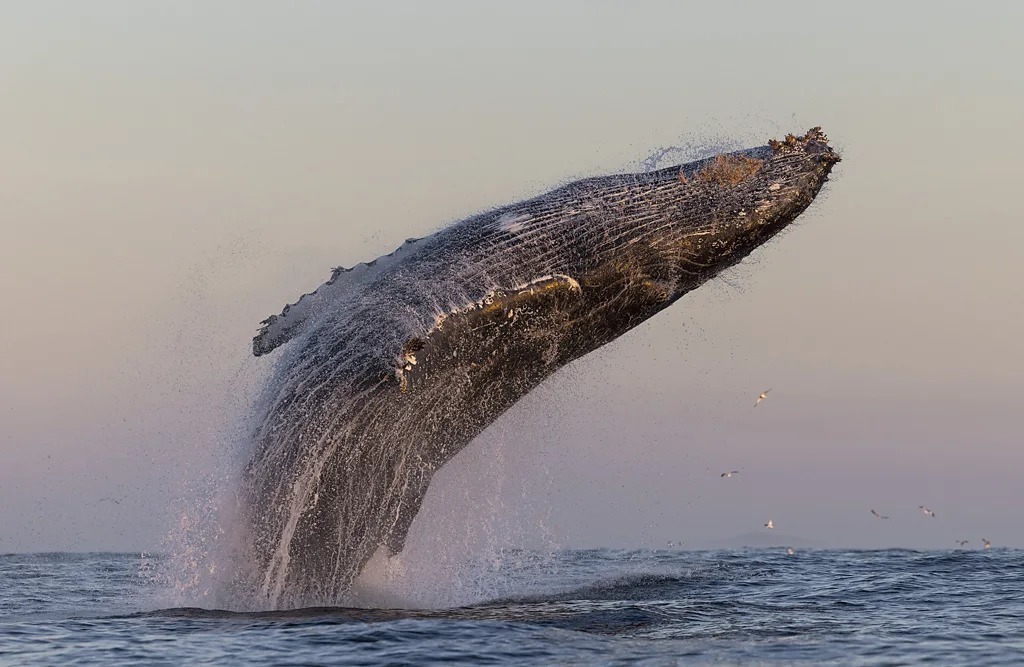
Fallows added that the ecological importance of whales to the ocean ecosystem, and to all human life, was enormous, which was why the West Coast discovery was so critical.
“I take huge joy in seeing how sentient humpbacks are, and feel strongly that they belong and have every right to exist. But beyond that, they contribute immensely to ocean ecosystems.”
Whales helped cycle nutrients through the ocean by bringing iron and minerals from deep water to the surface through feeding and defecation – their nutrient-rich waste key for phytoplankton growth.
“Each whale produces extraordinary amounts of this waste every week,” explained Fallows. “They are among the largest fertilisers of phytoplankton on earth, and phytoplankton produce about half of the oxygen humans breathe.”
Whales also played an important role in carbon storage. Scientists estimate that a single whale can sequester 30 to 33 tonnes of carbon in its life through its enormous biomass and various ecological processes.
Fallows said that each whale was equivalent to a small forest, so a superpod of 400 or more whales was hugely important to ocean ecosystems and human wellbeing – right on our West Coast doorstep: “Whales are a case study in how nature relies on nature to survive,” he said. “The more whales, the healthier our marine ecosystems.
“Our coastline – west and east – is an incredibly important part of their life cycle,” Fallows continued, adding that whales were more prevalent around South Africa than previously thought, with the nutrient-rich waters of the West Coast a big attraction. Research and observation showed that humpbacks cruised around South Africa – not all went to Antarctica every year.
And if the recent superpods were any indication, greater spectacles lay ahead: “The most amazing marine displays are probably still to come!”
However, as with the human impacts on biodiversity, this superpod did not mean threats had gone. With conflict in the Middle East disrupting shipping routes through the Suez Canal, increased traffic around southern Africa increased the danger to marine life.
“Fortunately for humpbacks, they normally operate closer to shore beyond the main shipping lanes,” said Fallows. “But around Cape Town and Table Bay, we constantly alert Cape Town Radio to ask ships to slow down on their approach.”
Deep ocean species such as sperm whales were also resident off the West Coast, something that many people did not realise, and he mentioned the Donkergat whaling station in Saldanha Bay that processed sperm whales. Sperm whales had also benefited from the end of whaling, although the extent was not properly understood. Boat strikes remained their main danger, as they fed off the slopes of the continental shelf – now one of the busiest shipping routes in the world.
“Huge ships also have a major impact on echolocation and sonar ability, affecting communication, breeding and their success in locating food,” he added.
For humpbacks closer inshore, a big threat was entanglement in fishing and crayfish nets, although the effects of mining-related impacts such as sediment caused by cofferdams were not well known. More was needed to reduce fishing impacts on marine life, including crayfish traps redesigned to lessen danger to marine life.
“Conservationists understand that fishing communities need to make a living. The reality is that there are more than eight billion people on earth, creating enormous pressure on nature. This relationship should involve a give and take approach, but human nature tends to take far more than it gives. Humans always have advocates speaking on their behalf – but where is the voice for the animals?”
Fallows points to the collapse of West Coast crayfish stocks as a warning sign: “There is believed to be less than 2 percent of the rock lobster biomass left,” he said. “The intense effort to harvest what remains has consequences for other species.
“We need to acknowledge all the impacts humans have on marine ecosystems and recognise that animals – especially whales – are vital to human survival.”
Donate to Protect the West Coast here https://protectthewestcoast.org/donate/
To see or follow more of Chris Fallow’s renowned work, visit www.chrisfallows.com or @chrisfallowsphotography