Richwill Diamonds recently issued a Notice of Intent to Develop (NID) a prospecting programme for diamonds along coastal land that includes state land and a portion of two farms, Waterval (Strandfontein 559) and Tities Baai 560, including an adjacent surfzone.
As part of the legal requirements of the NID, Richwill has requested the public to sign up as an Interested and Affected Party (I&AP) to receive future correspondence and the opportunity to comment on the Basic Assessment Report (BAR) and Environmental Authorisation (EA) when they are compiled. The window to register closes on Monday, March 10.
Register as an I&AP on Ripl:
Trespassing Charges
In November 2024, the owners of the farm Waterval, Braam and Therese Nieuwoudt, filed a trespassing charge against Richwill Diamonds for allegedly accessing their property without their consent.
Despite the charge – in a case that is ongoing – the company applied in February 2025 for prospecting rights to search for leftover diamonds from mining sites once operated by De Beers.
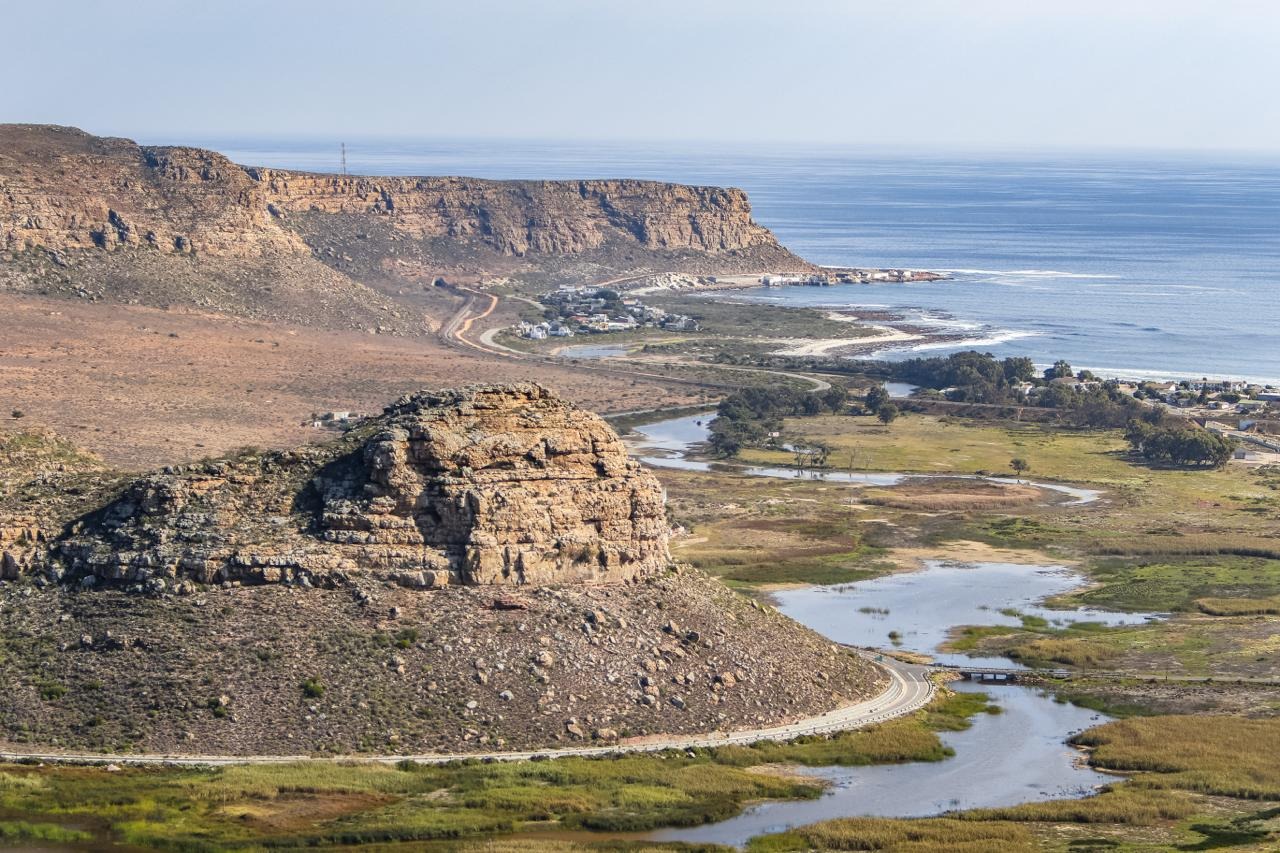
Another farm bordering their property, Tities Baai 560, is also being earmarked for prospecting by Richwill. Both farms fall under the Namakwa District Municipality and Kamiesberg Local Municipality about 15km from Lepelsfontein and Kotzesrus in the Northern Cape. The area comprises an extent of 197ha, and covers about 25.5 km of coastline.
Mining Threats
Besides this application, the same two farms are being targeted by another mining company, Nurulos, to prospect for heavy minerals. The farms are now wedged between two prospecting applications, and potentially two full-scale mines in the future.
“Mining companies are hungry for this stretch of coastline,” said PTWC MD Mike Schlebach, “and our main concern is that once prospecting rights are granted, the likelihood of a mining right being granted is extremely high.”

The scientific team at PTWC is concerned about the potential long-term effects on a stretch of coast that is an important biodiversity area, with the Namaqua National Park and Marine Protected Area (MPA) just to the north.
While the first ‘desktop’ phase of the prospecting process is non-invasive, should the programme evolve to the next phase, they will dig a series of huge trenches along the water’s edge. Although they are required to fully rehabilitate, such extensive activity in a narrow coastal margin applies significant pressure on marine and terrestrial ecosystems.
Further methods outlined for later prospecting phases in the Richwill application Background Information Document (BID), such as “pig-rooting”, are highly invasive in the marine space. Pig rooting entails using tractor-mounted shore units (acting as vessels) to drive heavy duty pumps guided by experienced divers into the surf zone, continuously sucking up high volumes of gravel (and anything else), while classifiers and compressors (diesel- or petrol-driven) treat the material. Unwanted material, such as oversized material or sand, is dumped back into the ocean.
“The issue with this method of mining is that it is impossible to determine or predict the economic feasibility before exploitation: it is purely based on trial and error, as Richwill has stated this in its BID,” said Schlebach.
The nearby MPA provides refuge and habitat to one of the most valuable, economically important fish species on the west coast, the Cape hake. The general level of habitat disturbance, noise from pumps, invasive nature of divers and equipment, and the potential leakage of petrol, diesel or oil from the equipment used, feasibly threatens the schools of Cape hake in the surrounding area. Then there is added pressure on fish nurseries, which are crucial for replenishing fish stocks.
The sand between the high-water and low-water mark allocated for digging up deep trenches is a crucial zone where flocks of wading birds such as the Sanderling actively feed on the intertidal critters that burrow in the sand.

The area is also home to the world’s smallest tortoise, the speckled Cape tortoise (Chersobius signatus), which is listed on the IUCN Red List of Threatened Species, and endemic only to the rocky areas of the Western and Northern Cape.
The vegetation in the Namaqualand region of South Africa falls within the Succulent Karoo biome, one of the world’s 34 biodiversity hotspots (one of only three such hotspots in South Africa). The Namaqualand alone consists of nearly 3,000 plant species (1,500 are endemic), of which many are listed as Red Data species.
These plants host unique fauna, mainly bees, bee flies, and monkey beetles, all highly important in maintaining the floral diversity, and will ostensibly be placed directly under threat from the prospecting and potential mining.
Part of the area that Richwill has earmarked for prospecting is also directly in front of many rustic coastal camps in the area, including ‘Steekguet’ on the Nieuwoudt’s farm, which is where they confronted Harry Rich of Richwill Diamonds late last year, before laying a charge of trespassing against his company.
Not only will the proposed prospecting potentially negatively affect the experience of campers and the Neuwoudts’ business, this and possible full-scale mining to follow may also prohibit public beach access, including for fishermen, hikers, birders – and surfers, as there are several great surf breaks in the immediate vicinity.
“This stretch of coastline is one of the last beautiful, pristine stretches of the West Coast unaffected by mining,” added Schlebach, “featuring the harmonious blend of a vast ocean and pristine white sandy beaches, combined with vibrant rocky shores teeming with life and remote, world-class surf spots. Please help us keep it that way.”

View the NID and BID documents and register as an I&AP on Ripl: