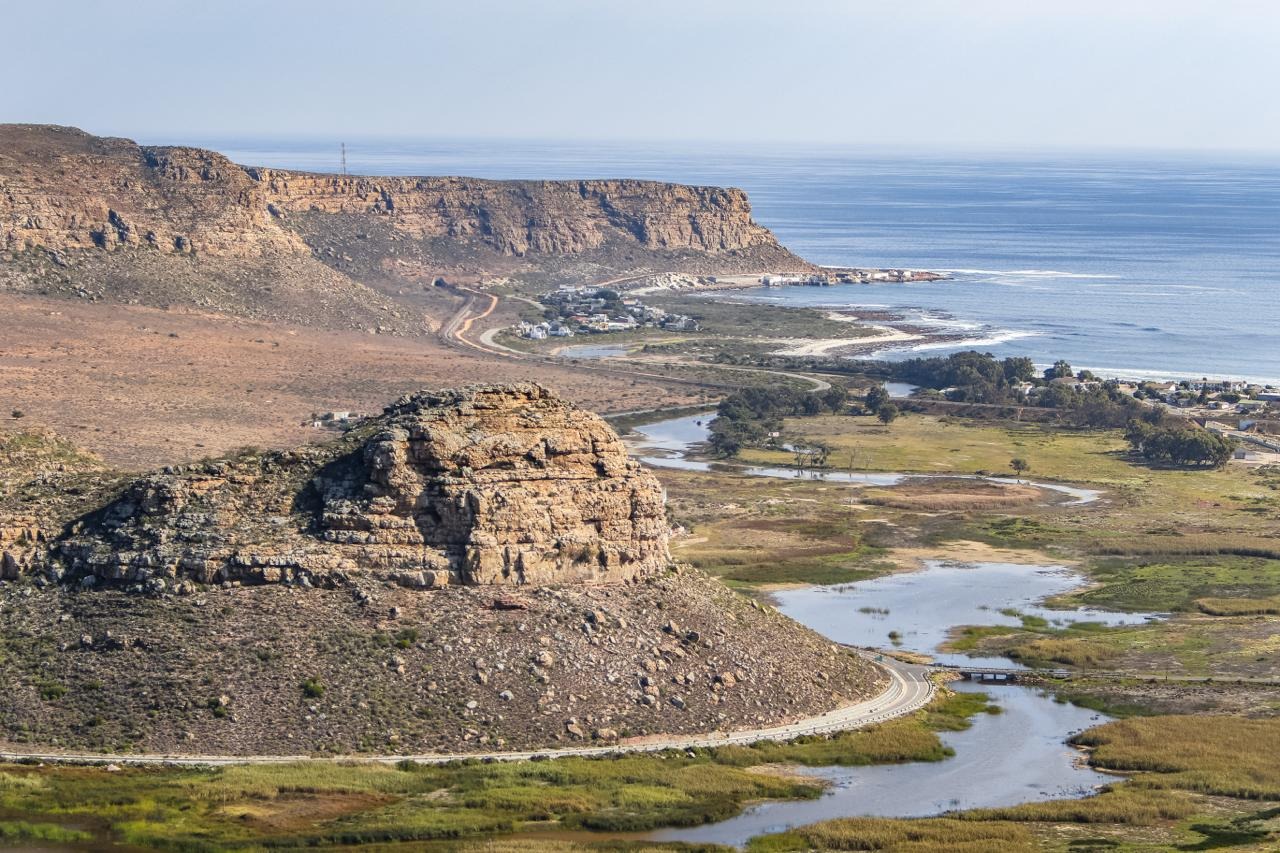
The proposed project is located in a remote conservancy comprising Namaqualand Arid Grassland, Namaqualand Klipkoppe Shrubland and Northern Knersvlakte Vygieveld, with a total extent of 8,070 hectares on two farms Roodewal 74 and Uilklip 65 in the Matzikama Local Municipality.
PTWC warns that while elements of the prospecting are low impact, the drilling of multiple holes present noteworthy environmental concerns. However, the overarching problem is that it could lead to mining in the Knersvlakte Conservancy Area, which intersects with a Critical Biodiversity Area and two Ecological Support Areas. These conservation areas are important for preserving biodiversity and ecosystems and include conservation corridors that support indigenous flora and fauna.
The Basic Assessment Report accompanying the prospecting application states that three forms of prospecting will be used: desktop study, geological mapping and a “drilling programme”. While the first two are low impact, comprising the study of data and maps to generate a geological survey of the area, the third was contingent on the mapping.
Exploration diamond drilling (using a diamond tipped drill bit to penetrate rock) can be invasive and damaging to the environment. In this case, according to the BAR, multiple holes would be drilled to get core samples of the minerals, each occupying a total area of up to, but not exceeding, 200 square metres.

The BAR does not provide much detail about how many holes will be drilled, because they drill depending on the data they generate from the mapping process. However, the generous window of five years suggests a lot of activity across a wide area. Apart from the drilling, the digging of trenches was an option and would be “planned if necessary”, according to the BAR.
Diamond drilling can contaminate soil and water without correct environmental mitigation. The elements they are prospecting for is another cause for concern. Apart from the rare earth elements (REE), Sano is also looking for zirconium, vanadium and phosphates. Global health agencies warn of the toxicity of mining uranium, which is naturally radioactive, as well as rare earth metals.
“The long-term, large-scale mining and utilisation of rare earths has caused serious environmental pollution and constitutes a global health issue, which has raised concerns regarding the safety of human health,” says a report in the National Library of Medicine, headquartered in Maryland, USA.
REEs have been in the media recently, with US President Donald Trump targeting them as a bargaining tool with Ukraine to continue US support for the embattled country.
MD of PTWC Mike Schlebach said that he was concerned about the length of the proposed prospecting: “Five years is a long time to map out a remote area in Namaqualand, even though it is large. But with a place so out of sight and out of mind, how will we know if they stick to the prospecting, which itself is vague in terms of location and extent, and don’t start mining the area?”
A prospecting application is simpler and cheaper than an application to mine, which requires a more rigorous environmental assessment, so some mining companies mine under the guise of prospecting to avoid this cost.
Also, Schlebach said the application was concerning because it ignored the cumulative impact of mining as an ad hoc individual application that threatened sensitive biodiversity areas that could lead to wall-to-wall mining. This issue was exacerbated by the prospecting area’s proximity to the Steenkampskraal Monazite Mine, which is in the process of resuming operations.
The land was utilised for subsistence farming of livestock and comprised several home settlements.
“While prospecting and mining are distinct processes, successful prospecting could lead to mining applications with significant impacts on landowners, the environment, and the wider community,” Schlebach said.