Words by Steve Pike.

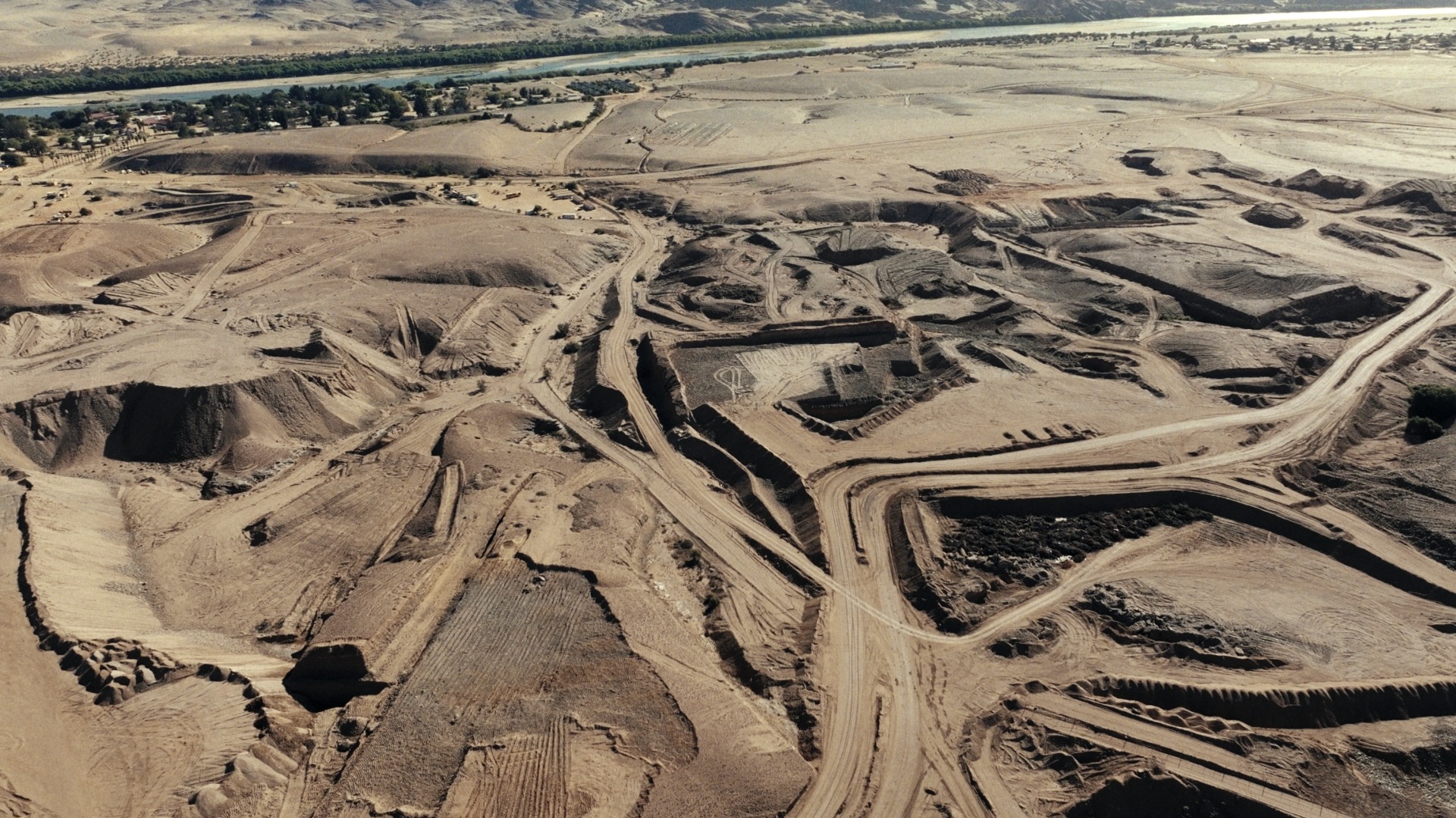
Moonstone’s Doringbaai mining site. Image by Sacha Specker.
PTWC reports a breakthrough and meaningful win to protect critically important areas of bio-diversity north and south of the Olifants River Estuary. After launching an urgent interdict application against Moonstone Diamond Marketing (now Transhex), PTWC has secured an interim undertaking from Moonstone for no-go areas south and north of the Olifants estuary, a biodiversity hotspot and RAMSAR site that communities depend on for their livelihoods.

The Olifants River Estuary river mouth. Image – Sacha Specker.
The legal bid was made in association with the Doringbaai and Olifants River Small Scale Fishing Communities and individual community members. While it is great news, work remains to secure these areas as permanently protected zones. The court case against Moonstone will be heard at the end of August, 2023. The no-go areas, which limits mining activity along several kilometres of unspoiled coast, will again be under review when the case is heard. PTWC is working with academics and scientists to compile input from experts – including sedimentologists, soil scientists, rehabilitation experts, fisheries experts and others – in a bid to get the court to secure and even expand the no-go areas.

A scarred coastline – an old wound left unrehabilitated near Alexander Bay. Image by Alan van Gysen.
The initial court papers are for an urgent interdict against the Department of Mineral Resources and Energy, DMRE, to review and set aside the renewal of a mining right that was allegedly illegally granted to Moonstone for a further 30 years.
The outcome of these court proceedings will have a material impact on the consideration of applications for future renewals of mining rights by the DMRE, in circumstances where old mining rights with out-of-date EMPrs (Moonstone’s current EMPr is 17 years old) are being renewed under the MPRDA without obtaining an environmental authorisation under NEMA and having to undergo the necessary public participation processes and environmental impact assessment enshrined in NEMA.
Read more about it here: https://www.protectthewestcoast.org/post/protect-the-west-coast-launches-urgent-interdict-against-mining-company
PTWC has been active on the legal front in several other areas of concern. We continue to monitor and broadcast to local communities, the academic sphere and the wider public the ongoing avalanche of applications being made for mining and prospecting on the West Coast. Our legal and media teams are working on responses to the sudden upturn in activity, such as a recent application to mine heavy sand minerals at Karoetjie Kop near the mouth of the Groenrivier. This coastline is literally one of the last wildernesses left on the West Coast.

Doringbaai. Images by Sacha Specker.
We aim to encourage better public participation in these applications in an attempt to place before the relevant decision-makers an adequate representation of how the broader south african community views these activities and their impacts.
PTWC has also supported certain of its strategic partners in the legal sphere including the Centre for Environmental Rights in the ongoing matter with Mineral Sands Resources and is monitoring closely the consent order taken under case number 13446/2020 before the Western Cape High Court and more particularly the submission to be made to the Minister by Mineral Sands Resources calling for a Strategic Environmental Assessment for the West Coast.

There are a host of further challenges that PTWC needs to become actively involved in whether it is oversight of existing mining operations, pursuing those parties which have responsibilities to rehabilitate, and ensuring that communities are equipped with the necessary tools to ensure that their interests and those of the environment they live are placed first when decisions around mining activities are taken. PTWC views the legal dynamic as a valuable part of its overall strategy to ensure that the West Coast is a thriving and abundant ecosystem that benefits present and future generations.
If you would like to assist us with legal fees (as we all know this is a very expensive part of our fight), you can donate in a few ways:
- Zapper
- Snapscan
- EFT/Direct Deposit
- GivenGain
- Paypal
To donate, please follow this link: https://www.protectthewestcoast.org/donate