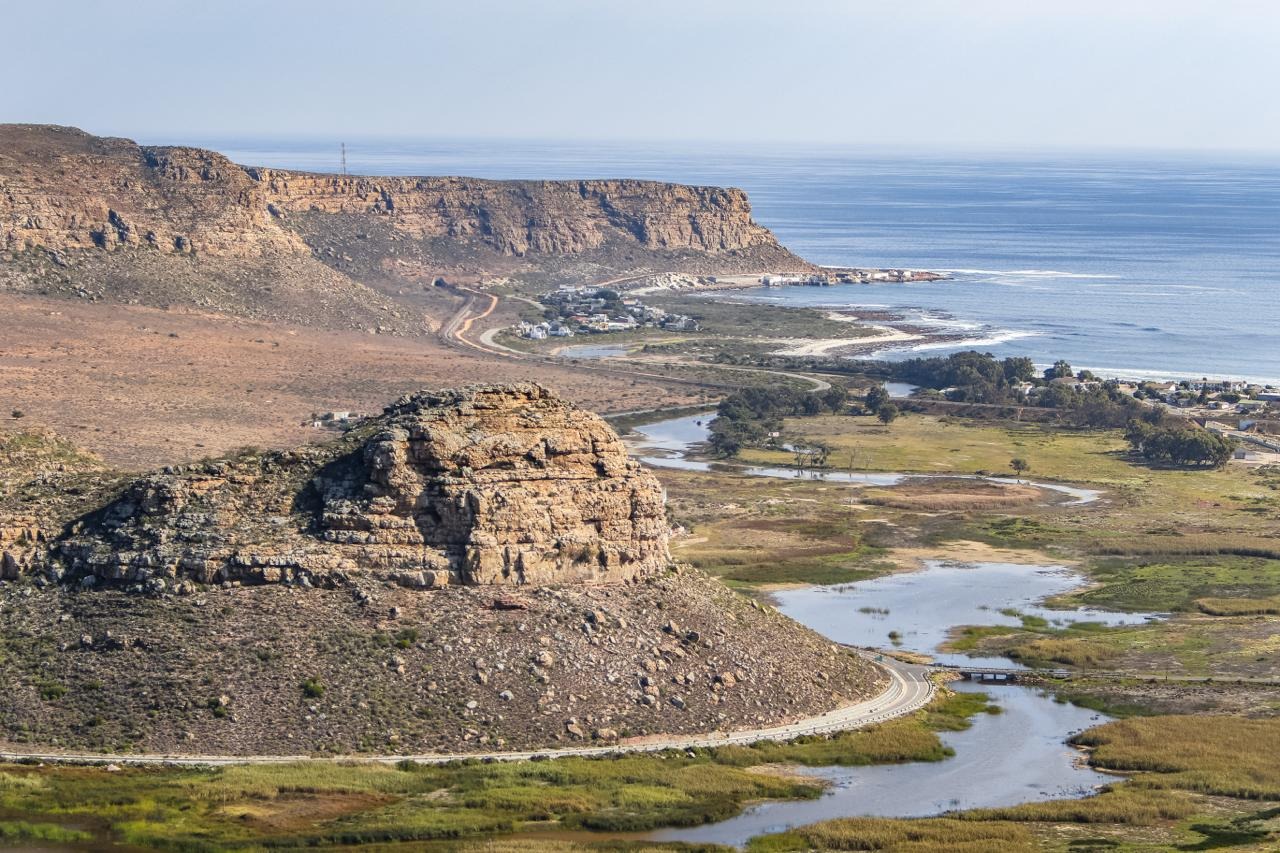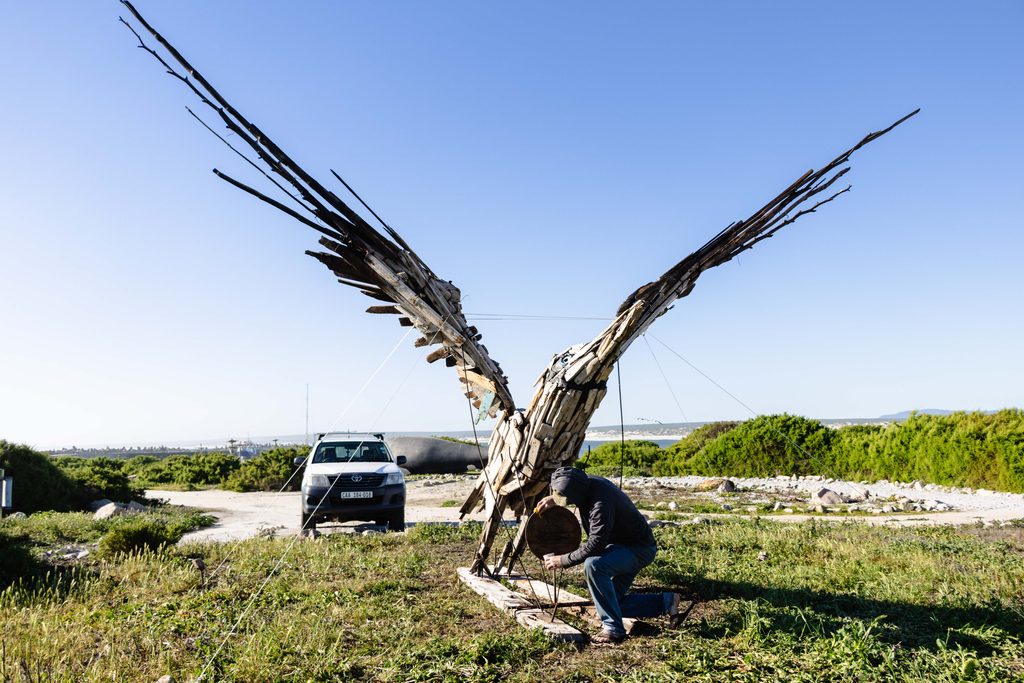
A team from Protect the West Coast (PTWC) recently travelled up to the Lambert’s Bay Bird Island Nature Reserve, with the 100kg Cape gannet sculpture Koos Malgas in pieces on a trailer, to install him near the visitor’s centre on the three-hectare rocky islet, 100 meters off Lambert’s Bay.
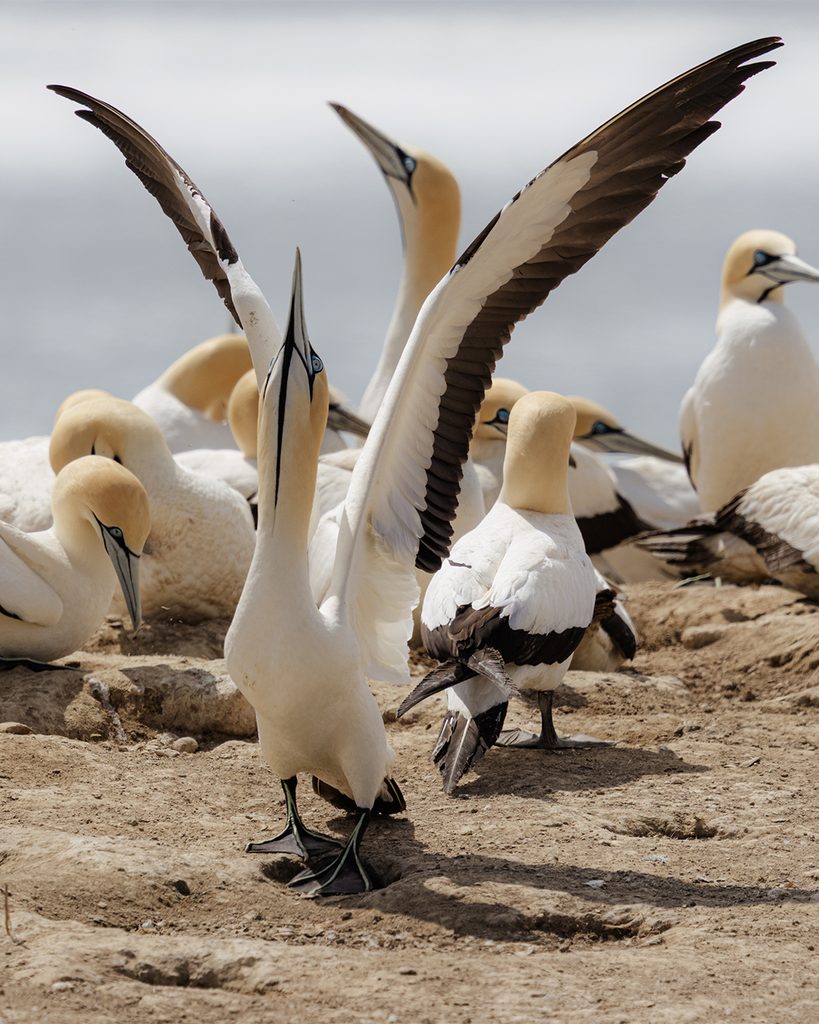
The imposing figure of Koos, who stands six metres high, is right at home with tens of thousands of blue-eyed Cape gannets (witmalgas), Cape fur seals, and cormorants that call the reserve their home. The island, which is connected to the mainland by a breakwater, is one of only six global breeding sites for Cape gannets and the only one accessible to the public.
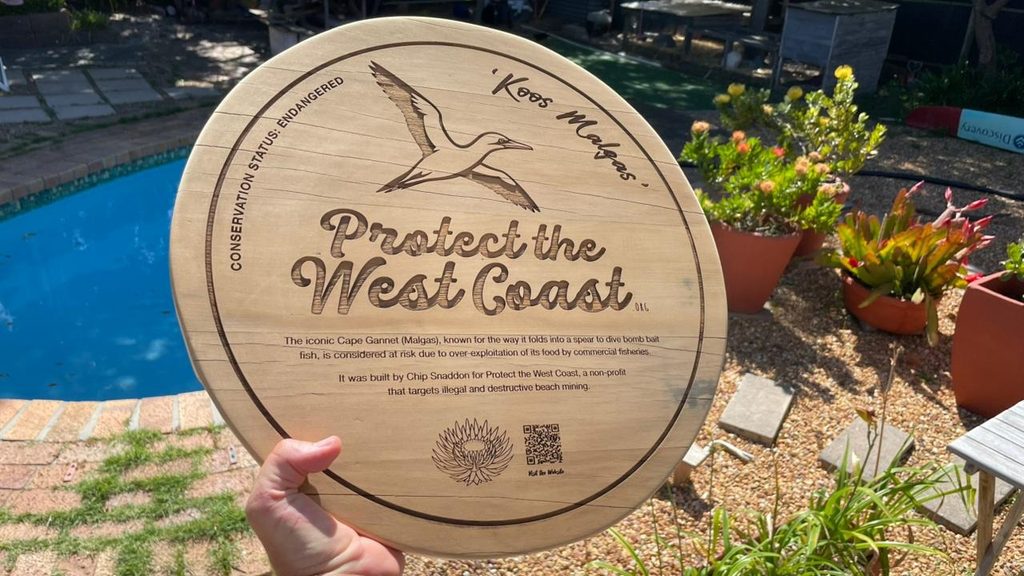
Managed by CapeNature, it features an enclosed viewing hide right at the edge of the colony for a bird’s eye view of the gannets, now including the figure of Koos Malgas in the foreground. Crafted from wire, beach detritus and driftwood – and fastened to the rocky ground via iron rebar hammered through hefty railway sleepers and tethered by industrial strength nylon cord – Koos dwarfs his visitors as they read the sign that describes him and the work of PTWC.
PTWC commissioned Kommetjie artist Chip Snaddon to create an iconic representation of the work they are trying to do to protect the fauna and flora of the West Coast. Named in memory of artist Koos Malgas, who made all the Owl House sculptures under Helen Martins in Nieu-Bethesda, the large bird was initially installed on another Bird Island, Kommetjie, where it was on show at the Kommetjie Festival.
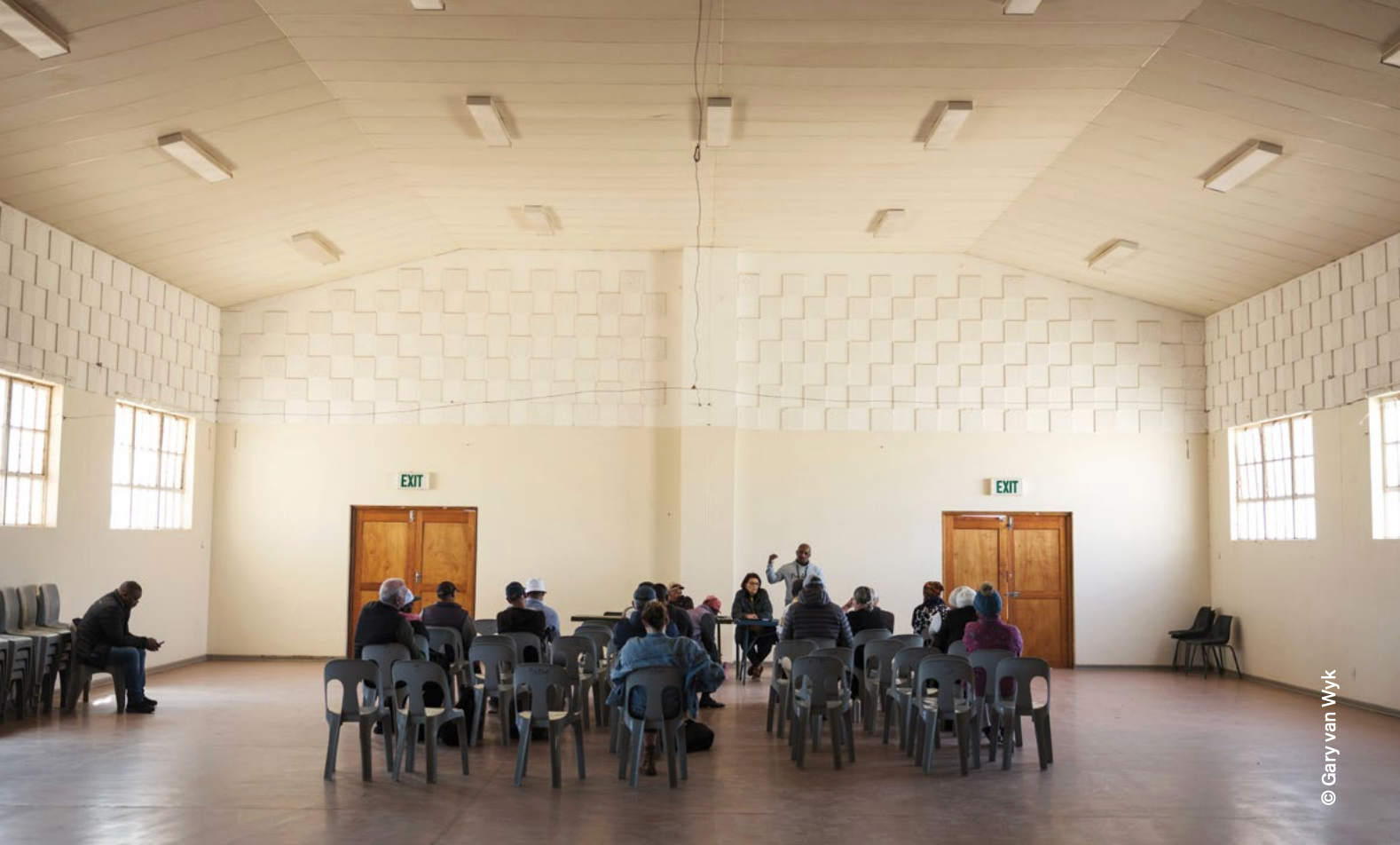
Koos featured at the Open Studios Kommetjie in early December 2025, before he went to Langebaan Town Hall for the inaugural Ripple Effect Gathering hosted by PTWC in March 2026. The event drew more than 150 Indigenous leaders, fishers, scientists and other stakeholders, who gathered in Langebaan to lay the foundation for a sustainable economic future.
Koos Malgas then returned to Kommetjie, where he was moved to Imhoff’s farm as a popular local attraction until his final resting place in Lamberts Bay.
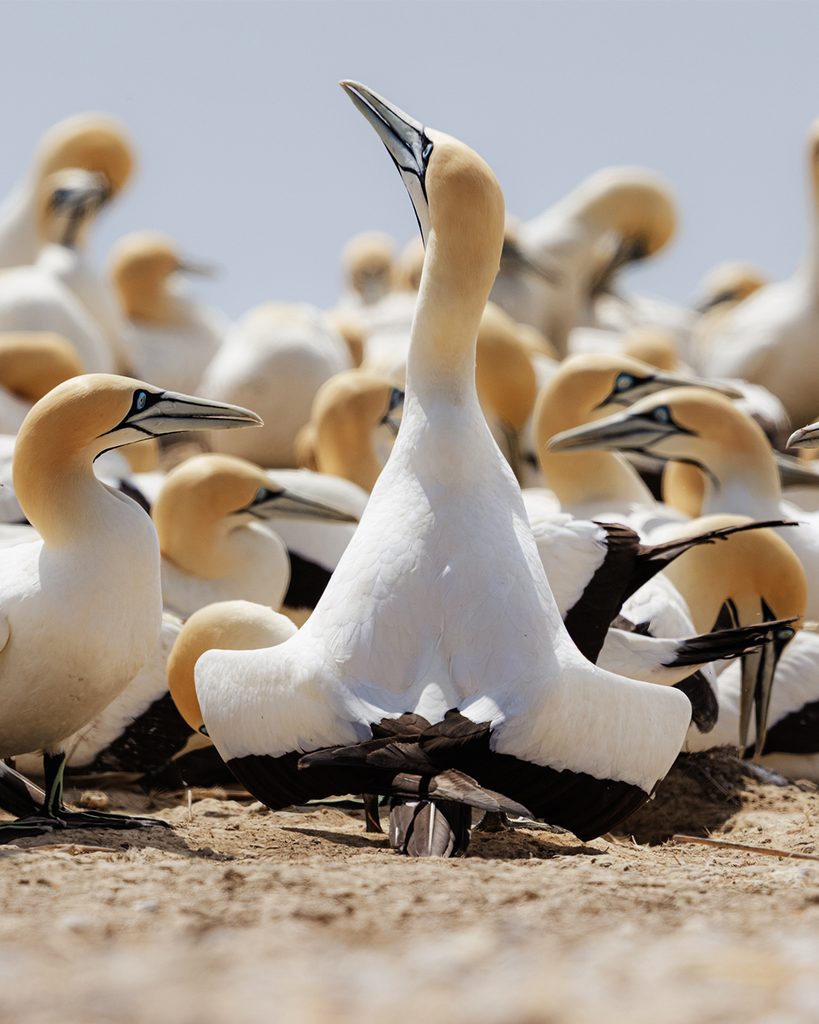
The Malgas or Cape gannet is an iconic seabird loved by Western Cape fishers as a symbol for pelagic fisheries – it is fondly revered for the way it fires itself like a projectile into the ocean to hunt shoals of bait fish. Flocks of Cape gannet follow the bait balls of the Sardine Run all the way up the East Coast in winter before returning to the Western Cape.
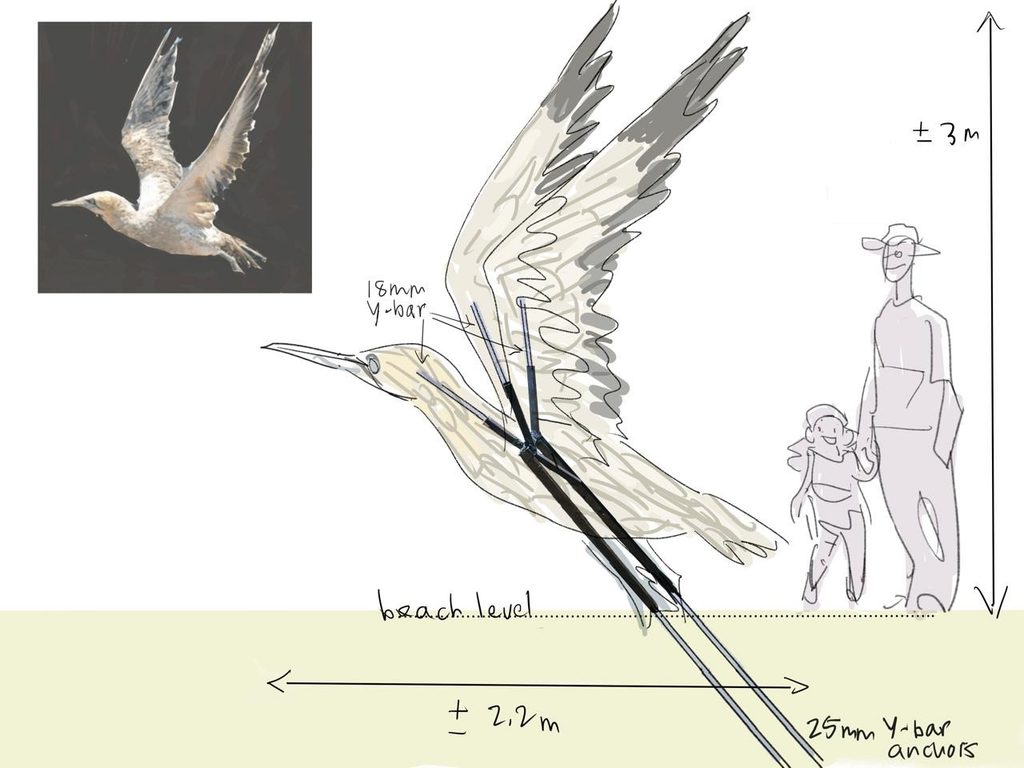
The project was initiated by PTWC media team members Jacque Smit – a keen birder – and journalist Steve Pike in talks with Chip, who started the process by drawing up some mockups, and started collecting more material – driftwood and wire and detritus – needed for the job.
Originally, Chip had the bird’s wings folded as though about to plunge towards the sea at the moment it begins to retract its wings into its body. However, Chip settled on Koos Malgas about to take flight, with help from gannet photographs provided by Jacque, with wing span slightly more akimbo, which makes the length and overall size of the sculpture more imposing, especially because he stands almost double the three metres originally envisaged.
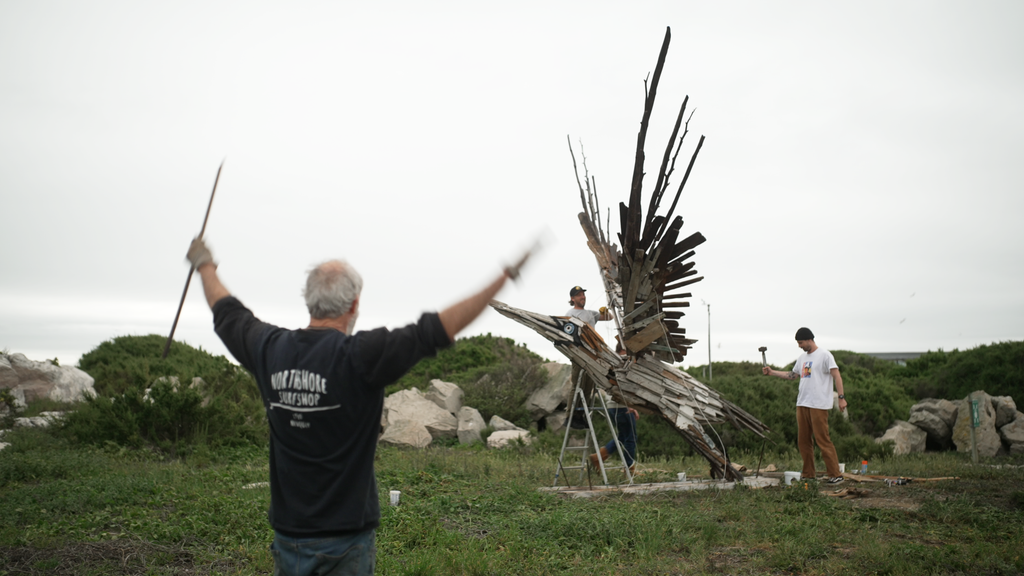
“I built the sculpture as four removable pieces using welded steel as the internal structure, with the head, two wings and body clad with driftwood collected over many years to evoke the coastal environment and suggest the vulnerability of all the creatures affected by unfettered development and extractive practices so favoured by our elites,” Chip said.
The Cape Gannet is under severe pressure from many threats including overfishing, habitat loss due to unchecked development including mining, and the ensuing ecological imbalance that leads to predation on the birds by seals and their encroachment on breeding sites.
However, the PTWC team felt that the Cape Gannet was not just a symbol of the threats facing the West Coast, but also stood as a vibrant and positive symbol of the successes PTWC has had in protecting pristine biodiversity areas such as the beaches around the Oliftants River Mouth. In 2023, PTWC won an out-of-court settlement with Trans Hex not to mine around the Olifants River mouth, an estuarine environment unique to South Africa, and a wetland of international importance as a vital staging post for migratory birds.
The Olifants estuary is home to unique aggregations of bird and fish species, and is a well known and important source of food for local fishers from Papendorp and Ebenhaezer. The court also ordered PTWC-led site visits by scientists and geologists and other experts to ensure compliance.
Koos Malgas also stands as a symbol for PTWC attempts to promote sustainable alternatives to mining, whether via our scientific, media or legal teams, who challenge irregular compliance to regulations by mining companies, with a focus on inadequate rehabilitation.
To help us in our work to protect the West Coast and its iconic creatures such as Koos, visit our website www.protectthewestcoast.org, or join our public participation platform Ripl here (www.ripl.co.za) and sign up and an Interested & Affected Party to comment on ill-advised and ad hoc mining applications that threaten to swamp 88% of the entire 450km coastline of the West Coast.