Diamonds
Diamonds, the hardest material known to man, were formed over billions of years, forged by immense heat and pressure deep in the earth. Volcanic eruptions – the last about 30 million years ago – pushed the rock towards the surface in carrot-shaped funnels known as Kimberlite pipes.
Alluvial diamonds released from weathered kimberlites were transported to the coast by ancient rivers draining the Karoo and Kalahari basins.
Diamonds were first discovered along the west coast of Southern Africa in 1906 near Lüderitz Bay. The ensuing diamond rush was cut short with the outbreak of World War I. After the war, prospecting activities moved southwards, eventually leading to the discovery of diamonds near Port Nolloth in 1925.
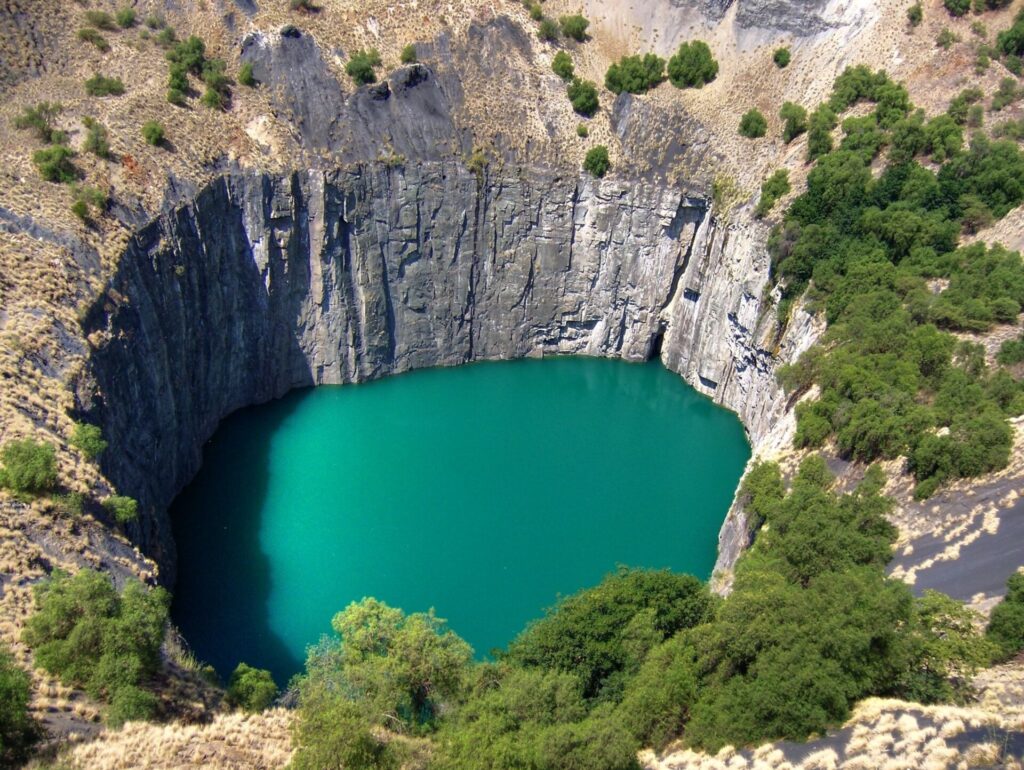
This discovery sparked a rush of prospectors. By 1928, the government had intervened to control the rush by consolidating the diamond fields between Port Nolloth and Alexander Bay into the State Alluvial Diggings (SAD), fencing off the richest areas and regulating mining activity.
Eighty kilometres of the Namaqualand coast was brought under tight government control, which lasted well into the Apartheid era, when this was a prohibited, militarized zone.
The diamond deposits around Kleinzee were discovered in 1927. Cape Coast Exploration Company, a company chaired by Sir Ernest Oppenheimer, tied up all the land between Port Nolloth and Hondeklipbaai. This company was incorporated into De Beers by 1941. De Beers started full scale mining in 1942 at Kleinzee.
Production peaked in the late 20th century. Since the late 2000s, diamond production has been declining due to dwindling diamond reserves.
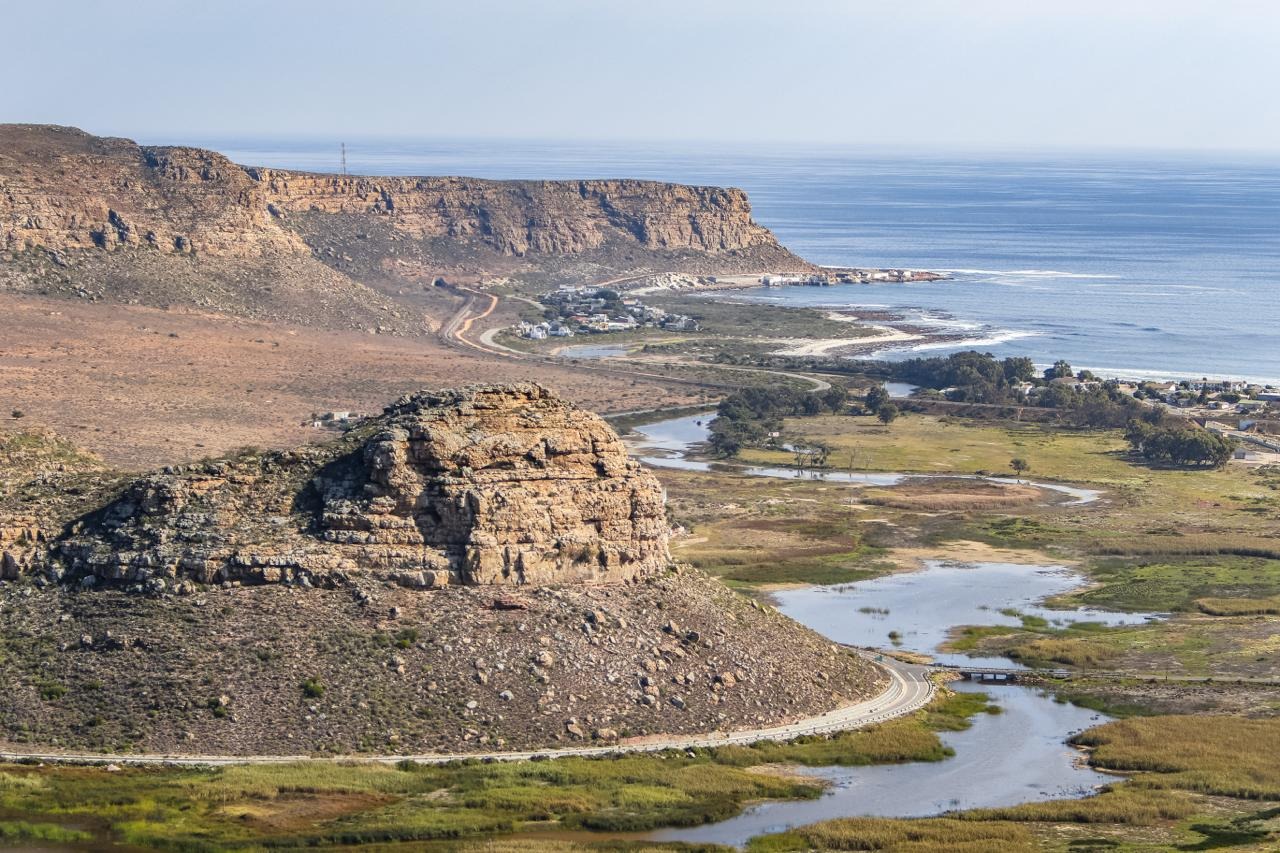
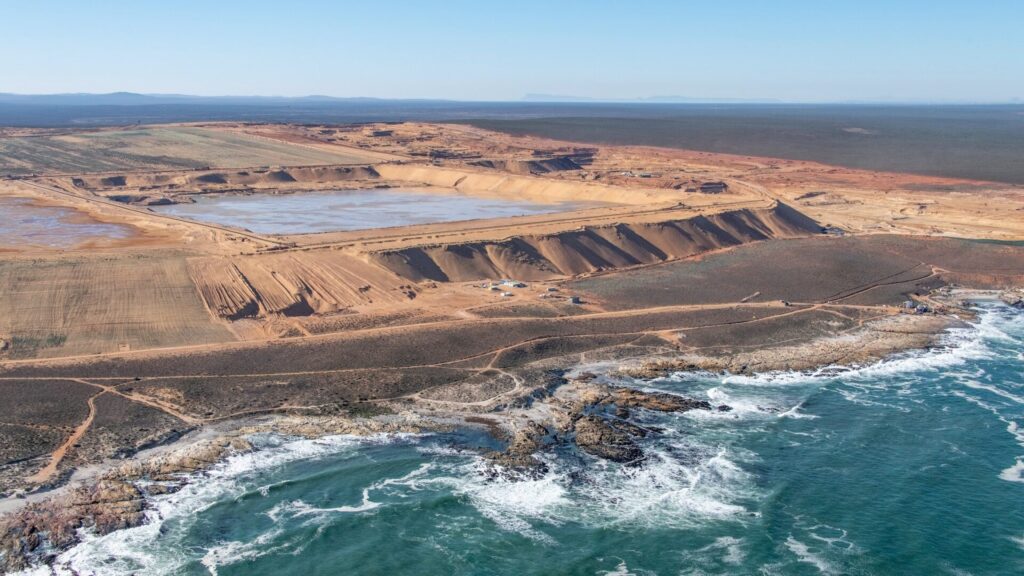
Alluvial diamond mining has been undertaken along the West Coast for almost 100 years. Where mining activities have been concentrated the landscape has been utterly transformed. Deep mining pits, high ‘overburden’ dumps, intermittent prospecting trenches and heavy vehicle tracks have transformed much of the Namaqualand coastline into the unrehabilitated, mine dump-lined, pockmarked moonscape seen there today.
Heavy Mineral Sands
Heavy mineral sands are beach and coastal sand deposits containing high concentrations of heavy minerals such as ilmenite, rutile, zircon, monazite, garnet and magnetite. Heavy minerals are an important source of industrial minerals and metals used in pigments, ceramics, electronics and aerospace materials.
After World War II, growth in demand for titanium drove global interest in heavy mineral sands. Exploration in South Africa led to the discovery of the Richards Bay deposit in the 1970s and the Namakwa Sands deposit of the West Coast in the 1980s.
The Namakwa Sands deposit is a world-class heavy mineral deposit developed by Anglo American Corporation, with full production from 1995. Now operated by Tronox, it is the second largest producer of heavy minerals in South Africa after Richards Bay Minerals and is an internationally leading supplier of titania slag, pig iron, premium ceramics grade zircon and rutile concentrate to several export markets. It is estimated that this mine will be in production until 2047.
Zircon is used as a strong metallic element in ceramics, or processed into zirconium chemicals and metal. South Africa’s share of world zircon production was 25% in 2020, equivalent to 311,800 metric tons. Tronox alone accounts for 60% of that production (180,000 metric tons) of which approximately 40% is derived from their Namakwa Sands operation at Brand se Baai.
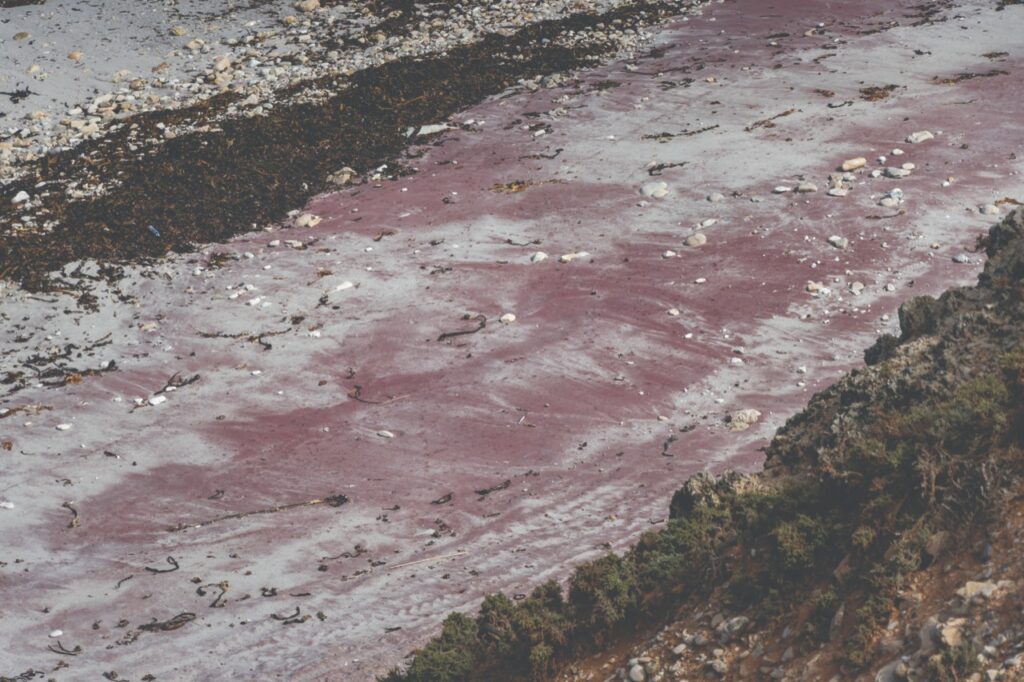
Mineral Sands Resources (Pty) Ltd (MSR) started mining the Tormin beach deposit early 2014 and the inland palaeo-placer late 2020. By the time MSR started mining the inland strand deposit the company was already under financial stress. The company eventually went into business rescue in 2024 without fulfilling its rehabilitation obligations.
The Tipping Point
The above is an excerpt from the 2026 PTWC Special Report: The Tipping Point
The report brought our legal, science and media teams together to create a unique 56-page expose on the state of the West Coast. Filled with history, stats and other information, the report unpacks the damage from decades of heavy mineral and diamond mining, partly as a result of weak regulatory oversight. But all is not lost. We make the case for better enforcement of legislation, a moratorium on new mining applications while an assessment of cumulative impacts is conducted, with more investment in alternative economic solutions, such as nature-based industries, including ecotourism.
Read the full Special Report here: