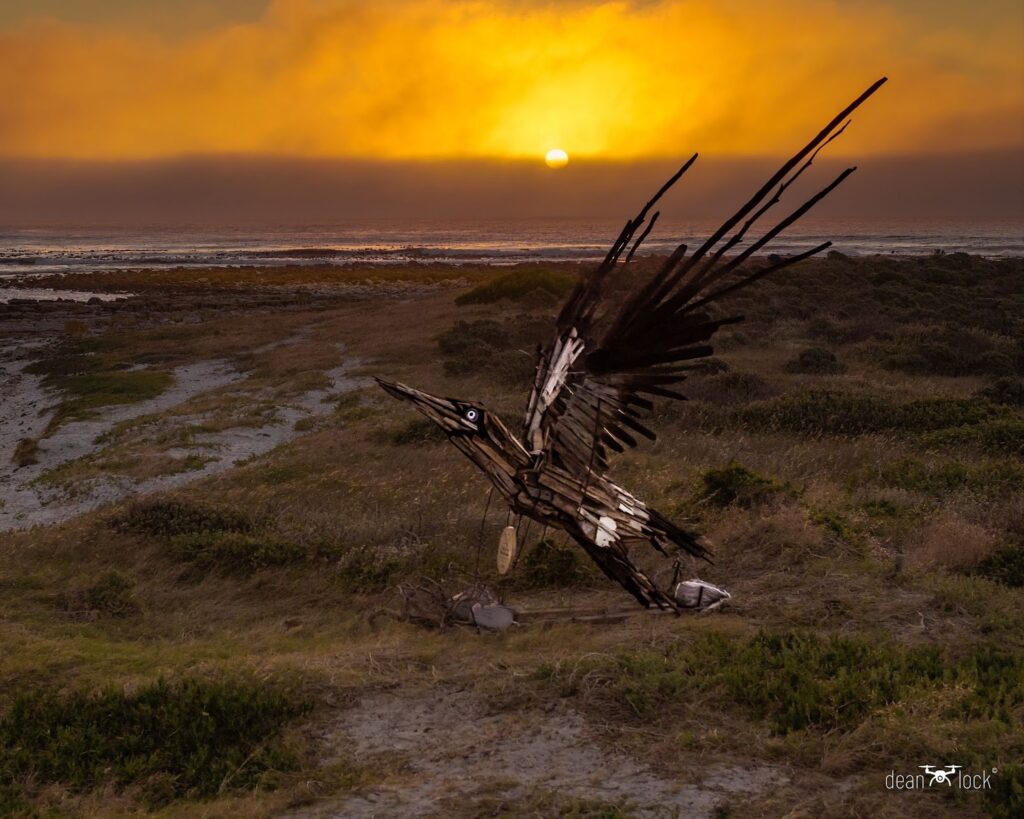
The imposing silhouette of Koos Malgas – a huge Cape Gannet seabird crafted from steel and driftwood to symbolise the work of Protect the West Coast (PTWC) – dwarfed the curious bystanders standing nearby as a stiff southeaster caused the structure to creak and sway.
Protect the West Coast (PTWC) commissioned Kommetjie artist Chip Snaddon to create an iconic symbol for the fauna and flora of the West Coast that PTWC is trying to protect. He created ‘Koos Malgas’ out of found objects and driftwood from the nearby coastline. It was installed on Bird Island in Kommetjie in the southern Cape peninsula, where it was on show at the Kommetjie Festival, and where it will remain for the Open Studios Kommetjie in early December before being moved to an appropriate permanent location on the West Coast.
The Malgas or Cape Gannet is an iconic seabird loved by the Western Cape fishing community because of the way it represents pelagic fisheries – it is fondly revered for the way it fires itself like a projectile into the ocean to hunt shoals of bait fish. Flocks of Cape Gannet follow the bait balls of the Sardine Run all the way up the East Coast in winter before returning to the Western Cape.
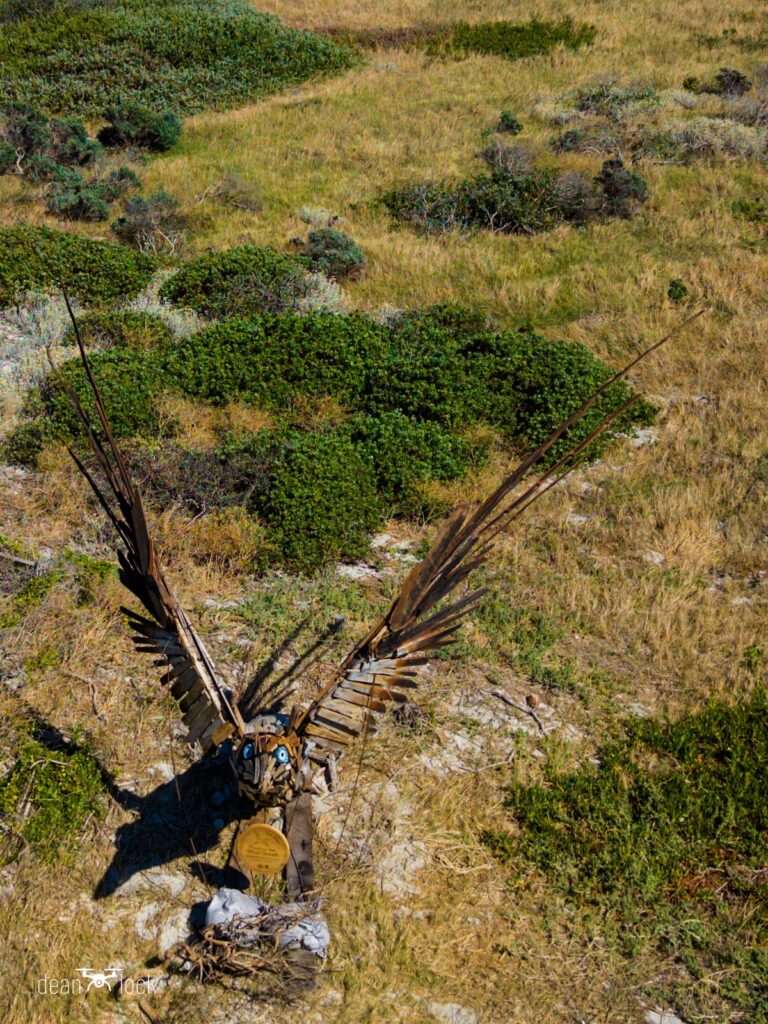
When Chip started collecting the more than 90kg of steel bar, driftwood and wire needed for the job, he considered folding its wings as though about to start its rapid descent into the sea, just at the moment it begins to retract its wings into its body. However, Chip settled on Koos Malgas about to take flight, with wing span slightly more akimbo, which makes the length and overall size of the sculpture, which stands about five metres high, even more imposing.

A wooden plague at the sculpture explains the why and what of Koos the Malgas.
The name Koos Malgas arises from the memory of the artist Koos Malgas, who made all the Owl House sculptures under the direction of Helen Martins in Nieu-Bethesda.
“I built the sculpture as four removable pieces using welded steel as the internal structure, with the head, two wings and body clad with driftwood collected over many years to evoke the coastal environment and suggest the vulnerability of all the creatures affected by unfettered development and the extractive practices so favoured by our elites,” Chip said.
The Cape Gannet is under severe pressure from many threats including overfishing, habitat loss due to unchecked development including mining, and the ensuing ecological imbalance that leads to predation on the birds by seals and their encroachment on breeding sites.

However, the PTWC team felt that the Cape Gannet was not just a symbol of the threats facing the West Coast, but also stood as a vibrant and positive symbol of the successes PTWC has had in protecting pristine biodiversity areas such as the beaches around the Oliftants River Mouth.
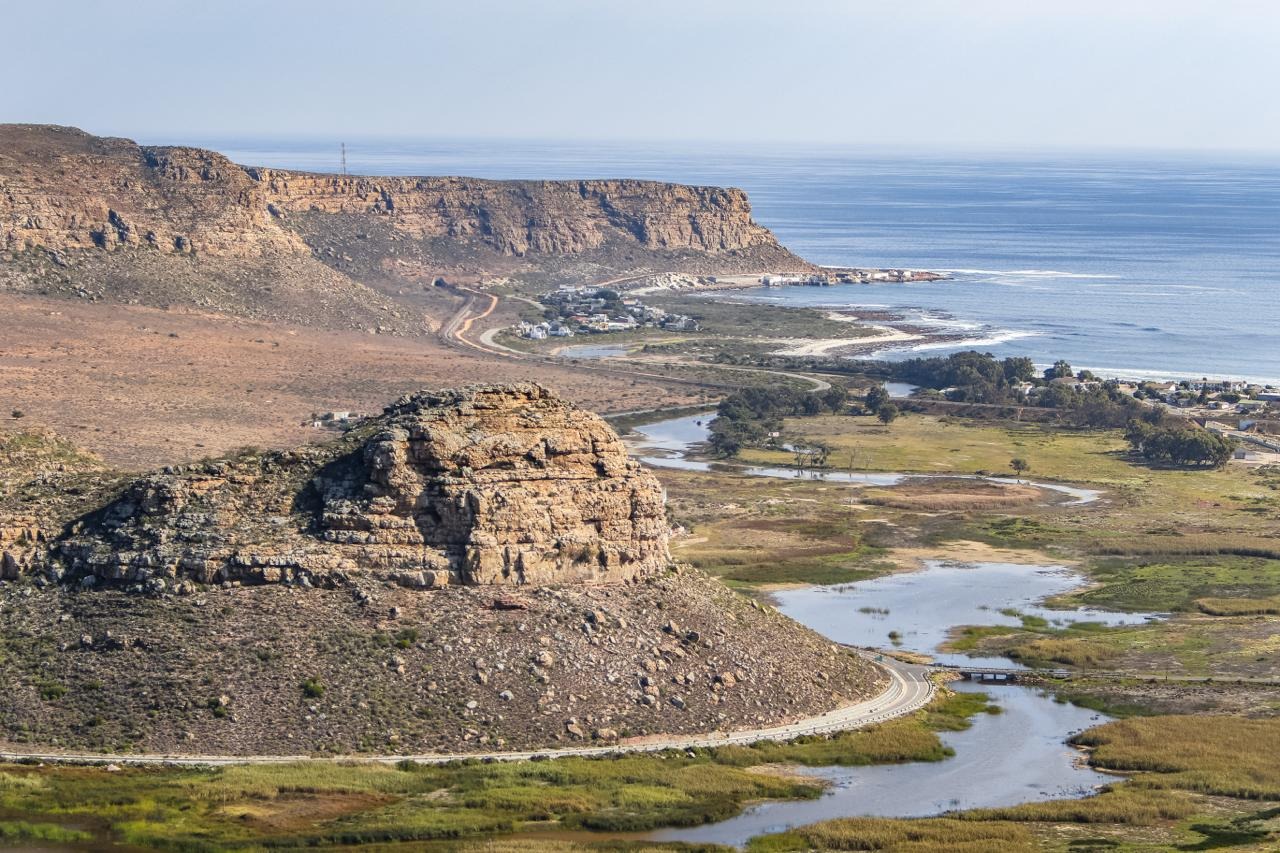
In 2023, PTWC won an out-of-court settlement with Trans Hex not to mine around the Olifants River mouth, an estuarine environment unique to South Africa, and a wetland of international importance as a vital staging post for migratory birds, and critical habitat for a rich and biodiverse collection of fauna and flora.
The Olifants estuary is home to unique aggregations of bird and fish species, and is a well known and important source of food for local fishers from Papendorp and Ebenhaezer. The court also ordered PTWC-led site visits by scientists and geologists and other experts to ensure compliance.
Koos Malgas also stands as a symbol for PTWC attempts to promote sustainable alternatives to mining, whether via our scientific, media or legal team, who challenge irregular compliance to regulations by mining companies, with a focus on their rehabilitation obligations, which often fall short.
Sign up to Ripl: http://www.ripl.co.za
MD of PTWC Mike Schlebach was chuffed with the result of the commission: “Koos Malgas is such a great example and representation of what we stand to gain if we protect and nurture the wild spaces of the West Coast.”
“We chose Chip for his amazing skills at foraging for found objects and turning them into a masterful creatures that blend perfectly into the wilderness as though they’ve been there for a million years. We couldn’t be more pleased with the way Chip has made this creature come alive,” he said
To help us in our work to protect the West Coast and its iconic creatures such as Koos, visit our website www.protectthewestcoast.org, or join our public participation platform Ripl here (www.ripl.co.za) and sign up and an Interested & Affected Party to comment on ill-advised and ad hoc mining applications that threaten to swamp 88% of the entire 450km coastline of the West Coast.