PTWC has identified several vulnerable surf ecosystems in South Africa as potential areas for protection and has been in communication with Save the Waves for some time.
“The Save the Waves Summit was a deeply enriching experience that I have no doubt will pay dividends as we pursue our goals for surf ecosystems in South Africa.” – Mike Schlebach, MD, PTWC.
Founded more than two decades ago by Californian surfer Will Henry, who witnessed first hand the destruction of an iconic big wave surf sport Jardim do Mar in Madeira, Portugal, Save the Waves has emerged as a powerful force in surfer-led environmental activism worldwide.
Since 2003, working with local activists and organisations, Save the Waves has been instrumental in establishing World Surfing Reserves at iconic but vulnerable surf breaks and the environments around them – which they describe as ‘surf ecosystems’ – including in Australia, the United Kingdom, Mexico, Brazil, California, Peru, El Salvador, Costa Rica and Chile.
By creating legally protected zones under the stewardship of local coalition partners, the Save the Waves World Surfing Reserve model serves as a global standard for preserving surf spots and their surrounding areas by recognising and protecting key environmental, cultural and economic attributes in coastal communities.
Where this is not possible, or a work in progress, Save The Waves has also developed the Surf Protected Area Network (SPAN) in order to at least facilitate and establish some form of legal protection for surf ecosystems that overlap with biodiversity hotspots, as well as several other tools and forms of support for coalition partners.
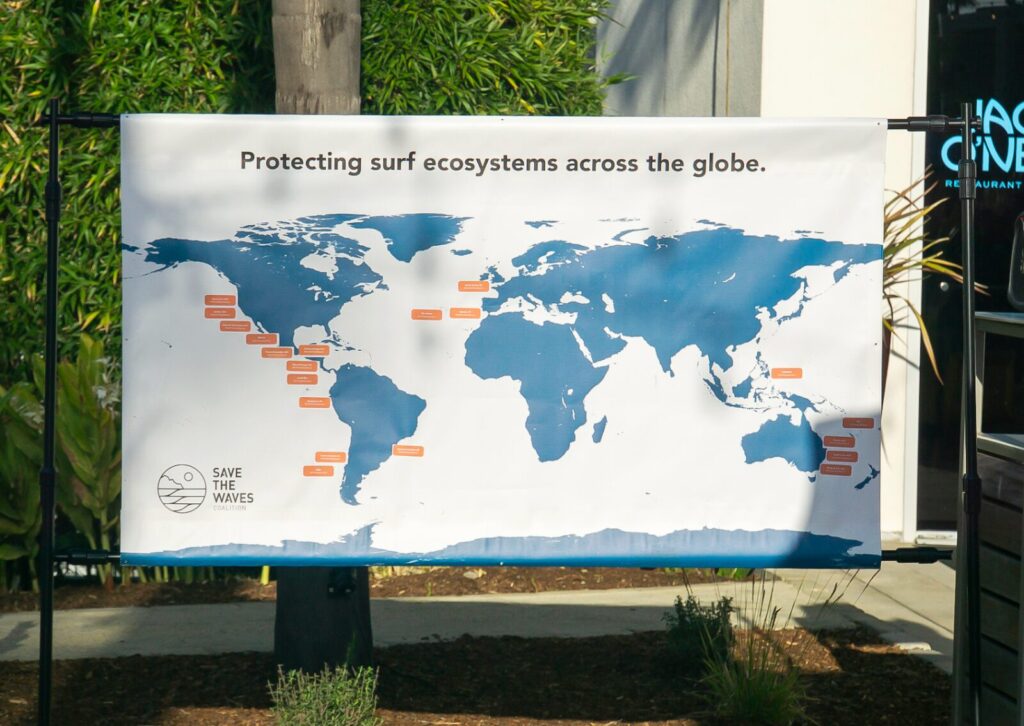
Through the experience they have gained and the global network they have formed over the past two decades, Save the Waves has built a wealth of knowledge, legal frameworks and data, while providing critical advice and moral support to emerging coalition partners around the world.
At the second bi-annual Save The Waves Coalition Summit in Santa Cruz, California in October 2025, attendees gathered from Australia, Portugal and the Azores, Costa Rica, Peru, Brazil, United Kingdom, Chile, Mexico, Indonesia, El Salvador, Ecuador, the Galapagos, and across California to share and learn.
Among them were partners, famous ambassadors, scientific advisors, field coordinators, World Surfing Reserve stewards and many others.
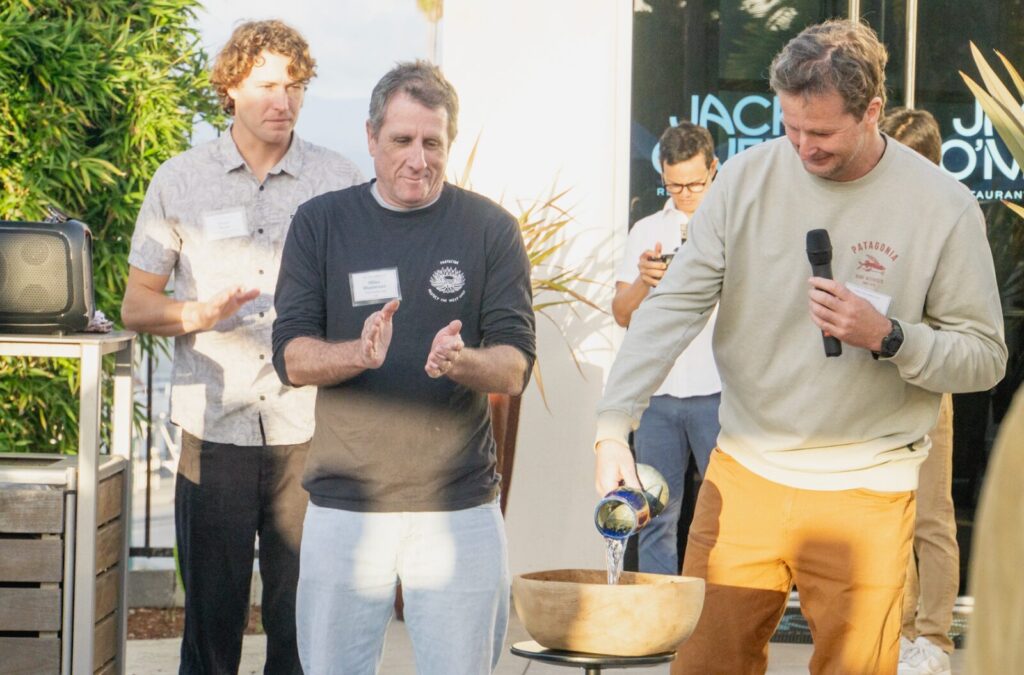
For the first time, Africa was represented by Protect the West Coast Managing Director Mike Schlebach and Communications Manager Miles Masterson. Africa has no surf ecosystems with any form of Save The Waves status, so the visit was timely.
PTWC and other like-minded partners in South Africa have identified several vulnerable surf ecosystems in the country as potential areas and have been in communication with Save the Waves for a while.
Mike and Miles seized the opportunity to meet and network with some of the leading surfer environmental activists in the world face-to-face for three days of learning sessions, plenaries, and vibrant workshops focused on the challenges of surf ecosystem protection, all with the goal of establishing 1,000 protected surfing areas around the world by 2030.

Mike and Miles were blown away by the positivity, enthusiasm, depth of knowledge and experience of all present, especially those who had been successful in protecting surf ecosystems, but also at the sheer extent of the growing threat that development and fossil fuel extraction presents around the world, including Bali, Indonesia, The Azores, Mexico, and elsewhere.
“Many of the challenges faced in these countries are very similar to those we are experiencing on both South African coasts from the onslaught of mining applications, oil and gas projects and more,” said Mike. “It was sobering, but also motivating to see so many intelligent, motivated people coming together to share knowledge and ideas that we have brought home to apply in South Africa to create our own legally protected surf ecosystems.”
Apart from being inspired by the positive energy of a large crew of powerful surfing eco-activists from all around the world, Mike and Miles learned an immense amount from people such as Surfrider Foundation CEO Chad Nelson, Patagonia’s Nick Mucha, big wave surfers Greg Long and Ramon Navarro, Save the Waves CEO Nik Strong-Cvetich and eminent scientific minds, including Dan Reineman and Cliff Kapono, and many others.
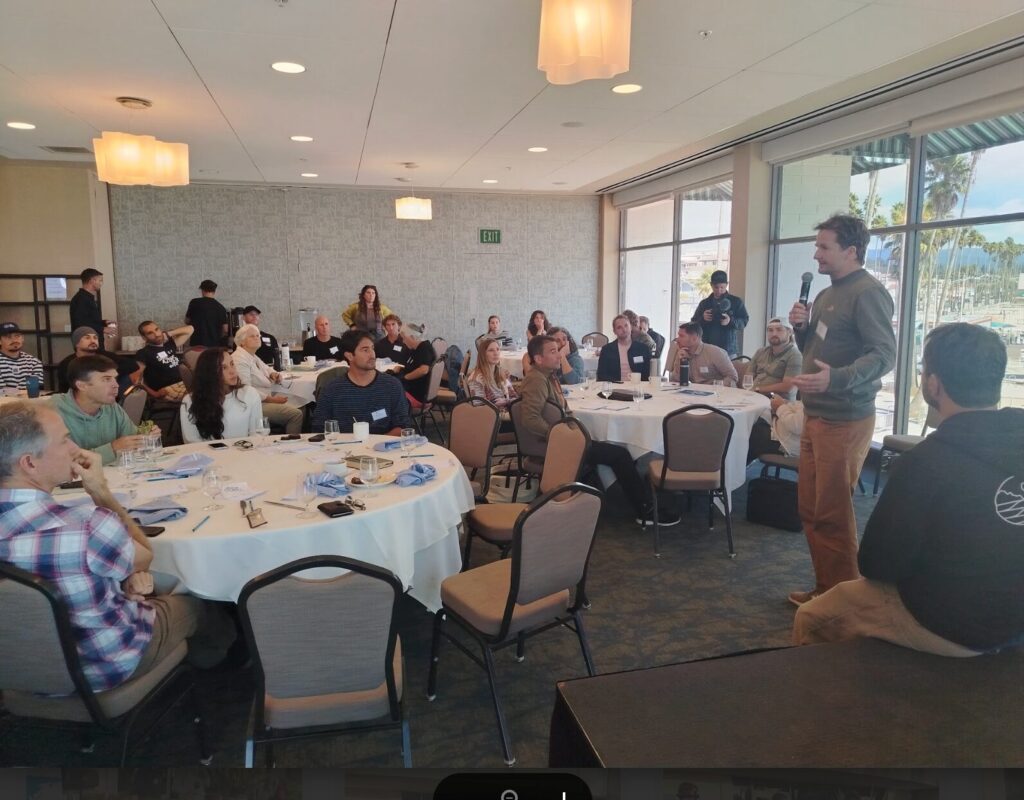
Summit delegates were in turn fascinated by PTWC’s development of our public participation platform Ripl, which even earned us a mention in a talk by Save the Waves Board Member Richard Margolius for our innovative approach to environmental conservation using digital tools.
Key benefits for PTWC were:
- Knowledge to Move Forward: We are now armed with a wealth of information on how to go about established protected surf ecosystems in South Africa. We learned how to utilise and leverage existing environmental and legal frameworks at several threatened areas across the country.
- Powerful Tools: Save the Waves and its partners have developed tools to enable regional activists to get surf ecosystem protected, from the recently published Guidelines and Best Practices for Surf Ecosystem Conservation; their 2023 SPAN Process Guide; and the recent Climate Vulnerability of California’s Natural Surfing Capital report – the first integration of data to estimate impacts of sea level rise on the surf economy of Santa Cruz.
- Contacts and Support: Through the friends we made in Santa Cruz, we will explore partnerships, knowledge-sharing and funding or technical support around surf ecosystem conservation. For our team and supporters, our presence alongside seasoned global conservation campaigners makes us realise that we are not isolated – our fight for the sanctity of the West Coast is part of a vibrant worldwide movement.

“Attending the second Save the Waves Summit was a deeply enriching experience that I have no doubt will pay dividends as we pursue our goals for surf ecosystems in South Africa, with an eye on using the country as a springboard to do the same in other parts of Africa,” said Mike. “A big thank you to Save the Waves CEO Nik Strong-Cvetich, his entire team and sponsors of the event.”
“It was so great to have the guys from Protect West Coast representing at the second Save The Waves’ Coalition Summit,” said Strong-Cvetich. “What they are doing is incredible – thoughtful, strategic and really needed. And for us, it is a positive step forward, as they pointed out there is a giant hole in our coalition, the shape of the continent of Africa – one of the most surf-rich coastlines in the world.”
Protect the West Coast will be revealing more of its plans to work with Save the Waves to protect South African and African surf ecosystems shortly, so watch this space.