In a major win for the public participation process, PTWC has withdrawn an appeal against the Environmental Authorisation (EA) awarded to mining company Whale Head Minerals (Pty) Ltd to mine on the coast after the company agreed to give a fishing community in Port Nolloth improved access to important fishing grounds, as well as environmental oversight measures and financial support required by PTWC.
The appeal stemmed from a 2024 application by Whale Head to mine for heavy minerals along 27km of coast between Port Nolloth and Alexander Bay, with an extent of 3,127 hectares, for which a Mining Right was granted by the Department of Mineral and Petroleum Resources (DMPR).
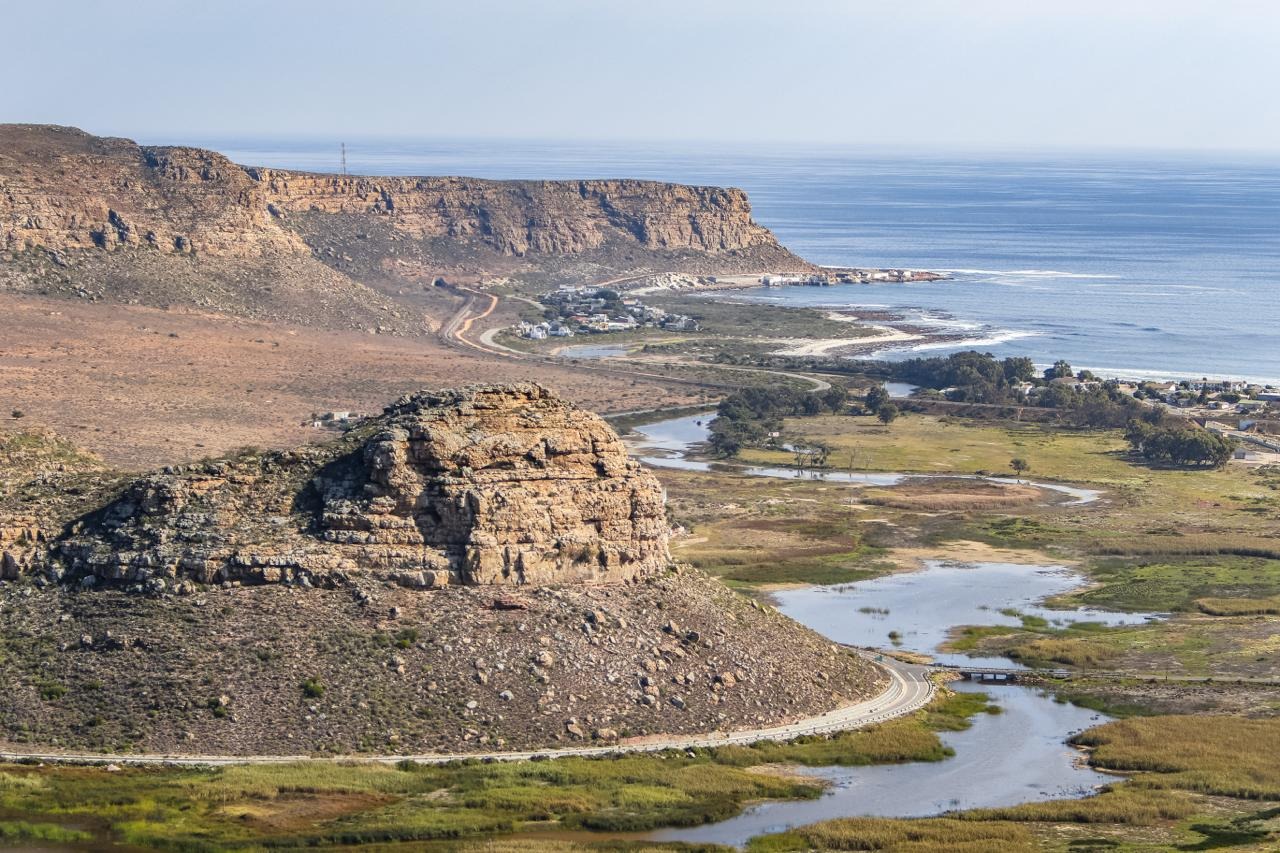
Whale Head was given the right to dredge for heavy minerals such as garnet, zirconium, rutile and leucoxene in and beyond the surf zone ( Concession 2A) along a shoreline north and south of the Holgat river – a dry river reported to have last flowed in 1925, but would have played a role many millennia ago in distributing precious minerals into the ocean and beaches around its mouth.
At the time the Mining Right was granted at the end of 2024, Managing Director of PTWC Mike Schlebach urged the public to appeal, citing a lack of adequate scientific data on the impact of industrial dredging on sandy and rocky habitats of the sea floor, and its benthic flora and fauna.
PTWC lodged an appeal to the DMPR after it was contacted by the Aukotowa Fishing Primary Co-operative in Port Nolloth, who represented about 50 fishers. Aukotowa complained that they did not know about the right and had not been consulted.
The appeal stated that the EA process was inadequate, and did not meet minimum EIA Public Participation Process (PPP) requirements as set out in by the National Environmental Management Act (1998), and the EIA regulations of 2014. From a scientific perspective, the appeal highlighted potential impacts on nearshore fisheries resources and marine habitats, particularly when considered with other mining operations in the area.
The fishers raised concerns that cumulative mining had severely restricted access, and would result in increased turbidity and the smothering of West Coast rock lobster habitat, in the nearshore environment limiting their ability to lobster, snoek, seabream and southern mullet, prejudicing their right to sustainable livelihoods, access to food and their cultural heritage.
The appeal also pointed out that the DMPR allowed Whale Head to get a mining right without a prospecting right. “There is no evidence in the EIAR that prospecting was undertaken for heavy mineral sands,” PTWC wrote. This is a major legal failing, even though the DMRP allows it all the time.
PTWC stated that the Mining Works Programme (MWP) submitted by Whalehead was not a MWP, but rather a geological report. The MWP, another document mandated by law, needs to clearly define the economic merits of the project. However, none of the economic factors – including cash flow forecasts, mine scheduling, capital expenditure, financing mechanisms and Social Labour Plan (SLP) – were included.
Other concerns raised were potential environmental damage by the dredging of the sea floor; a failure to adequately consider cumulative impacts as defined in NEMA, and a lack of detail in the Rehabilitation Plan, which included no itemisation or costings, no scheduling, and no maps showing rehabilitation areas – all of which the DMPR simply overlooked
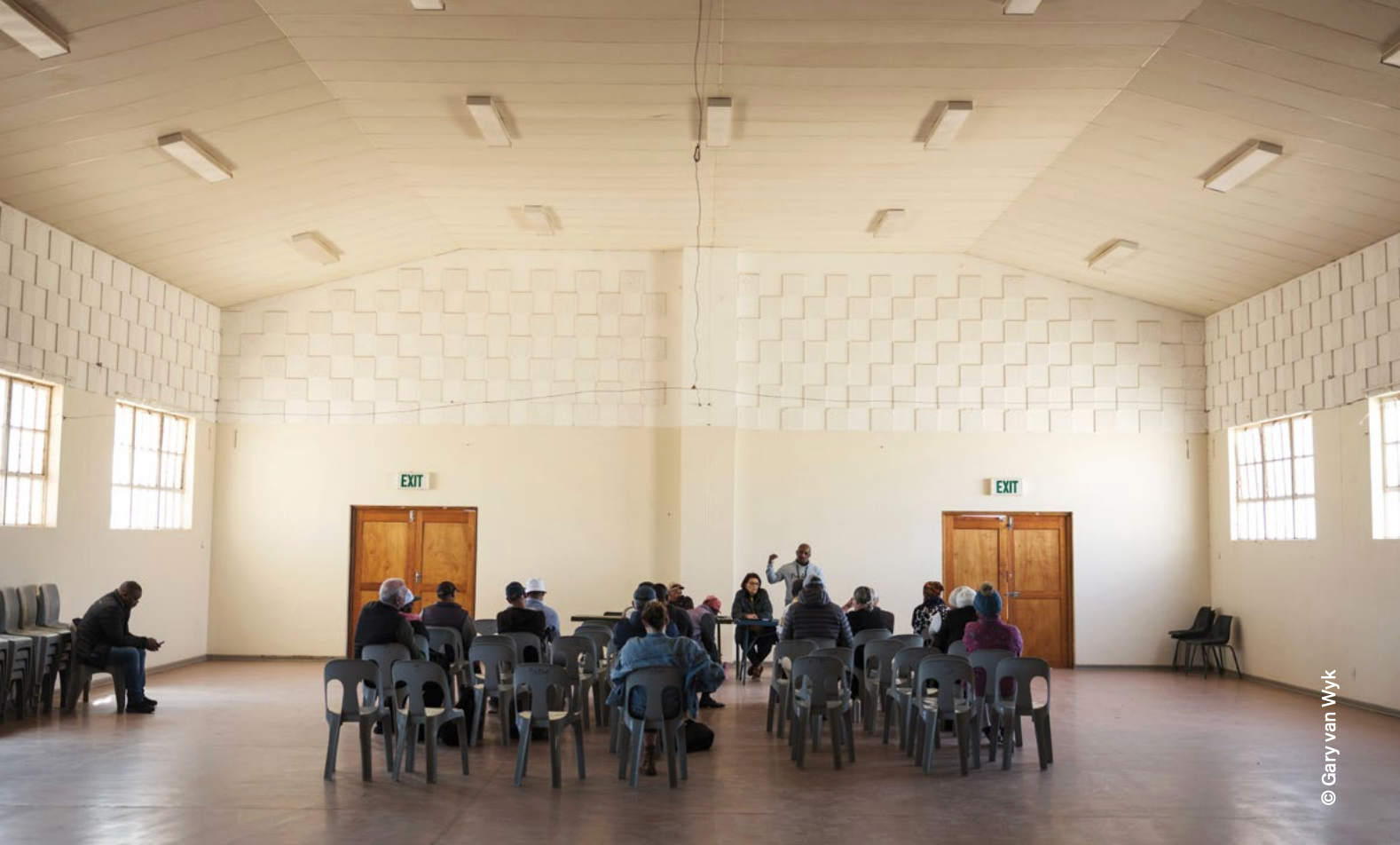
However, after dialogue between the PTWC, the Whalehead team, and Aukotowa, an agreement was reached, brokered by Port Nolloth community leaders, including Walter Steenkamp and pastor, James Malgas, who will now look to partner with PTWC to help other fishing communities to engage with the organisation’s Ripl PPP platform to boost public participation.
A Memorandum of Understanding was signed between Aukotowa and Whale Head based on three concerns raised by the fishers: financial support; environmental control; and fishing access to the mining area.
Whale Head committed to transparency in environmental matters, and said they would assist to get the fishers access to the Muisvlak fishing area that lies in an Alexkor concession to launch their boats – something Alexkor had promised but never delivered on, and which the fishers still had no access to. Whale Head agreed to assist Aukotowa with financial support, particularly with costs in the rock lobster and snoek season.
This was contingent on the DMRP granting the mining right, and transparent financial records provided by Aukotowa for 2026. There was also a clause recognising the fishers’ right to the environmental stewardship of fishing stocks as an important extension of their cultural identity.
The MOU was also contingent upon PTWC withdrawing their appeal. In return, the PTWC withdrawal was contingent on certain conditions to be met by Whale Head that satisfied points in the original PTWC appeal. Whale Head agreed that they would contribute to a Rehabilitation Fund of R500,000 to R1 million per year minimum, as well as commit to a rehabilitation plan within 12 months from the start of mining.
Whale Head also agreed to scientific monitoring during the life of mine and implementation of mitigation measures. Marine scientists would be appointed to work with Aukotowa to conduct baseline studies prior to mining and to assist in monitoring marine conditions. Another condition was that PTWC could access the SLPs and environmental audit reports submitted to the DMRP annually.
Candidate Attorney Zarreen Khan of the PTWC legal team said that the agreement underlined the power of the appeals process as a public participation tool, with meaningful benefits for communities to have their say and then translate that into tangible benefits on the ground.
“This is real public participation happening in real time. It gives the community a seat at the table, and empowers them to be part of decision-making processes that affect their livelihoods and culture, the very essence of a participatory democracy, none of which would have happened without the appeal,” she said.
News of the appeal even found its way into an article in a UK-based stock market publication Shares Magazine, which mentioned the impact it had on the owner of Whale Head, Kazera Global PLC:
“In December 2024, local organisation Protect the West Coast issued a notice urging the public to appeal [an] environmental authorisation granted to Whale Head by the South African government. The organisation flagged the sea floor dredging method used at heavy mineral sands deposits as ‘a destructive form of mining with a known record of damaging benthic ecosystems’.”
Kazera said the objection was withdrawn after “discussions surrounding environmental and community matters” which saw Whale Head promise “to update its rehabilitation planning, scientific monitoring and reporting measures”.
The article noted that Kazera shares were up almost 7% in London at the news.
Mike Schlebach, MD of PTWC, added that the agreement was a boost for the power of public participation, and highlighted PTWC’s role in securing the first ever ongoing rehabilitation plan in the Northern Cape, with concomitant scientific oversight.
“Through dialogue with stakeholders sparked by our initial appeal, there’s now some dialogue moving forward. We have managed to get Whale Head to promise that they will try and secure the Muisvalk area from Alexkor so that fishers can launch their boats there. Otherwise they had to launch from Port Nolloth and drive all the way to the fishing grounds.”
“We have also managed to get Whale Head to commit to rehabilitation oversight and scrutiny, so it’s a step in the right direction for all parties,” Schlebach said.
Sign up and register as an Interested and Affected Party (I&AP) at Ripl.co.za to comment on, object to and appeal against mining applications.
Make your voice heard in the vitally important Public Participation Process.