A huge backlash is gaining momentum in the Western Cape as environmental organisations, community groups and conservation bodies intensify fociferous opposition to plans to build an enormous R47 billion green hydrogen and synthetic aviation fuel facility near Hopefield just inland from the West Coast.
Multiple red flags have been raised about the impact of five overlapping environmental and regulatory authorisation processes for the eSAF and Green Hydrogen plant and a further application for a separate solar farm in the Hopefield area about 35km east of Langebaan. The synthetic fuel plant is earmarked for 61 hectares, and the solar farm will cover 3,000 hectares of pristine veld with, according to some reports, up to 3.9 millions solar panels when complete.
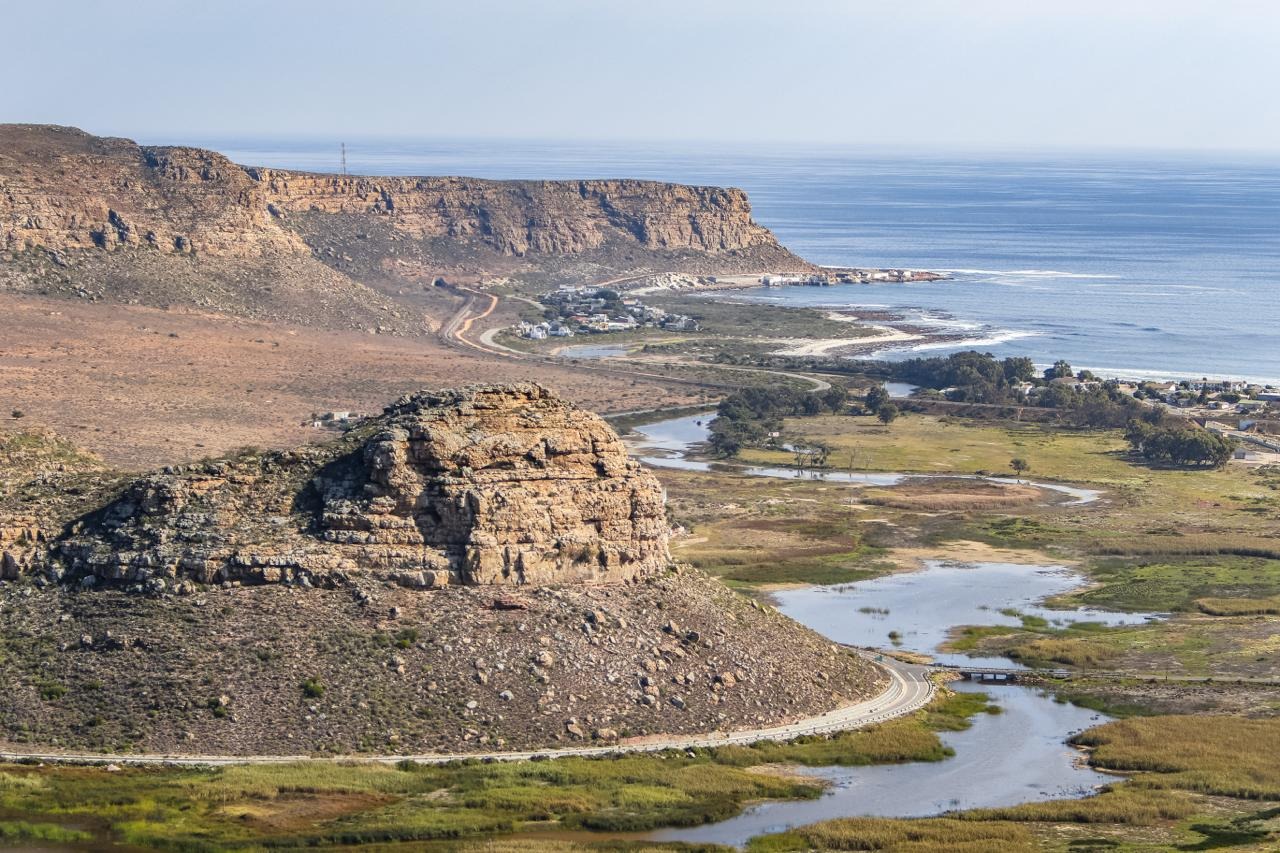
A range of organisations – including Protect the West Coast (PTWC), the Save Hopefield campaign and other civil society networks – have pointed out major potential impacts of a project of this magnitude on one of the world’s most ecologically sensitive landscapes that comprise threatened fynbos and groundwater reserves in a water scarce area. There is widespread concern that the industrial-scale project will undermine local tourism, which depends heavily on the natural flow of West Coast ecosystems, including landscapes, wildflower displays, birdlife and character.
One of the more vocal voices of dissent comes from the West Coast Environmental Protection Association (WCEPA), backed by PTWC, who say repeated requests for information have gone unanswered and allege that key supporting documents for public participation – including specialist field studies and baseline ecological assessments to properly evaluate impacts – are incomplete or absent.
The Draft Scoping Report (DSR) itself outlines serious threats to a highly sensitive ecosystem. Five of the application processes relate to a single facility: a green hydrogen and electro-Sustainable Aviation Fuel (eSAF) plant on Farm Portugeesche Fontyn 167 that would operate around the clock. At full production, the plant is estimated to consume up to 8 megalitres of water per day, drawn primarily from the local municipal potable water line, while also abstracting up to 175,000 cubic metres of groundwater annually from the shallow aquifer beneath the site. The electrolysis process at the heart of the plant requires a continuous and uninterrupted water supply, raising serious questions about the impact on local water security, particularly during construction and in the event of supply disruptions. The plant would also handle hazardous materials including hydrogen, ammonia, naphtha and amine solvents.
For the PTWC legal team, the concern is not only about water consumption but about introducing an industrial-scale chemical complex into an ecologically sensitive landscape whose groundwater systems, wetlands and rivers remain insufficiently understood. The plant directly overlaps sensitive underground aquifers that replenish the Langebaan Lagoon and surrounding wetlands. Intercepting or polluting this water table threatens the lagoon’s fragile marine and avian life, drawing concern from BirdLife South Africa about the project’s environmental footprint.
BirdLife has questioned whether sufficient consideration has been given to impacts on bird populations, ecological corridors and biodiversity. They say that the cumulative impact of renewable energy installations, industrial processing facilities, pipelines and associated transport infrastructure could permanently affect a critically important coastal landscape.
The DSR itself confirms that the industrial scale footprint of the project overlaps Critical Biodiversity Areas and an area rated with Very High environmental sensitivity for agriculture, animal species and aquatic biodiversity.
Critics have noted that a single industrial chemical spill or layout mismanagement could permanently damage ecosystems tied to the West Coast National Park. Beyond chemical risks, the construction of potentially 60-metre-high, flame spewing, flare stacks will alter the landscape, turning a pristine eco-tourism area into an industrial hub, which post grave threats to the local hospitality and tourism sectors.
Apart from the five applications that relate to the Green Hydrogen plant, the sixth comes from a Phelan subsidiary, Phelan Green Saldanha Energy, for an entirely separate but simultaneous project – a massive 3,000 hectare solar photovoltaic facility on and around the same farm. This solar farm would generate up to 1.6 gigawatts by the time it is complete.
Two options face developers: build the solar panels over the fynbos, or clear the fynbos. The heavy irony of this dilemma is the huge threat that both options pose. If the fynbos burns – fire is part of its natural lifecycle – potentially toxic chemicals built into the panels may leach into the ground from the wreckage. If the ground is cleared, the fynbos will be lost forever.
The site is dominated by Hopefield Sandy Fynbos, one of the most botanically diverse and threatened vegetation types on earth. It is classified as Vulnerable and Hardly Protected provincially, with more than 40 percent of its original extent already transformed. A second vegetation type on the site, Swartland Shale Renosterveld, is classified as Critically Endangered, with the vast majority of it already lost to farming. The proposed location overlaps Critical Biodiversity Areas, channelled wetlands, and confirmed field populations of Endangered and Vulnerable plant species found nowhere else on earth, including the Endangered Hopefield Cornbush and Endangered Snakestem Pincushion. The Endangered Black Harrier and Vulnerable Southern Black Korhaan have both been recorded in the area.
A central concern for the PTWC legal team is that the regulatory architecture meant to protect it is processing at least six separate applications for the same patch of land, with no requirement that any one authority look at all of them at once.
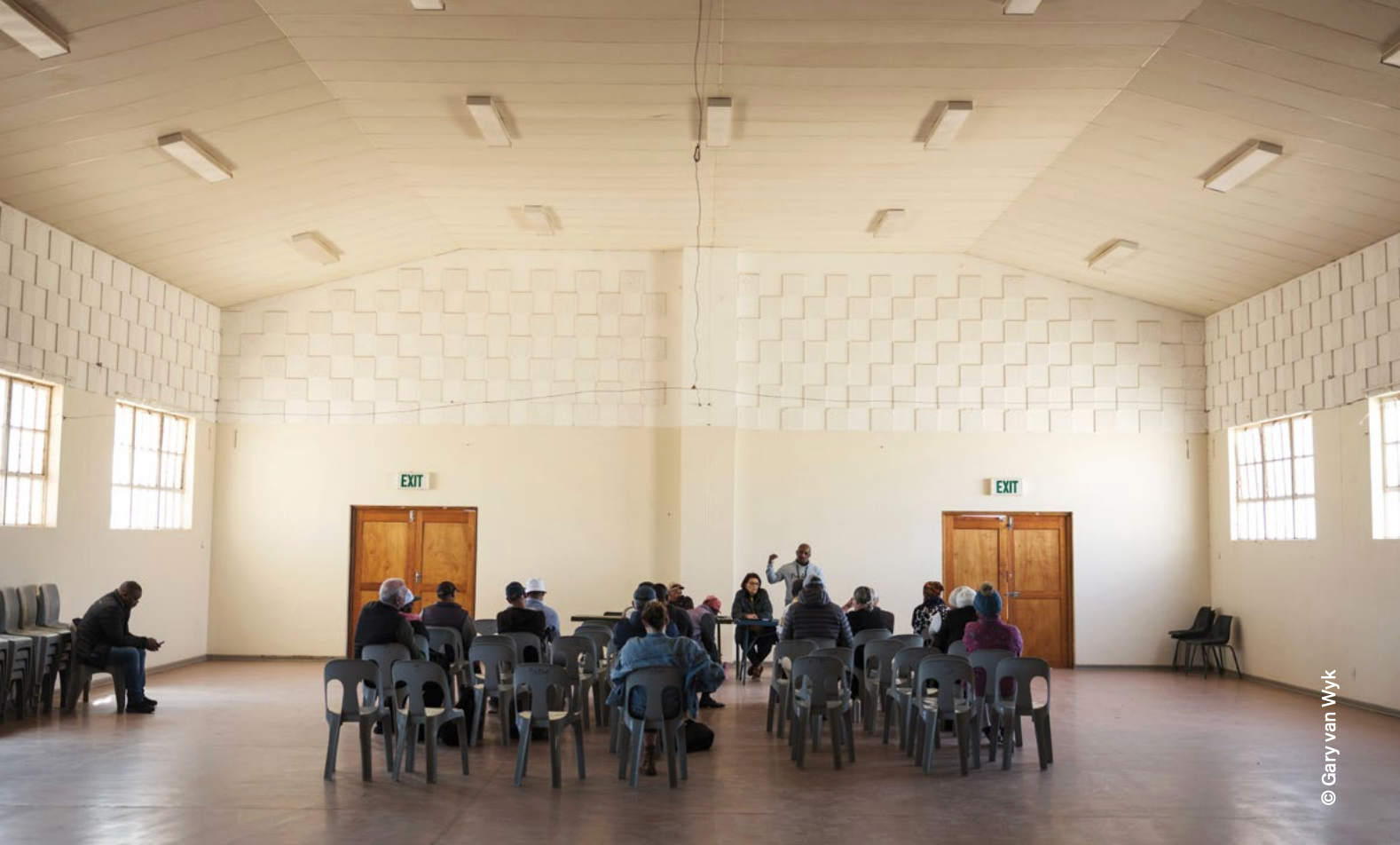
Local civil action groups and residents have heavily criticized the public participation process, calling out a lack of local transparency from WSP Group Africa, the Environmental Assessment Practitioner (EAP), for the five applications.
The PTWC legal team has also raised concerns about engagement with the solar application’s EAP, Eco-Compliance. “Despite repeated written follow-ups, we have not received the information we requested or confirmation of the comment deadline,” said PTWC in-house attorney Michael Yaman. “That makes it very difficult for the public to participate meaningfully in the time available.”
Yaman pointed out that meaningful public participation is being undermined by a process that asks communities to comment before the science is ready. In the case of the Water Use Licence Application, required specialist studies had not yet been compiled at the time the public was invited to comment. While WSP has since indicated it will continue to accept comments, the initial request to engage with incomplete information risks confusing and misleading the public, materially constraining a process that is a legal requirement.
“It is simply impossible to comment on reports and studies that have not yet been compiled, yet the public is being asked to comment,” said Yaman.
All six applications are connected to one holding company, Phelan Green Group, which is owned by the Phelan family in Ireland – an illustration that South Africa has been identified as the host for the project as part of the EU’s push to decarbonise aviation.
The PTWC legal team agreed with the argument in the editorial published by The Common Sense ‘Do not sacrifice South Africa to satisfy Europe’ that argued South Africa should not be expected to shoulder the environmental burden of Europe’s transition to cleaner aviation. The project is a form of environmental outsourcing, when renewable energy and green fuel projects are set up in environmentally sensitive areas of the Global South to satisfy renewable energy targets in wealthier countries.
“This is being presented as a green project,” said Yaman. “But local people will carry the environmental risks while Europe gets the clean fuel. We are not opposed to climate solutions, but they should not come at the expense of biodiversity, local livelihoods or meaningful public participation.”
The main environmental impact assessment is being processed by the Western Cape Department of Environmental Affairs and Development Planning. Running alongside it, simultaneously and with different decision-makers, are a Water Use Licence Application before the Department of Water and Sanitation, an Atmospheric Emission Licence application before the West Coast District Municipality, a waste management authorisation under the National Environmental Management: Waste Act, and a National Heritage Resources Act application.
Each has its own comment window and its own decision-maker.
None of the six processes has produced a cumulative impact assessment addressing all of them together. Neither do they address the extra burden of the 18 wind and solar energy applications that have been identified within 30 kilometres of the site, three on or immediately adjacent to the project area. Other burdens come from the Elandsfontein phosphate mine, which draws water on the same regional aquifer, while the site also already contains various transport and gas corridors.
While PTWC’s mandate is focused primarily on mining on the West Coast, it is keeping a close eye on the Hopefield development and will be adding its voice throughout the Public Participation Process if it finds flaws in the process, such as a demonstrable lack of engagement with the cumulative impacts of the project on its many different levels.
The Hopefield proposal reflects the trend of fast-tracking strategic green energy projects before the necessary environmental science has been completed, potentially undermining the integrity of South Africa’s environmental authorisation process.
Sign up to Ripl (www.ripl.co.za) to register and comment on the numerous Hopefield applications while comments are still being accepted.
Ensure your voice is heard, sign up today.