Targeted minerals and metals include gemstones, precious metals, ferrous and non-ferrous metals, heavy metals and industrial minerals. In its most extensive appeal yet (102 pages), PTWC filed 12 grounds of appeal against the authorisation, addressing what PTWC considers is a lack of a proper assessment of cumulative impacts; lack of proper assessment of benthic habitats (seafloor life), and lack of sediment plume dispersion modelling, as well as inadequate public participation.
However, at the heart of the appeal is the dearth of information about the seabed and benthic environment on this stretch of sea floor off the West Coast. Only once the baseline environment is properly understood, can the effect of prospecting and mining be measured. This study needs to take place prior to prospecting, before the seabed is disturbed or full scale-mining takes place.
The only baseline presented in Trans Hex’s application to the decision-maker, the Department of Minerals and Petroleum Resources (DMPR), was a desktop study compiled largely from sources published in 1999 and 2007. The National Environmental Management Act, 1998 (NEMA) requires an EA to rest on an assessment of the likely impacts carried out before the decision is taken, not after it.
There could be significant natural or cultural assets that may be severely impacted. For example, further north of this stretch of coast, in a sea concession once held by De Beers, an extremely rare fossilised yellowwood forest was unexpectedly found on the seabed during exploration off Kleinzee in 1997. The area was recognised as an Ecologically and Biologically Sensitive Area (EBSA) in 2014, and declared the Namaqua Fossil Forest Marine Protected Area in 2019, with 1200 km2 of unique fossil forests and the surrounding seabed ecosystem ultimately protected.
According to PTWC’s in-house attorney, Michael Yaman, “the six Trans Hex concessions cover a vast area and very little is known about what’s really out there, with no plans, it appears, to find out. The same discrepancy is evident when considering the money set aside for rehabilitation. Almost all of it is earmarked for a survey that is meant to show how the seabed will recover, but there appears to be no way of recording what it looked like beforehand.”
Cumulative impacts and the Olifants River Estuary
Yaman added that the assessment’s prediction that sediment plumes caused by the disruption of the seabed were unlikely to reach the Olifants River Estuary was based on a desktop study that did not indicate firsthand understanding and modelling of the actual substrates and their dispersion.
In 2023, PTWC took Trans Hex to the High Court and secured an order in which the Court declared certain ‘no-go areas’ around the Olifants River mouth estuary, one of the most important estuarine habitats in the country. However, the recent offshore authorisation does not even mention that order, and would ostensibly permit destructive prospecting inside the area it covers (in concessions 12A and 13A).
In addition, the applicant’s own marine specialist recommended the exclusion of sensitive biodiversity areas from prospecting across all six concessions, and two provincial authorities backed that in writing. But it was approved anyway, with nothing excluded, and no reasons recorded.
Cumulative impacts were again not properly measured, an issue PTWC has raised repeatedly. The assessment seemingly ignores two diamond mining rights already granted to Trans Hex over concessions inside this same footprint. PTWC has appealed those separately, but contends that they still had to be taken into account here.

Eleven appeals against the Trans Hex authorisation
Besides PTWC, 10 additional appeals from government and other organisations were lodged against this authorisation, including the Western Cape Government’s Department of Environmental Affairs and Development Planning (DEA&DP) and the Matzikama Municipality. Community, Civil Society and Government talking in one collective voice.
Others were small-scale fishers and fishing groups from Doringbaai, Ebenhaeser and Papendorp; the Strandfontein Ratepayers Association; and the South African Pelagic Fishing Industry Association (SAPFIA), with joint appeals by Natural Justice and The Green Connection, and the Biodiversity Law Centre, Conservation Outcomes and Masifundise Development Trust.
It is worth noting the link to the 14 August 2026 judgment by the Constitutional Court against Shell Oil’s proposed oil exploration off the east coast. The ruling in Sustaining the Wild Coast NPC v Minister of Mineral Resources and Energy enforced the requirement for meaningful consultation with affected communities, another important point that PTWC included in its appeal.
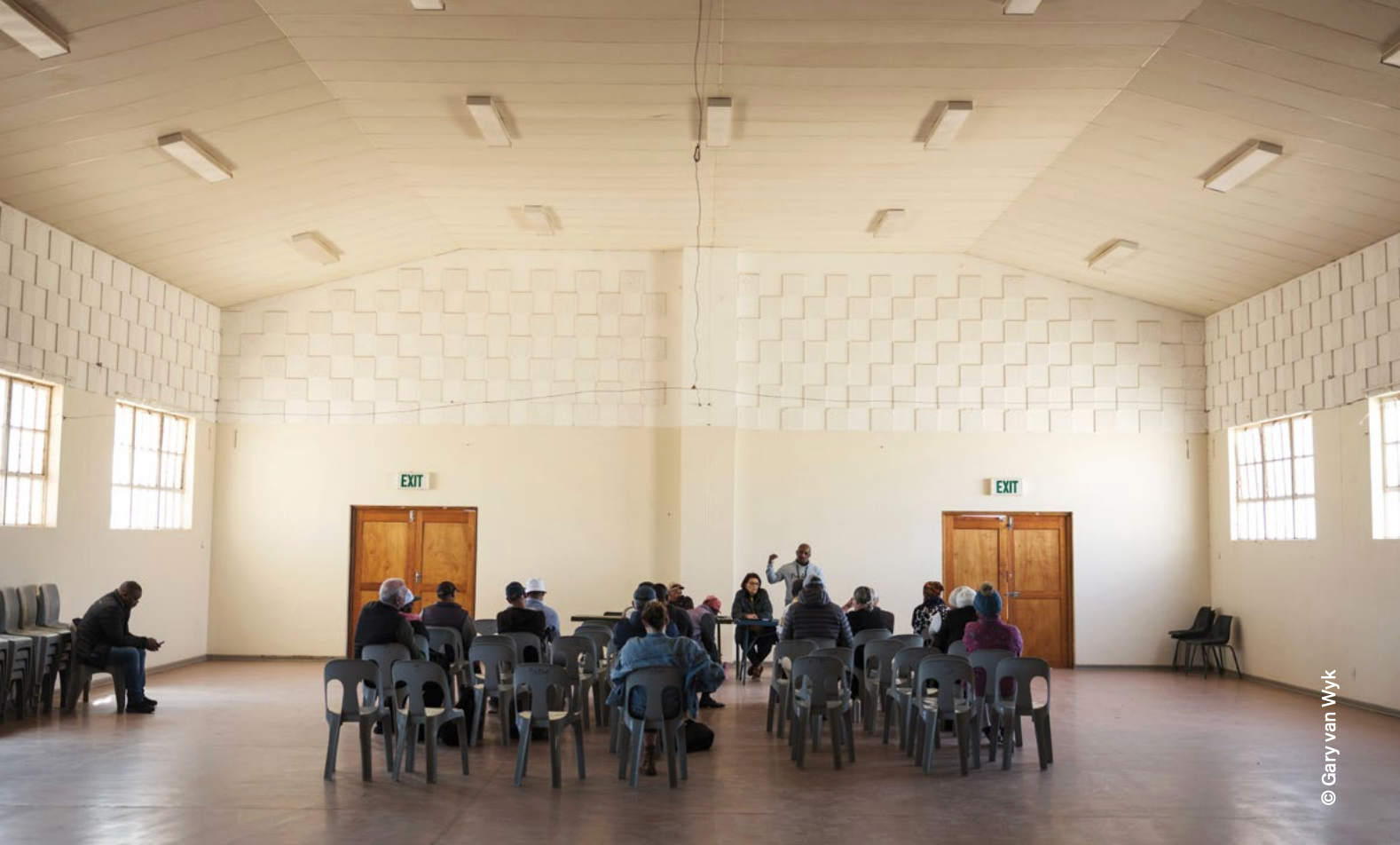
Fishers from Ebenhaeser had asked for a meeting and were told to come to an open day. None of them did. The record shows just 20 community members at public meetings across the entire application process in the lead up to the decision in favour of Trans Hex. This is not what our courts have previously held in terms of what constitutes meaningful public participation.
Why seabed prospecting on the West Coast matters
The seabed off this coast is not just a barren desert. The Southern Benguela upwelling system is one of the most productive marine environments in the world, and the communities along this stretch of coastline depend on a functioning marine ecosystem to support themselves.
To authorise activity that can disturb or destroy parts of that system, without a proper understanding of what the impact will be, runs against the principles South African environmental law and our Constitution are built on.
“You can’t exploit the seabed without knowing what it will cost. The law asks decision-makers to be careful, to follow the precautionary principle and to make an informed and considered decision. There is too much at stake here and too little understood about it. Where we believe a decision is not the right call, we’ll keep stepping in,” concluded in-house attorney Michael Yaman.
The appeal process suspends the authorisation while it is decided. Nothing happens on this stretch of the coastline until then. So for now, we await the decision of the Department of Forestry, Fisheries and the Environment (DFFE) Appeals Directorate.
Read the PTWC and co-appellants’ appeals in full here
Add your voice. Join Ripl