What is PPP?
PPP stands for the Public Participation Process. This is the legally mandated mechanism to assess all types of development applications, including mining, oil and gas projects and construction projects. All must undergo public scrutiny and feedback to proceed to the next stage. PPP is designed to empower and give affected communities, organisations and individuals a voice in decisions about all new projects that directly impact the environment, communities, livelihoods and health.
Public Participation is required when assessing the environmental impact of any application for an environmental authorisation. It is defined in the National Environmental Management Act of 1998 as a “process by which potential interested and affected parties are given opportunity to comment on, or raise issues relevant to, the application”.
Why is it important?
Taking part in the PPP is one of the only avenues ordinary South Africans have to comment on, object to, or appeal decisions that could have long-term environmental and social consequences. It is an internationally recommended public oversight mechanism required to present all relevant documentation for scrutiny. It allows people to raise concerns, request more information, demand accountability and advocate for better environmental or social protections. If used effectively, PPP can stop or delay harmful developments and force companies and the government to consider more sustainable alternatives.

How does it work (or at least how is it supposed to work)?
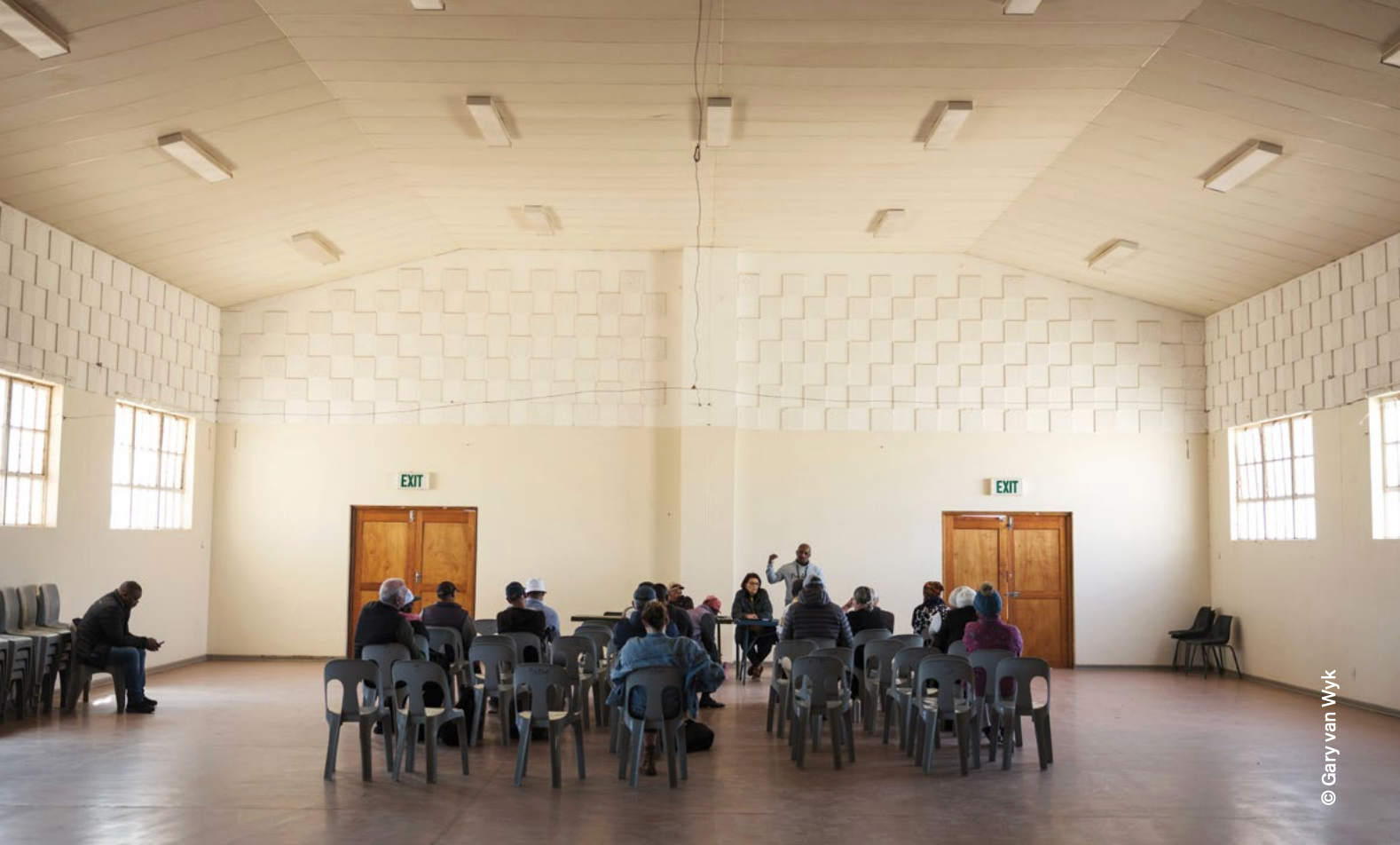
When a mining company applies for a prospecting or mining right, it must appoint an Environmental Assessment Practitioner (EAP) to manage environmental assessments and process the application. The EAP is supposed to notify all stakeholders, who can register for the application as an Interested and Affected Party (I&AP) through various means, such as newspaper adverts, community noticeboards and email notifications. Once the EAP and various specialists have done their assessment, they have to share this information with the public through public meetings, open days or focus groups. They are required to make all relevant documents available to I&APs such as the draft Scoping and Environmental Impact Assessment reports (EIAs), and collect feedback within a designated 30 day comment period. This input and the responses to it, must be included in the final EIA reports submitted to the Department of Mineral and Petroleum Resources (DMPR) who have the powers to authorise the EIA reports. In the case of appeals against DMPR decisions, the public can submit their written comments to the Department of Forestry, Fisheries and the Environment (DFFE).
What is wrong with PPP?
The way PPP is structured, less-than scrupulous players in the South African mining industry can take advantage by presenting documents that do not meet required legislative standards. Some underplay socio-cultural impacts, neglect to assess cumulative impacts, and include little by way of economic feasibility. A big problem is woefully inadequate rehabilitation budgets. The process is often subverted. PPP is often poorly advertised. Documents are often overly long and complex, unavailable or inaccessible and not translated into regional languages. Public meetings are limited in number, rescheduled with little notice and the process often feels rushed. Communities are frequently left out or misinformed, while feedback from the public is often ignored or downplayed in final reports. There is also a deep conflict of interest when mining companies appoint (and pay large fees to) consultants managing the PPP – leading to a system that tends to favour the mining industry over public or environmental wellbeing.
Why should the public engage with PPP?
There is strength in numbers of comments from the general public and local communities, and in quality of inputs from highly qualified scientists, economists, geologists, botanists and legal experts to flawed or unfeasible mining applications. If we opt out, mining companies just get their way. Even when the system is subverted, public participation can at least delay applications, raise red flags with decision-makers, trigger appeals or further preventative action, and empower communities. It creates a paper trail of resistance. It also increases pressure on authorities to uphold the law and act in the public’s interest and makes sure that the mining companies are better prepared. Silence, which on the West Coast has become the norm, is always interpreted as consent.
Where does Ripl fit into the picture?

Up until recently, the PPP has been an archaic, complex process that has been particularly difficult for the average individual to navigate effectively. Ripl is PTWC’s game-changing digital public participation platform, designed to make engagement far easier, faster, and more accessible. It immediately alerts users to new mining applications, summarises the key details of proposals, includes all the relevant documentation and provides simple tools to submit objections or comments directly to the relevant authorities. Ripl helps cut through the red tape and empowers citizens to take meaningful action with just a few clicks – no legal or scientific expertise required. It’s a game changer, but we need your help to make it as revolutionary as we know it can be.
Join Ripl and make waves: www.ripl.co.za
Abbreviations and acronyms
The Public Participation Process is filled with acronyms and abbreviations. Knowing what they stand for will further help demystify the process:
- I&AP – Interested and Affected Party
Any individual, group, or organisation that may be impacted by or has an interest in a proposed development can register as I&AP to voice their concerns and stay informed on the progress of each mining application. - EAP – Environmental Assessment Practitioner
A consultant appointed by the applicant to manage the environmental assessment and facilitate the Public Participation Process on behalf of the applicant mining company. - DMPR – Department of Mineral and Petroleum Resources
Formerly known as the Department of Mineral Resources (DMR) and later the Department of Mineral and Resources and Energy (DMRE), and now known as the Department of Mineral and Petroleum Resources (DMPR) this is the South African government department responsible for both approving and regulating mining rights and ensuring compliance with mineral and energy legislation. - DFFE – Department of Forestry, Fisheries and the Environment
The authority tasked with overseeing environmental protection and biodiversity conservation in South Africa.
Further commonly used PPP acronyms:
- BA – Basic Assessment
- BAR – Basic Assessment Report
- CA – Competent Authority
- EA – Environmental Authorisation
- EAR – Environmental Audit Report
- EIA – Environmental Impact Assessment
- EIAR – Environmental Impact Assessment Report
- EMPr – Environmental Management Programme/Plan
- NEMA – National Environmental Management Act, 1998 (Act 107 of 1998)
- S&EIR – Scoping and Environmental Impact Assessment Report