The deadline for appeals to stop Fish by the Sea prospecting for diamonds on the beach near Brand-se-baai adjacent to a Critical Biodiversity Area and a marine Ecological and Biologically Significant Area (EBSA), a world class surf spot and important bird habitats, among a slew of other environmental concerns, is almost upon us. PTWC calls on the public to appeal against another application by the company after the first was deemed inadequate last year. Comments close on Monday 17 February. Go to www.ripl.co.za to appeal.

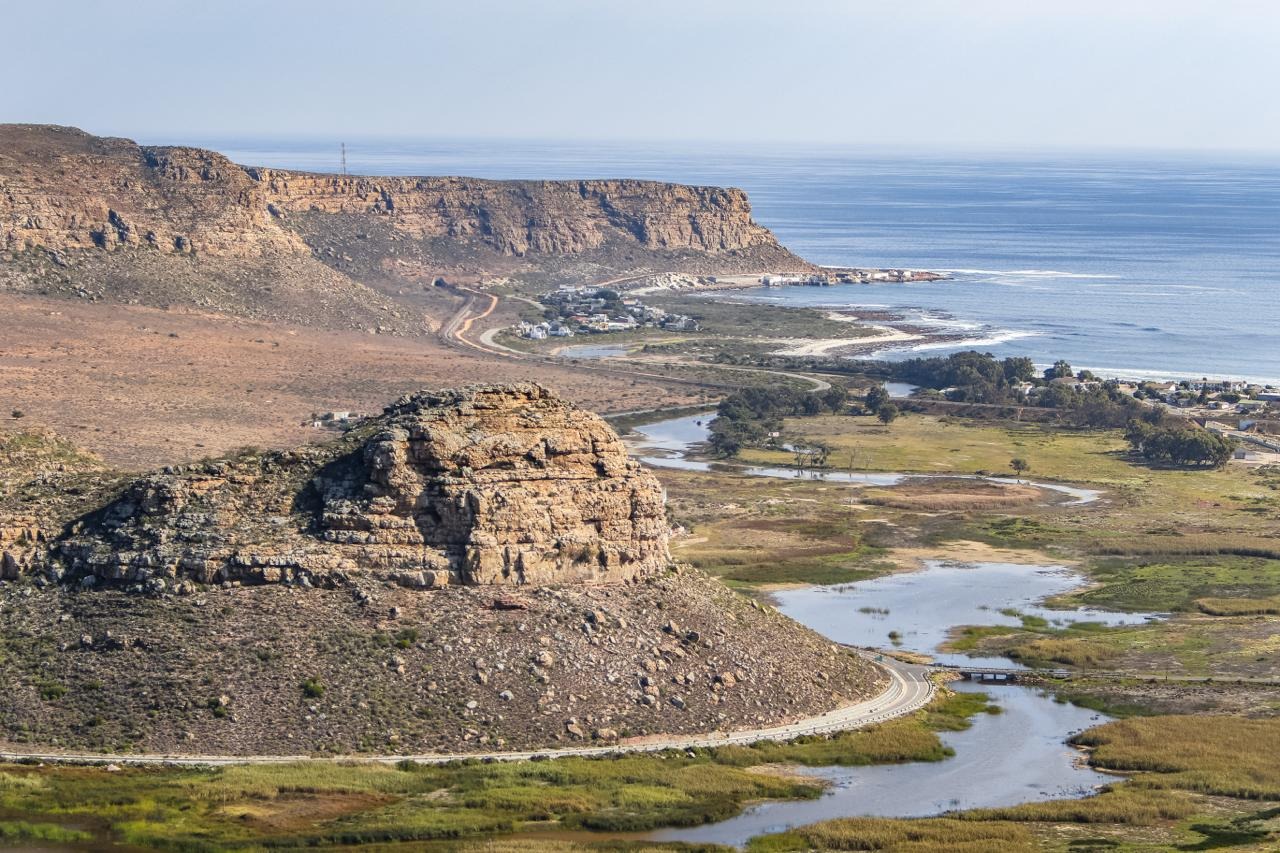
The vast Tronox Namakwa Sands operation is just inland from the proposed beach prospecting area, a fact that environmental reports fail to mention. Photograph: Jacque Smit
PTWC urges the public to appeal the authorisation given to Fish by the Sea, who are again trying to prospect for diamonds along a pristine West Coast beach adjacent to a Critical Biodiversity Area and next to the giant Tronox Namakwa Sands mining operation.
The 121 hectares (ha) area between the low-water and high-water mark on two farms not far from Vanrhynsdorp also includes a world-class surf spot, and is an important bird habitat. Should the invasive prospecting – utilising bulk sampling that entails massive trenches up to 15 metres deep to be dug along the beach – go ahead, mining is sure to follow.
This application, which has obtained an Environmental Authorisation from the Department of Mineral and Petroleum Resources, comes after the company’s first attempt last year was quashed when efforts to prove that the operation would comply with various environmental and other regulations were unsuccessful because the documentation was deemed inadequate.
PTWC notes that the application adds to the many prospecting and mining applications and authorisations along this sensitive coastal environment extending from Doringbaai in the south all the way to Alexander Bay. This application is targeting diamonds on the beach between the low and high mark and is adjacent to other prospecting and mining sites including the large scale Namakwa Sands heavy mineral sands mine owned by Tronox.
Cumulatively, it means that should Fish by the Sea be successful, there would be “wall to wall mining along the shore from the surf zone and inland”, if one includes the proposed Tronox operation and their current heavy mineral sand mine that is excavating and processing an ancient dune network measuring 16 million square metres.
PTWC notes that the marine ecology expert for the Fish by the Sea application recognised in the Basic Assessment Report (BAR) and Environmental Management Programme report (EMPr) that the cumulative environmental impacts were high, but claimed that with mitigation (rehabilitation and remediation) this impact would be “low-medium”.
Managing Director of PTWC Mike Schlebach pointed out a number of inconsistencies in the application, saying it was difficult to see how any remedial action could be taken to reduce the overall cumulative impact of such invasive activities taking place along this narrow coastal strip.
He questioned how a rehabilitation budget of R140,429 could repair the considerable damage that the bulk sampling would cause.
“Not only is it next to a marine EBSA and CBA, there is the risk that vulnerable habitats may be destroyed, especially if mitigation measures are not judiciously implemented. As is the case with many EMPrs, there’s a lot of rhetoric and promises, but from experience we know that remediation actions, socioeconomic benefits, and the correct use of the right materials and processes often don’t happen,” he said.
The authorisation for the Fish by the Sea application has not adequately considered the cumulative impacts, Schlebach warned, saying that the ad hoc nature of small miners tearing up chunks of beach was adding up to a potential catastrophe for entire ecosystems, with eventual systems collapse if it continued unchecked. It also spelled doom for the sustainable development of the West Coast that could open the door to alternative solutions.
A geologist familiar with the area, who preferred to remain anonymous, said it was incomprehensible why the “piecemeal, incremental destruction of the coastline through non-sustainable, so-called job-creation mining opportunities are allowed to continue unabated”.
He said hundreds of small ventures start and then fail financially “only to leave behind a trail of coastal destruction with no responsibility”.
The sheer size of the proposed prospecting trenches that would be dug along the beach “dwarfs the old 1960’s De Beers trenches (still highly visible today) dug perpendicular to the beach all along the coastline of Namaqualand”.
“To believe that the sea will restore the beach/marine environment to its previous state after coffer dams (dams built on the shore line to protect diggings from the action of waves and tides) have been built and these huge trenches have been dug is plainly false and misleading,” he claimed.

At least 5,000 tonnes of concentrate is required to obtain a sufficiently representative sample to determine a grade of carats per 100 tonnes. A 150 metre wide trench almost a third of a kilometre long backs against the ocean, protected by a five metre high berm.
Schlebach said that not only was it problematic that applications were ad hoc, but they were not being done with a clear strategic framework that considered the conservation value and importance of the West Coast in terms of more sustainable economic drivers with lower environmental impact, such as nature-based solutions and tourism.
PTWC has repeatedly called for a Strategic Environmental Assessment (SEA) to assess the cumulative impacts of prospecting and mining along the entire West Coast and to identify environmentally sensitive, no-go areas as well as areas that may be more suited to mining. A marine spatial planning process is currently underway to guide where, what and when human activities can occur in South Africa’s ocean areas, as required by the Marine Spatial Planning Act, which came into effect in 2021.
However, these plans are still in process and in the meantime, decisions to allow prospecting and mining in sensitive coastal and marine areas continues, thereby stifling options for the development of a sustainable marine spatial plan.
Overall, the potential damage to this sensitive coast will add to huge biodiversity loss, with impacts on beach ecosystems and dune systems, as well as the loss of recreational and tourist potential. Concerns about inadequate provisioning for rehabilitation, a hallmark of most disused mining sites on the West Coast, remain a concern.
PTWC urges all of those who signed up as an Interested and Affected Party (I&AP), and anyone else, to review and comment on the EIR and other updated documents and associated appendices and – should you see fit – strongly object to this application.