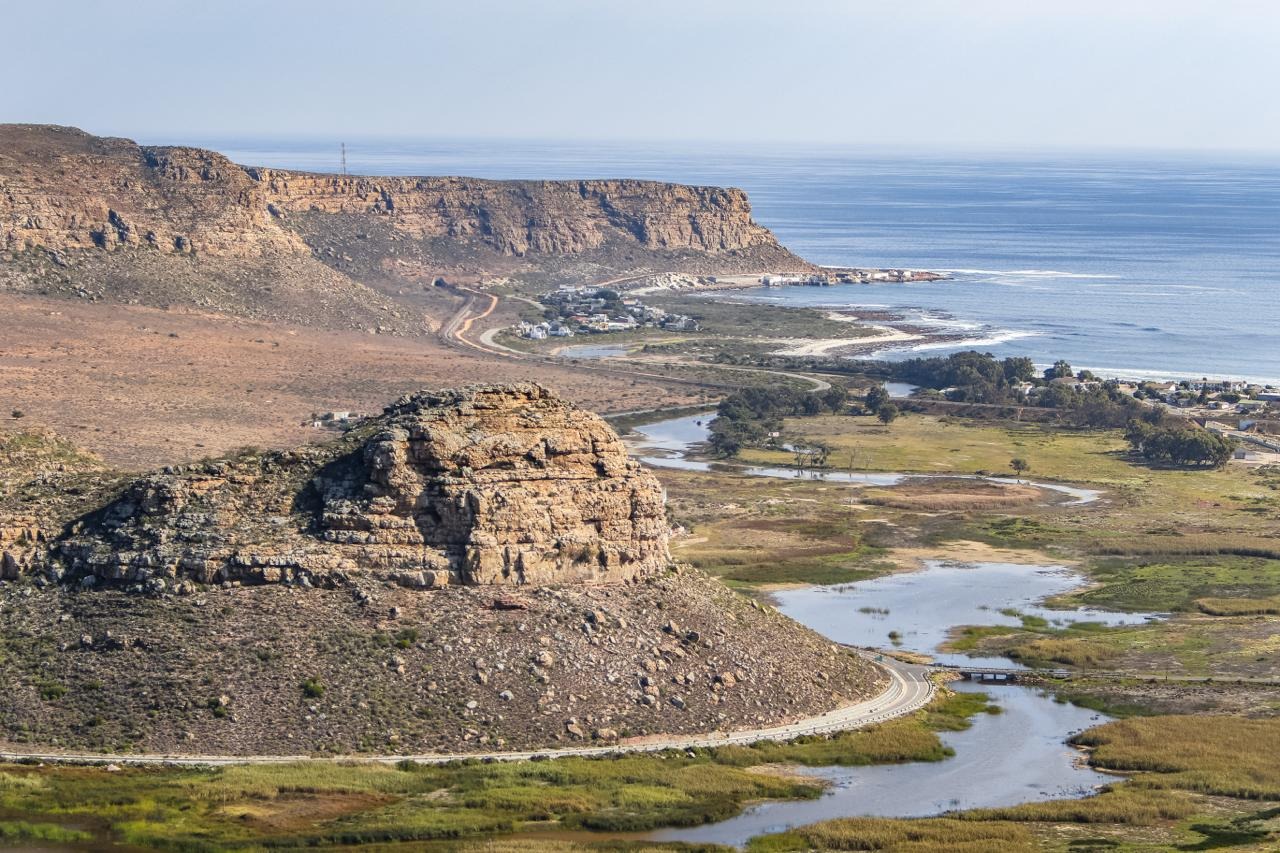
Apart from the contentious application to mine for phosphates in the West Coast National Park (WNCP), Mariama Mining recently applied for a Mining Right not far away, near Langebaan Road.
The application to mine in the national park was made in March 2025 by Kropz PLC, a publicly listed company on the London Stock Exchange, with billionaire Patrice Motsepe’s African Rainbow Capital (ARC) as the main shareholder with 49.1%. Kropz applied to extend its Elandsfontein phosphate mine, and proposed a land swap with adjacent biodiversity-rich land in the WCNP.
South African National Parks (SANParks) rejected the application, citing legal prohibitions under the National Environmental Management (NEMA): Protected Areas Act, while the World Wide Fund for Nature (WWF) opposed the plan, highlighting threats to the park’s sensitive ecosystems and legal disputes over unmet environmental offset obligations from Kropz’s earlier operations.
The proposed expansion has intensified debates over a worrying trend of mining within national parks in South Africa and raised concerns about setting harmful precedents. To add to the collective phosphate mining pile, another local firm, Adelaide Ruiters Mining and Exploration (ARME) is also in the late stages of developing a phosphate mining and beneficiation operation, Zandheuvel, just outside Saldanha. ARME is promoted as the world’s only female-owned phosphate mining company.
Yet another SA company, Colt Resources, no stranger to the West Coast, was also recently granted an Environmental Authorisation (EA) to prospect for phosphate ore across a huge 92,000 hectare (ha) area from Elands Bay past Doringbaai, and up to 20 kilometres inland.
Together, these projects cover an enormous stretch of West Coast territory, which has prompted environmental experts and NGOs, including Protect the West Coast (PTWC), to raise the alarm about this potentially toxic form of mining, and the potential threat it brings to the environment and thousands of people in nearby communities.
Phosphate mining entails the stripping of vegetation and the displacement of fauna in an area already fragmented and vulnerable from a history of mining. Other potential impacts include toxic slurry spilled from pipelines, trucks or trains, as well as toxins leached into wetlands and groundwater in a water sensitive area. This can cause several ailments, including fluorosis in people and animals (a condition that denigrates teeth and bones).
The chemistry of natural sedimentary phosphates shows elevated concentrations of cadmium, uranium and arsenic, which pose further potential health and environmental hazards. Cadmium in particular is shown to accumulate in soils and crops, with potentially harmful effects on humans, although these toxins are comparatively low in West Coast phosphate deposits.
Further human health impacts include respiratory problems from toxic dust and the contamination of crops. Marine phosphate mining, also touted for the West Coast, presents similar risks in the ocean and beach environment.
Why phosphate mining?
Land-based phosphate is mined in open pits and transported for processing via ‘beneficiation’, which removes impurities and unwanted substances. Physical and chemical methods make the material more suitable for processing and/or export.
The phosphate ore on the West Coast is used primarily as feedstock for soil fertilisers in agriculture. Proponents of this ‘rock’ phosphate mining point out how it contributes to a more ‘natural’ fertiliser that enhances ‘sustainable’ farming practices and crop production, and reduces the need for chemically-sourced fertilisers.
Sceptics will question whether the touted ‘sustainability’ of the product – which is essentially a nonrenewable resource – once it reaches market, outweighs the methodology it used to acquire it, considering the listed issues with this form of mining, especially on the West Coast.
Advocates of phosphate mining point out that local phosphate fertilisers reduce South Africa’s dependence on imports, which are prone to wild price fluctuations from exchange rates and global markets. South Africa processes about 2.3 million tonnes of phosphate rock annually (2.3% of global production), but holds about 10% of the world’s phosphate rock reserves, and yet imports the majority of its fertilisers.
The phosphate mining industry highlights employment and economic growth as an upside, with the Elandsfontein mine ostensibly providing 500 jobs to the Hopefield community and surrounds. Through this, the company claims to support more than 5,000 dependents at a ratio of 10-1.
In an information pack in their Mining Right application, Mariama also claims that the positive impacts of their ‘New Langebaanweg Mine Project’ will include “job creation, economic diversification and community development [and] provide employment opportunities, boosting household incomes”.
To their credit, ARME has provided a summarised document outlining their Social Labour Plan (SLP) for Zandheuvel, which includes R42 million investment in local “skills development” and “community projects” and numerous other community projects.
In addition to these commitments, ARME states that it will go beyond the SLP requirements “by contributing 1% of its profits to a newly established Community Development Trust. This Trust is expected to receive around R70 million over the life of the mine and will focus on high-impact areas such as youth development, small business support, and assistance for vulnerable groups.”
PTWC has found it challenging to corroborate these claims because the detailed SLPs for the Langebaanweg and Zandheuvel projects have not been made publicly available. The PTWC legal team consistently struggles to obtain accurate employment and economic data for many mining projects and applications on the West Coast, but remains committed to push for accountability and transparency.
For their part, Mariama concedes in their application that there are possible negative impacts to their proposed phosphate mining, including: “land loss, health risks, and economic instability post-closure. Converting agricultural land for mining will reduce food production capacity and impact local farmers. Mining activities may pose health risks due to dust, noise and occupational hazards.”
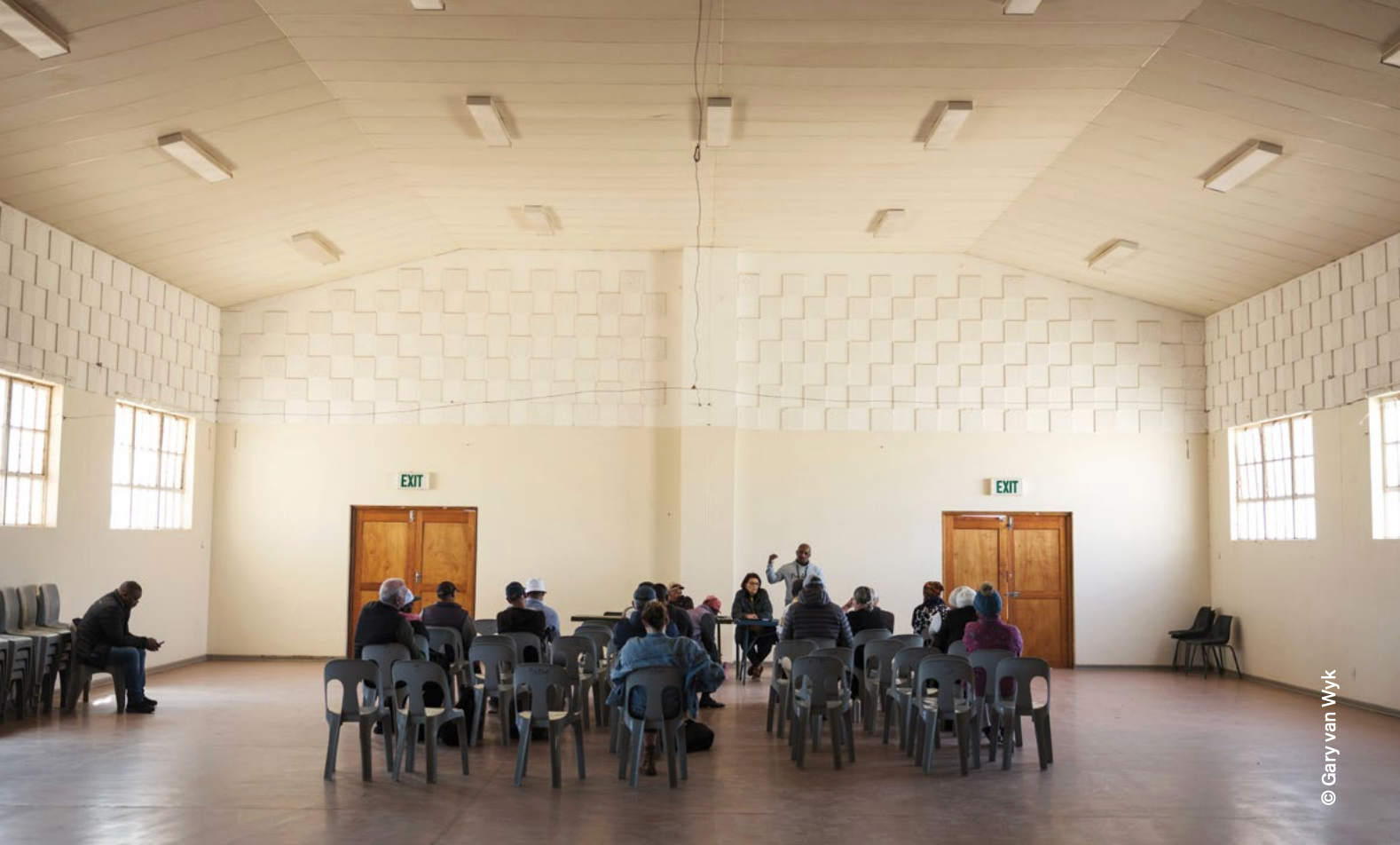
PTWC noted that by and large, Mariama’s responses to public and other comments loaded on Ripl following the Public Participation Process for the application were better than expected , although in some cases, vague language was used. For instance, in the response to PTWC, which asked about what mitigation they planned on to minimise impact on the Critical Biodiversity Area (CBA), they stated there would be buffer zone, but the language is not specific, with no mention of how large this area is or how it would be managed. This was then corroborated by the otherwise detailed diagram accompanying their EIA, which indicated no schematic representing buffer zones.”
At face value, the phosphate mining industry in South Africa appears committed to mitigate and take responsibility for the potential environmental and health risks this mining presents. The sector also seems more prepared to operate on a better ethical level and with more commercially viable business models than many neighboring operations in the diamond and heavy mineral sectors (although Mariama has also applied to mine for the latter).
Nonetheless, it is always about whether the promises made are actually delivered on. As such PTWC will continue to scrutinise all new applications via Ripl, and existing mines, as well as monitor the environmental and health risks inherent in phosphate mining in the region – and will take these mining companies to task should they be found to transgress the law.
Moreover, PTWC holds such widespread mining cannot be the sole answer to the economic future of the West Coast, where alternatives such as agriculture, sports, eco tourism and Nature-based Solutions have long been sidelined, especially due to the ad hoc approvals by the Department of Mineral and Petroleum Resources (DMPR), whose primary mandate is to promote mining, arguably at the expense of more sustainable activity that can provide longer-term employment.
“The DMPR has been described as ‘the fox guarding the henhouse’,” said PTWC MD Mike Schlebach. “When viewed in isolation each of these applications or operations do not seem to pose a major threat. But when assessed in their entirety, you can see how this area, which is heavily populated in parts, could become inundated by phosphate mines, increasing the inevitable negative repercussions for the fauna, flora and people of the West Coast.”
The surge in phosphate mining applications provides further impetus to PTWC’s campaign for a moratorium on new prospecting and mining applications until a Strategic Environmental Assessment (SEA) is conducted to assess the collective impact of all mining on the West Coast, Schlebach concluded.
Add your voice to Ripl
The sheer volume of mining applications on the West Coast, many of which are approved with little or no public knowledge, proves why it is vital that opposing voices are heard. Ripl, PTWC’s digital public participation platform, empowers individuals and communities to speak out against the continual stream of mining applications being permitted by the DMRE.
Ripl makes it easy to submit comments and objections to new applications uploaded by PTWC.
In a system often dominated by industry influence, your voice is your power.
Join Ripl to protect our coast, our biodiversity and our future.
Visit www.ripl.co.za and take a stand today.