Protect the West Coast (PTWC) urges you to comment on Ripl.co.za before close of business Monday 14 July to add your voice to our efforts to ensure that authorities know that South Africans do not support the two applications by Trans Hex to mine and bulk prospect for diamonds and heavy minerals in a large area of ocean – along what is an ecologically sensitive and unique coastline that already carries the scars of years of mining.
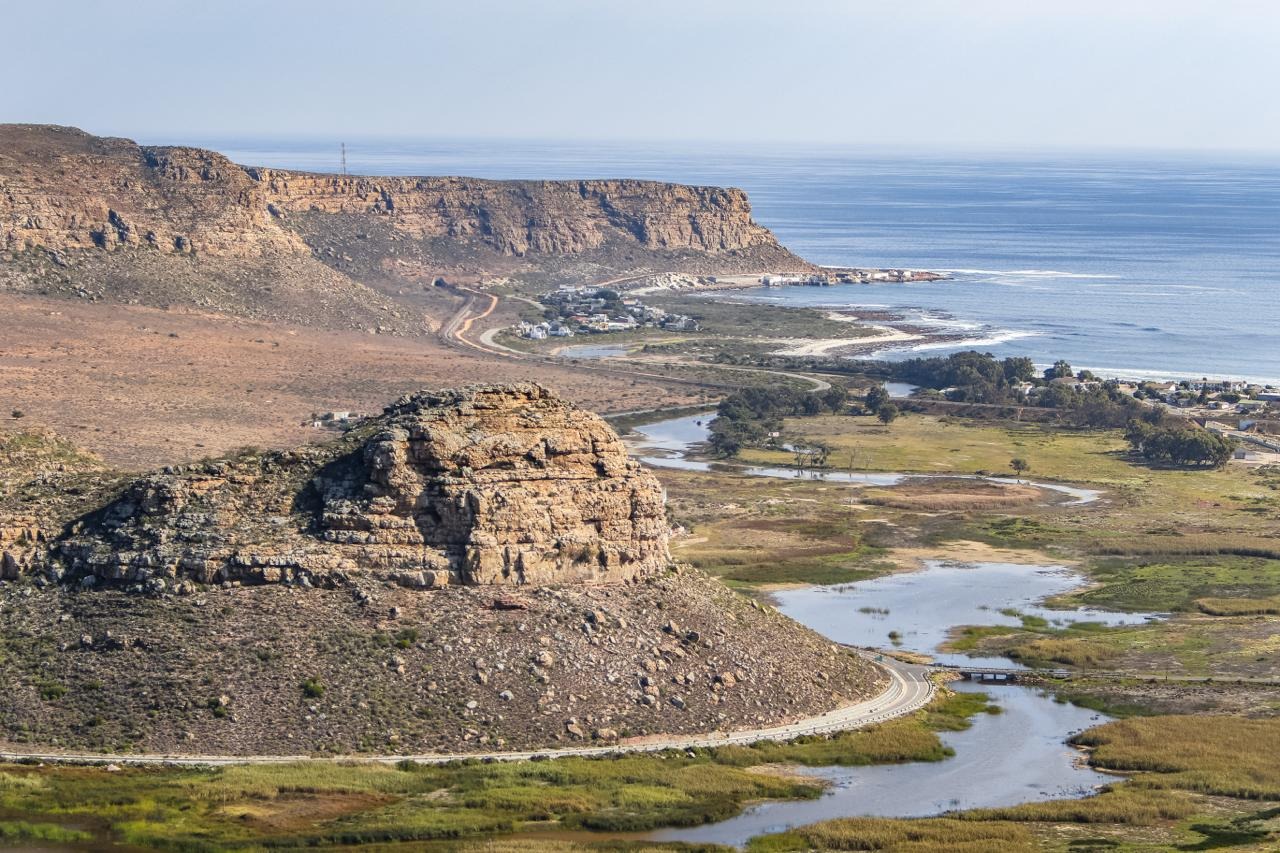
After all final comments are received on Monday, it will be up to the “competent authority” to make a decision on applications to prospect and mine on the seabed along an 80km strip of ocean from the surf zone to 6km offshore between the Sout River and Olifants River on the West Coast.
That “competent authority” is the Department of Minerals and Petroleum Resources (DMPR), which routinely relies on its pro-mining mandate to approve applications that lack the required level of scientific input and expertise.
According to legal and scientific analysis by the PTWC team, both Environmental Management Programme reports (EMPrs) – submitted for this final round of public participation – are based on a number of erroneous environmental claims that lack proper scientific backing.
The problems include:
- A lack of an annual rehabilitation plan in contravention of a statutory requirements;
- A lack of consideration for the cumulative environmental impacts of the two applications, given existing number of mining and prospecting applications and the close proximity of these two applications;
- Inadequate consideration of the inshore bathymetry and sediment transport dynamics and its impact on marine fauna and flora
- Failure to give proper consideration to the draft marine spatial biodiversity plan
A further issue of concern is the likely lack of access for communities and tourists to the coastline for sustainable economic and recreational use in the affected areas.
Head of the PTWC legal team Patrick Forbes said that the DMPR ought to deny Trans Hex permission and require them to provide more detailed scientific input on existing baseline levels, and more specialist input on the specific issues highlighted, if the comments outlined these deficiencies – particularly the adequacy of rehabilitation plans, timelines for meaningful recovery of the benthic community and related impacts, as well as the budget for rehabilitation, which has obvious challenges being in the ocean.
PTWC highlights the issues below, which the public is urged to read as they gather thoughts before they log in or register on our public participation portal Ripl.co.za.
Register as an I&AP on Ripl and make your voice heard here
Core Issues
In the first application (DMPR ref 11B: WC30/5/1/2/3/2/1/10185MR and DMPR ref 13B: WC30/5/1/2/2/10186MR), Trans Hex wants to mine diamonds for 30 years off the coast between the environmentally vulnerable Sout and Olifants rivers in concessions 11B, 12B and 13B. “B” concessions refer to a strip of ocean that runs parallel to the coastline from one to five kilometres offshore.
A remote-controlled track-based crawler machine will apparently suck up 600 tons of seabed per hour onto a large vessel overhead, before dumping unwanted fines or oversized material overboard, according to artisanal diamond diver Gavin Craythorn in a previous PTWC article: “Deep water diamond mining is a big problem. The disturbance to the ocean takes a very long time to rehabilitate.”
Lack of existing baselines and impact data, the cumulative impacts, potential impacts on fisheries and rehabilitation are at the core of the issues PTWC has about the applications, each entailing industrial-scale damage to the seabed that our scientists and lawyers feel has been under-estimated and inadequately mitigated for. For some of the proposed activities, which take place in deep water, mitigation measures are not possible, warranting careful consideration by the “competent authority”.
A report by Anchor Marine Research on marine mining in marine ecosystems, said permanent damage was a significant possibility with this type of mining and natural recovery of benthic communities and the seafloor takes time.
“These activities pose a significant threat in the absence of effective mitigation due to the (often) unavoidable loss of benthic marine biota as a result of destruction from the mining equipment and smothering of the benthos from the disposal of tailings and debris,” the report revealed.
Another is the alleged disregard for the cumulative impact of the mining and invasive bulk sampling prospecting contained in the second application (DMPR ref: WC30/5/1/1/2/10474PR), which Trans Hex wants to also conduct in the same area they wish to mine.
In this application, Trans Hex wants to expand its mineral portfolio for a “multi-commodity prospecting permit” over five years for concessions 11B and 13B, and the strip of ocean closer to shore, namely concessions 11A, 12A and 13A.
“A” concessions are the boundary from the surf zone to one kilometer offshore.
Invasive bulk sampling using a mechanical clam grab that can remove four tons of sea floor gravel at a time will be required for the second application in addition to the huge amounts of sea floor sediment removed during mining advocated in the first.

The commodities they will look for, in addition to diamonds, are heavy minerals and metals (including gemstones, rare earth metals, ferrous and non-ferrous metals, heavy minerals and industrial minerals).
Cumulatively, since prospecting inevitably leads to mining, warned Forbes, this meant that should the permits be granted, Trans Hex would own the rights to all the mineral commodities along this 80km stretch of coast extending to six kilometres out to sea, a total area of 321 square kilometres.
“This appears to be the first foray of its type into the ocean by Trans Hex, which is a departure from the terrestrial diamond mining they have traditionally done, now it’s multicommodity and heavy mineral sands ” Forbes said.
“The extent and effect of the damage that could be done is unknown, because it is happening on the ocean floor, out of sight, with a lack of baseline scientific data to fall back on. All manner of assumptions have been made about rehabilitation timeframes, without reliable data – we need to know what we have before we lose it.”
Forbes raised concerns with what appears to be “an inadequate R1.3 million” to run a sampling and monitoring project at the end of their 30 year time frame for mining. “They have not set aside money to actually monitor the damage their activities will cause during the life of mine, and we cannot know what that is, unless we know the baseline we are working from”.
“They are asking us to accept that the ocean will simply heal the damage they cause. We cannot accept that proposition without rigorous scientific monitoring and surveying during the entire life of the mine, so that we don’t get a total disaster after 30 years, and a budget that is simply nowhere near what we need,” he said.
Trans Hex’s application was also not compliant because an annual rehabilitation plan had not been drawn up as required by the law according to the GNR 1147 regulation, under NEMA. Trans Hex has tried to avoid the need for this annual plan by claiming that natural ocean processes would rehabilitate the seabed and its benthic community, rendering such a plan unnecessary.
Forbes contended that there is “no scientific evidence to support their statement of natural rehabilitation of the seabed within 12 months (as seen in Environmental Impact Assessment report and EMPr), while the Closure Plan indicates that natural rehabilitation will occur and is guaranteed within 24 months, which is then contradicts the EIAr and EMPr”.
The impacts of discharge from vessels (such as pollutants, tailings, ferrosilicon, and sewage) and the cumulative impacts of such discharges over a life of mine of 30 years was also vaguely addressed and seemingly dismissed. These impacts were deemed “very low”, again relying on “rapid dispersion” and “dilution” due to high energy sea conditions.
The Olifants River Estuary, on the border of marine concession 13A,which PTWC has been fighting for with Transhex in recent court proceedings, is in the process of becoming a protected area. The Site Sensitivity Verification Report (“SSVR”) dated August 2024 confirmed the ‘very high’ sensitivity for the aquatic biodiversity, due to the proximity to the Olifants River Estuary, and we need to give this area special consideration, its an estuary of enormous importance for the Weskus, Forbes said.
This raised serious concerns when considering the impacts from pollutants and tailings near the estuary mouth. With the unpredictability of nature and dynamic ocean conditions (wind, waves, and currents), there was no guarantee that discharge would disperse away from the coast.
Another major problem was the claim by Trans Hex that it did not need to take into account the National Coastal and Marine Spatial Biodiversity Plan (NCMSBP) because it was in draft form. The plan is a longstanding attempt, via multi stakeholder and government engagement, to create a framework document to recognise areas and activities that are mutually exclusive and to limit mining activities in Critical Biodiversity Areas (CBAs) and Ecological Support Areas (ESAs).
The South and Olifants River have already been marked as ecologically sensitive areas on the edge of the area that Trans Hex wishes to prospect and mine.
Forbes mentioned that the legacy left by Trans Hex from its terrestrial mining activity required discernment from the competent authority when considering new applications in sensitive environments. It just cannot be business as usual.
“Transhex wants to secure long term rights, for a considerable number of minerals, in a sensitive and contested area. There are multiple stakeholders here. We need to make sure that these decisions are made in the interests of all concerned and within our legislative framework. PTWC will continue to ensure that the decision makers have the facts to make rational and lawfully defensible decisions. If the decisions made are anything but that, the fight will have to continue,” added Forbes.
Watch this space.
Make your voice heard on Ripl here