In Part 3 of our series on the Public Participation Process (PPP) in South Africa, Protect the West Coast (PTWC), examines the vital role of the Environmental Assessment Practitioner (EAP). In particular we take a look at those who – intentionally or not – fail to adhere to legal requirements and the ensuing negative repercussions on the environment and communities. We also unpack why registering as an Interested and Affected Party (I&AP) to comment and object on mining applications is an important guardrail against this type of malpractice in the PPP.
Introducing the EAP
Mining companies are required by law to appoint an independent EAP to compile the required documentation for every mining application. The EAP’s role is to evaluate how proposed projects will affect the environment and communities and to present their findings impartially.
All EAPs must:
- Objectively identify environmental and social impacts and propose mitigation methods.
- Follow legal PPP procedures: post site notices, inform landowners and neighbours, alert municipalities, ratepayer bodies and other stakeholders, and where applicable, publish notifications in newspapers.
- Maintain and update a list of Interested and Affected Parties (I&APs) and respond to their questions or requests for further information.
- Ensure all I&APs have access to documents, the chance to comment on each application, and are informed of decisions, appeals, and outcomes.

In principle, the PPP is meant to protect the environment, empower communities, strengthen transparency and ensure that decision-making is as wide-ranging and inclusive as possible.
But this relies heavily on EAPs fulfilling their mandate, which does not always happen.
This is why registering as an I&AP to comment and object on mining applications on PTWC digital public participation platform Ripl is so important as a bulwark against unethical or unprofessional EAPs.
The Problem with (some) EAPs
The mining industry is able to select from a wide range of EAPs, many of whom are ethical, adhere to regulations, and are members of the relevant registration authority and governing body, the Environmental Assessment Practitioners Association of South Africa (EAPASA).
However, PTWC has encountered repeated failures by selected EAPs that completely undermine the PPP:
1. Notification Failures
Some EAPs neglect the most basic duty of informing affected landowners and registered I&APs, who can be excluded from subsequent rounds of consultation. Notices may be absent, poorly placed, or withheld. In some cases, applications are submitted to authorities without stakeholders’ knowledge. Requests to register as I&APs have also been ignored, with submissions not acknowledged.
2. Documentation Issues
Reports are often unnecessarily dense, technical, inaccurate, or incomplete. For example at times, they can downplay infringements on Critical Biodiversity Areas; brush off impacts on bird habitats; omit water assessments; ignore species listings; or massively underestimate rehabilitation budgets.
Documents are often only available in English despite the fact that both the DMPR and the duly appointed EAPs are obligated to ensure that all I&APs have access to information and should be able to participate meaningfully, regardless of language. Translation obligations are frequently disregarded, in most cases leaving Afrikaans-speaking communities excluded.
Sometimes, without notification, documents are retracted and reissued due to inaccuracies, while deadlines for public comment are sometimes unclear or poorly communicated.
3. PPP Meeting Failures
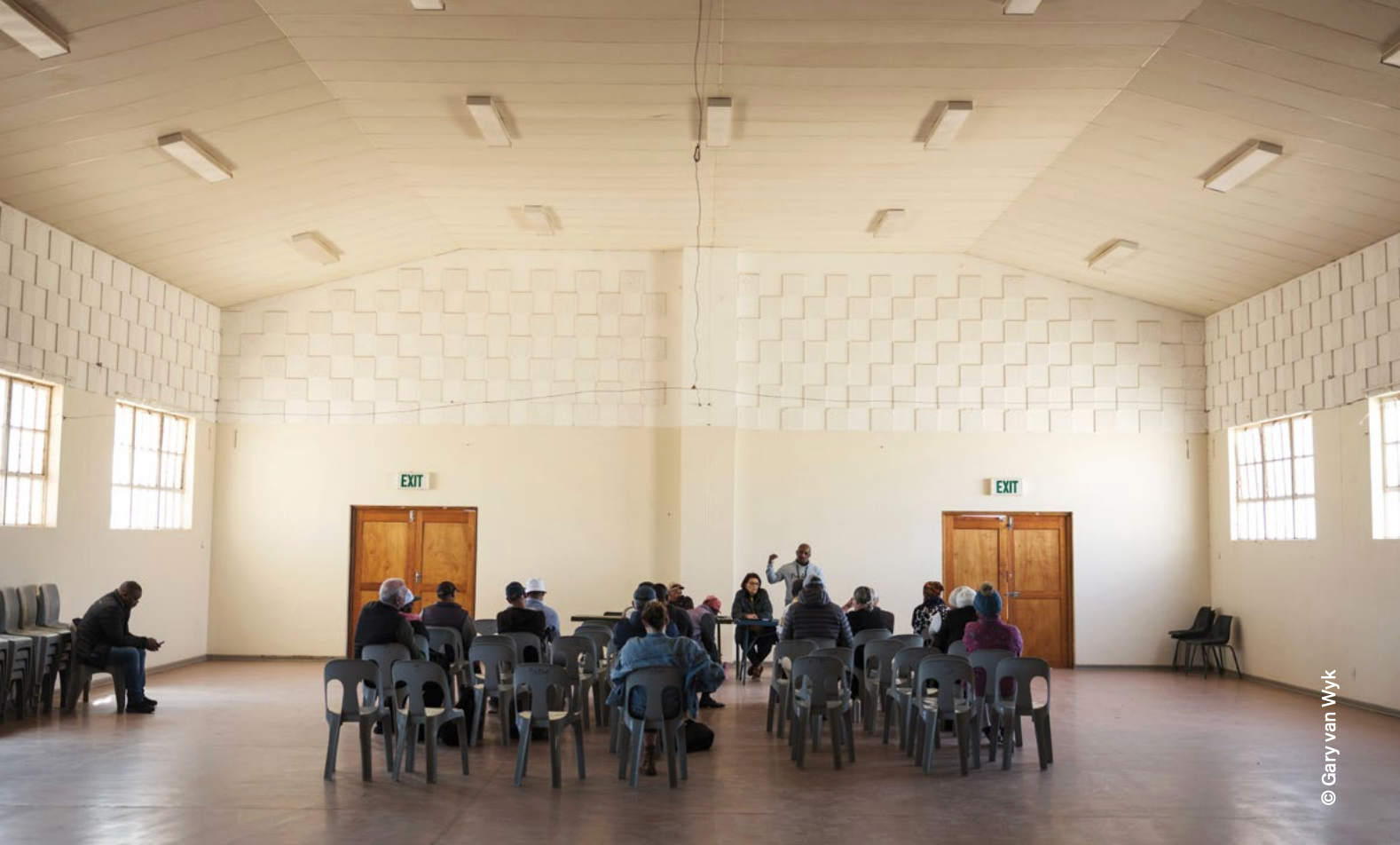
Public meetings are often poorly advertised, held at inaccessible times or locations, cancelled and/or rescheduled at short notice, or held online in areas with poor digital access. Sometimes the EAP does not attend or arrives poorly informed, and unable to engage constructively with stakeholders.
4. Communication Breakdowns
Communication has remained a recurring failure of the worst EAPs. Emails and phone calls from I&APs or other stakeholders for more information go unanswered. Applications have been postponed or allowed to lapse without explanation. When correspondence is forthcoming, it can be inadequate, unsigned or anonymous, making it impossible to hold anyone accountable.
5. Irregular and Unethical Conduct
Finally, some EAP behaviour crossed the line into outright misconduct. New EAPs have been appointed and documents reissued without informing I&APs. Representatives even visited private properties without prior arrangement, demanding access without consent. These actions not only violated ethical standards but also further alienated the very people the process is supposed to include.

In some cases, documentation has been prepared by an individual claiming to be a legitimate EAP but who lacks the required qualifications to do so (a grey area under investigation by PTWC’s Legal Accountability team).
“While in PTWC’s experience the majority of EAPs conduct their business professionally,” notes PTWC MD Mike Schlebach. “For those who do not, whether they do so out of ignorance, poor preparation or with an actual agenda to misrepresent the true impacts of each application in collusion with mining companies, we can only speculate. But these rogue EAPs are a major concern, and represent a rot in the system PTWC is intent on rooting out.”
The Power of the I&AP
At their worst, poor EAPs reduce the PPP to box-ticking in the full knowledge that the DMPR seldom scrutinises the process and approves almost every application ad hoc. This erodes trust, weakens safeguards and leaves watchdog groups and citizens as the last line of defence.
This is why registering as an I&AP is crucial. It grants the legal right to receive documents, submit objections, and appeal decisions. More importantly, it pressures EAPs to act properly, since any flaws or inconsistencies in the mining application process can be challenged legally.
Collective public participation is powerful because:
- Applications have been delayed, amended, or even withdrawn due to I&AP objections;
- Communities get greater scrutiny and, occasionally, have influence on refusals to applications.
By registering as an I&AP you secure:
- Legal standing to comment, object and appeal;
- Updates on projects and amendments;
- Access to technical reports;
- Participation in site visits and public meetings.
The PPP is imperfect, but not powerless. Coordinated, informed action can expose flaws, strengthen assessments, and hold mining companies and EAPs accountable.
Unscrupulous EAPs and mining companies rely on public apathy. Registering as an I&AP is one of the most effective ways to resist flawed processes and protect South Africa’s West Coast from destructive mining operations.
Register. Engage. Ensure accountability. Make your voice count: Subscribe to Ripl here.