Our friends at Run West enjoyed a record turnout up the West Coast this weekend – again proving how important nature-based events such as trail runs are to a sustainable future away from extractive industries.
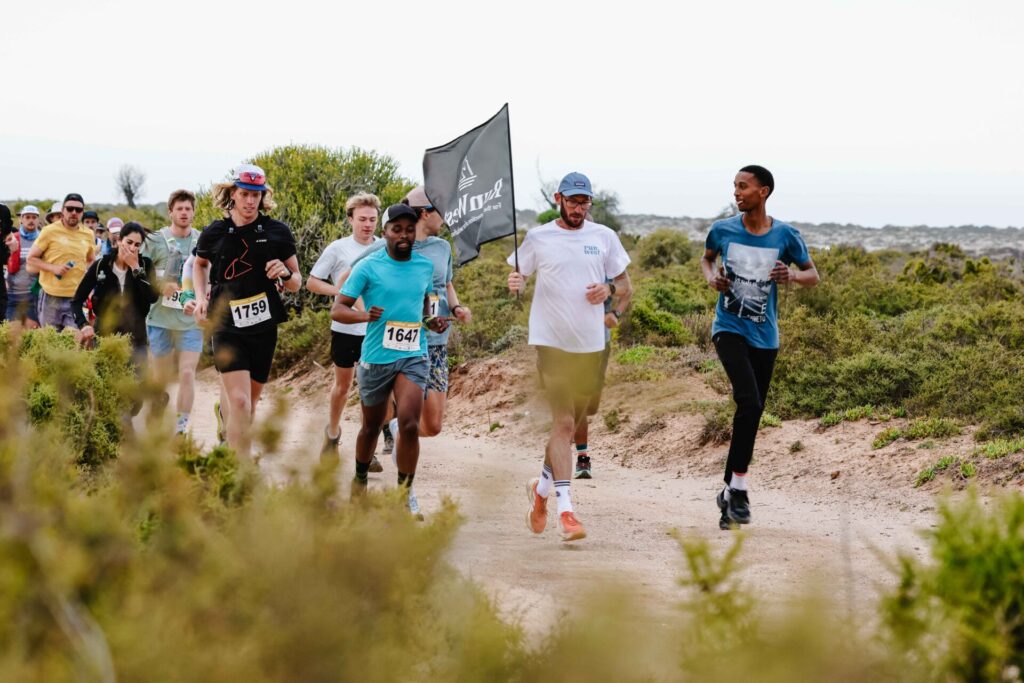
More than 450 runners turned out for the expanded format, which saw the inaugural Guppie Gallop children’s 2km run (ages 4 to 14) tacked on to the Euphorbia (10km) and Olifants (21km) routes between the Olifants River Mouth and Fryer’s Cove in Doringbaai.
A cool NW breeze and low cloud cover created comfortable running conditions for the entrants, and friends and family, who descended on guesthouses and campsites in Doringbaai and Strandfontein – an important role model for sustainable tourism and recreational activity that could be a game changer for this mine-ravaged coast.
The 21km men’s race was won by Anton Moldenhauer in a blistering time of 1:36:06 followed closely by Alfred Slimmers 38 seconds later. Tarrin van Niekerk comfortably took the women’s title in 1:53:29. The 10km women’s race was won by Kiera-Lee Ralph in 58:06, with the men’s title going to Andro Afrikaner in 52:30. The inaugural 2km Guppys Gallop for boys and girls (aged 6 to 14 accompanied by parents) went to Heinwinn Afrikaner and Lisa Coetzee respectively.
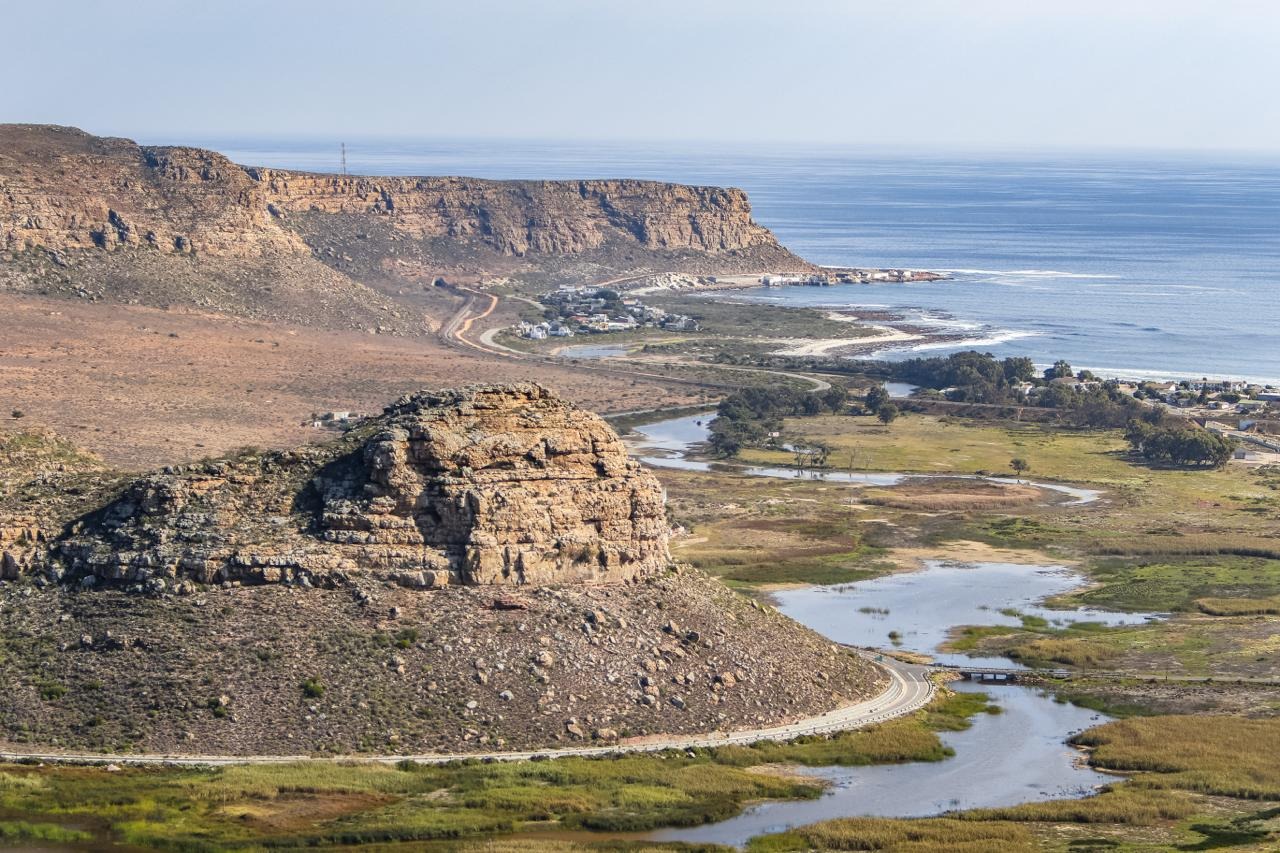
The 250 or so runners who navigated the longer route, which began near the fishing village of Papendorp on the Olifants River, enjoyed the raw pristine beauty of the estuary, before working their way along a 4km stretch of beach.
The unrehabilitated scars of mining could be seen along some of the cliffs just before Strandfontein, but thankfully, most of the route is still untouched – all the way from Papendorp, through the picturesque settlement of Strandfontein, and along the rugged coastal cliffs to Fryer’s Cove in Doringbaai.
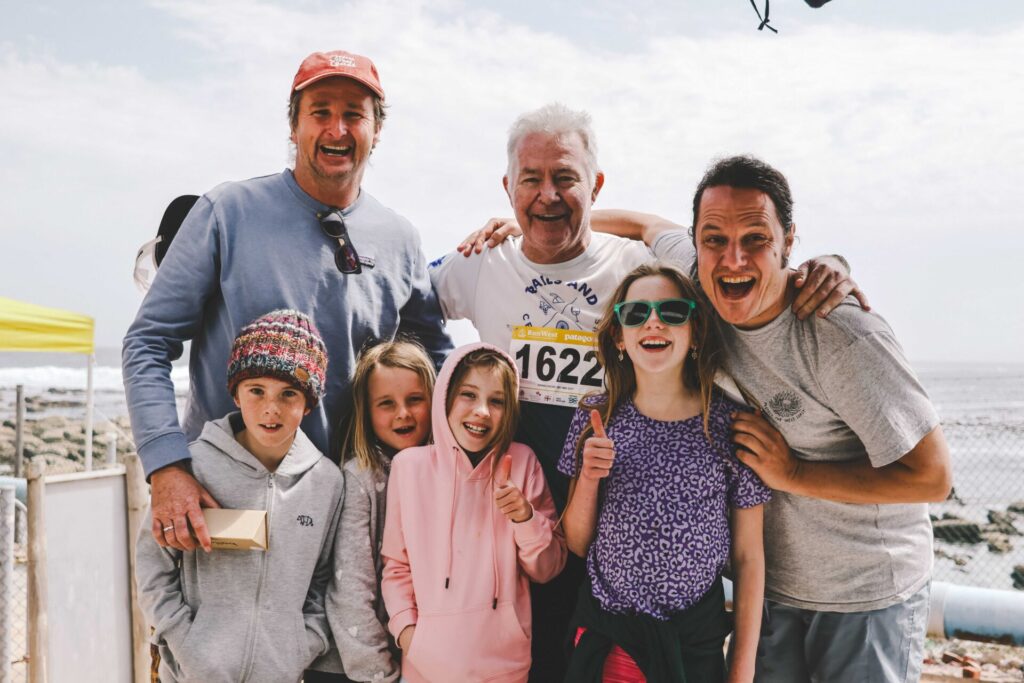
Several PTWC team members took part, including CEO Mike Schlebach who ran the 10km with his son Sasha, the youngest participant, while the PTWC Chief Fish (Legal) Eagle Patrick Forbes and Senior Editor and Journalist Steve Pike took on the gruelling but magical 21km race.
Forbes and Pike noted large patches of black-coloured sand along the initial beach segment, which signified the presence of heavy minerals so sought after by miners.
Events like Run West – a non-profit company that uses trail running and outdoor events to promote environmental awareness on the West Coast – are a way to keep the miners at bay, while also proving that Nature-based Solutions (NbS) are a much more sustainable economic alternative for small towns dotted along the coast.
Many small town communities are steamrolled by authorities and mining companies, and are left with the damaging effects of sand mining, and many broken promises that leave no benefit to residents.
Forbes said Run West was an important practical answer to the questions raised by mining. “When 450 runners and their families descend on a small community like this, there is an enormous boost in revenue inflows,” he said after the race at Fryers Cove, where the prize-giving took place at the packed restaurant brimming with enthusiastic runners and their guests.
Forbes also pointed out the community work that Run West founder Dom De Jesus and his team were doing for Papendorp, Strandfontein and Doringbaai. The Run West team have set up an educational programme at the primary school in Doringbaai with NEST (Nature Education & Sustainability Together).
The pilot session for the programme took place the day before the race, and comprised NEST partners Fundamental KinderKinetics, who took learners through a series of physical challenges to improve fine motor skills.
The ethos of Run West lies in the power of movement to connect people with nature. Through inclusive events such as the trail run, and youth-focused programmes — especially the partnership with NEST — the idea is to support environmental education, encourage active lifestyles, and help protect the natural beauty of the area.

“Run West is about more than just running — it’s about shining a positive light on our coastline — a light that will remain on, guiding future generations toward care, respect, and responsible stewardship of the land,” De Jesus said.
Prior to the run the racers were treated to stirring songs from a local group of activists about their origins and the importance of protecting the coastline.
MD of PTWC Mike Schlebach said that the legacy of the Run West event grew year on year, and was beginning to make a real difference:
“The partnerships they have with local organisations just shows that an economic and social solution lies ahead for all users and custodians of this amazing coastline.
“We salute Run West for the hard work they have put in to find a sustainable future for us all – a vision we all share. Well done guys!”
Partners of the event were Namaqua West Coast, NSRI, the NEST partners at Fundamental KinderKinetics, Ballo, Artisans Bakery, Good Riddance, Reduce Reuse, Spirit of Endeavour, Fryers Cove, Patagonia, Suzi and Dee du Plessis, Doringbaai Primary School, and PTWC.